
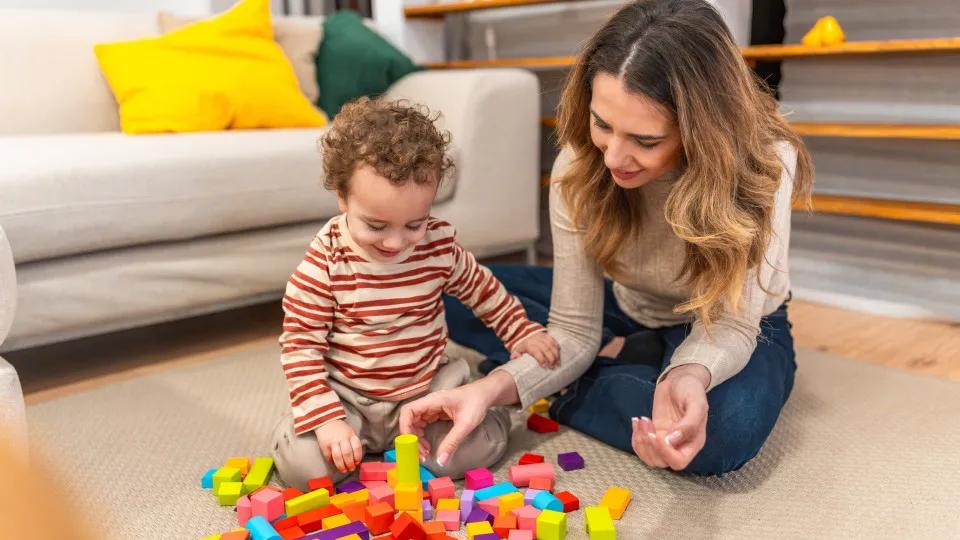
The lack of parental time is pointed out by Portuguese families as the main obstacle to children's moments of play, according to a published study.
© Shutterstock
13/11/2026
by
Lusa
A lack of parental time continues to be pointed out by the portuguese families as the main obstacle to children's moments of play, according to a study published today.
In the study coordinated by the Escola Superior de Educação (ESEC) of the Universidad Politécnica de Coimbra, which had the partnership of the Instituto de Apoio à Criança e a Estrelas & Ourícios, more than a thousand Portuguese families participated with children up to 12 years of age.
More than half of respondents (51.9%) pointed out the lack of time as the main condition for children's play opportunities. The difficulty in reconciling professional hours with family life was reported by 27.7% of participants.
“The biggest obstacle identified by parents is not space or lack of toys, it is time“, stressed ESA professor and scientific coordinator of the study, Rui Mendes.
The investigator warned of the impact of the demands of professional life on the availability of adults to follow the children's games.
This study first introduced the perspective of children and identified differences between what parents and children consider to be play.
The study Portugal to Play IV – 2026 drew a picture of the habits, opportunities and main challenges associated with playing in Portugal.
The 30 children included in the investigation process allowed them to confront their opinions with those of their parents, with the cross-reference of the answers identified 133 divergences and revealed that “adults and children do not always attribute the same meanings to play experiences”.
“It was important to listen to the children themselves and to know their perspective on a reality that concerns them directly“, considered Rui Mendes.
While adults associated play mainly with cognitive development, imagination and creativity, children highlighted joy and movement.
With regard to playing spaces, the house remains the privileged place, referred to by 65.1% of families. However, 29.4% would like children to have more opportunities to play outdoors, stressing the need for adequate public spaces and greater contact with the outside world.
This edition of the study also identified challenges in the school context, since for 82.7% of families, “the availability of toys and materials to play in schools is insufficient”.
And, “if in the first years of life play occupies a central place in everyday life, in the first and second cycles it tends to be limited, above all, to recreation periods”.
In this context, Rui Mendes considered it important to recognize the educational potential of playing and to value the natural curiosity of children also in learning contexts.
“ Play could be seen as an opportunity to stimulate creativity, discovery and learning,” said ESA professor.
The results of Portugal to play IV – 2026 intend to be “a contribution to the reflection and definition of educational and childhood policies, as well as to the organization of family times and the qualification of school and public spaces, reinforcing the importance of guaranteeing children time, conditions and opportunities to play”.