
To Simão inherited the taste for the sea of his father, who pointed out the path of the construction of traditional vessels, a craft portrayed in “The Last Chata”, by Louyse Gerardo, a documentary that will be presented at the Museum of the Sea of Cascais.
© Cascais City Hall
14/11/2026
by
Lusa
To Simon
To Simão inherited the taste for the sea of his father, who pointed out the path to the construction of traditional vessels, a craft portrayed in “The Last Chata”, by Louyse Gerardo, a documentary that will be presented at the Museum of the Sea of Cascais.
“ Ever since I was born, practically, my house has been Fish Beach. It was the Bairro dos Pescadores that was my house and the second house, or the first, perhaps the first, was the Praia do Peixe ", said António Pereira, nicknamed Tó Simão, from the name of the father.
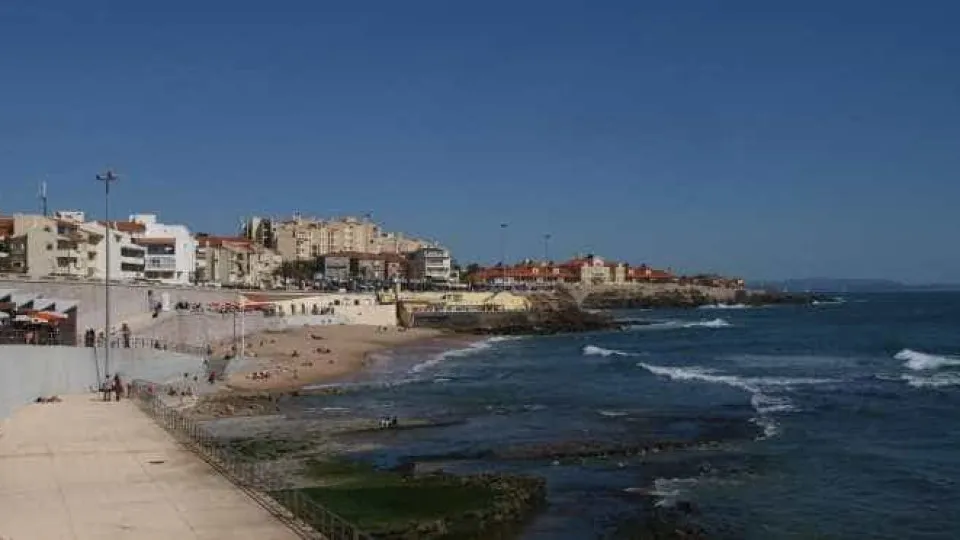
Next to Cascais Bay, while tents are set up for Christmas season, the master is defianced to the Lusa agency memories of the parents, who each sought, in their own way, sustenance at sea.
“ My mother came for sale, who was selling to the canasta, and [...] she brought me down. My mother was a big woman, she looked like a tuna, there with 150 kilos and one meter and 80 or more ", described.
In the sunny afternoon, seagulls and tourists take advantage to take rematch from the previous storm days and the former boss at Cascais Lifeboat Station advanced more details of childhood.
“And ‘so’, my father had come from the sea, she would leave me sleeping on the bow of the bore, covered with an oily and my father’s coat. When the trawlers came and the pole boats, she grabbed the fish, went to sell and I stayed with my father there ", he told.
At age 65, from Praia dos Pescadores, he kept games with boats built in the sand and the first time he was “at sea”, aged 5 or 6, taken by an uncle.
“The school for me was just to peel me. I only had one teacher, who's still alive today, who didn't hit me. The rest, the best school was this one I had from the beach ", recalled.
The naval carpentry craft began in a shipyard behind the current Hotel Baía, as an apprentice at the father's request, making boring, the traditional Cascais vessel, ideal for use on the beaches, due to the flat and keelless background.
“ The boring one is a boat that cannot be drawn because of the arphamento and the stages [structure]”, said Tó Simão, about the peculiar characteristics of the vessel, in which, “if it fails half a millimeter on one side”, “you can send the boring one away” because “it cannot be repaired”.
With his teachers, José Luís Parracho and “Manecas”, he learned to work the wood, but he did not forget to thank his father, who “at that time had vision” to “get him to learn a craft”.
After the loss of his father, at the age of 21, he devoted himself to fishing for bass, more profitable, leaving the carpentry, which he dedicated to himself or to repairs for friends.
Later, a Madeiran, owner of a shipyard in Boston, United States, tried to hire him for the construction of “boats for Maine,” but it was not because he never had “emigrant spirit.”.
More recently, the Museum of the Sea and the House of Cascais challenged him to build a pain in the ass, put it to work and baptized it “Maria da Luz” and “John Simon”, the names of the parents.
The art, admitted, is threatened, because Parracho is 93 years old and, at his age, is “seeing no one else” working on these vessels, when there were before “seven or eight carpenters making boring”.
For this reason, he considers that “this is an art in extinction”.
In the Pescadores neighborhood, Tó Simão keeps an old bore named “Maria da Luz”, who promised his father never to sell, and the aiola “Mr. Simon”, typical boat of Sesimbra.
In the workshop, in addition to small replicas of other types of vessels, it preserves objects related to maritime activity, from vests, canastra, gourds or ancient buoys made of “pig bexies”.
Although he did not care that the Museum of the Sea was with the boring one, “for people to see” a “true one”, he admitted that “they have little interest”, because what “there is a bottle” and “an imitation”.
The photographer and director Louyse Gerardo, a Brazilian based in Portugal, worked on another project “related to women in fishing in Portugal”, when Belinha, a fishmonger of the Cascais Market, who “is very ashamed to do an interview” indicated a friend who also had “several stories”.
“ I didn't know the ship, I didn't know what it was like. And he explained everything to me and I was in love with him at first. And from that he called me to meet personally the boring, showed me the boat and began to develop there the idea” of the documentary, he explained.
The title, he stressed, came about because it was the last pain in the ass that Tó Simão built so far and in the documentary he is also interviewed Parracho, so “it was very nice to be able to see the master and the apprentice and how this relationship between the two was also incredible”.
For Louyse Gerardo, “Cascais was a fishing village, 100%, and now it is going more to this tourist part, and it is not so much valued the fishing around here, but there are still people who were part of this story and who have built all of this up to today, who are alive and we have to, yes, value them”.
“ I believe that these initiatives are very important for us to value the heritage, value culture, people, memory ", noted.
According to the director of the Department of Museums and Cultural Equipment of the Cascais Chamber, Ana Vanessa Rodrigues, the documentary “is also a way to honor all these generations who have been working with traditional vessels, which are somehow related to the life of the village of Cascais”.
“Together Simon is, in fact, one of the masters who keeps alive a craft that is resisting” and “that at some point was decisive in the history of Cascais”, he said, because “they are boats that are built as suitable as possible” for the sea of the village.
On the criticism of the boring exposed in the museum, Vanessa Rodrigues stressed that the equipment, in addition to the “mission to safeguard the crafts and professions”, has “a very close relationship with the fishing community in Cascais because the goods that exist are mostly donations, deliveries of the people themselves” who live and work there.
“ I think he would like very much and it was an honor for us to be able to receive a boring from Tó Simão ", admitted.
The documentary “The Last Chat” is presented on Monday, at 18:00, at the Cascais Sea Museum.