
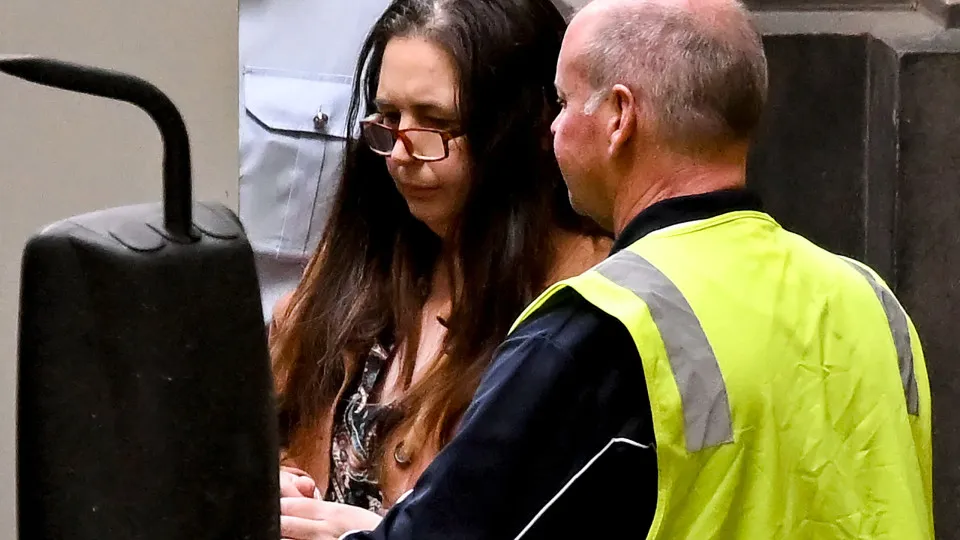
An Australian court rejected Erin Patterson’s appeal, known as the “mushroom killer”, while maintaining the life sentence without parole. The woman poisoned three of her ex-husband's family at lunch.
© Getty Images
30/10/2026
by
Uthe Australian court rejected the appeal of Erin Patterson, the woman known as “the mushroom killer” for poisoning three of her ex-husband’s relatives during a meal in July 2023.
The decision was announced this Friday by a collective of three judges of the Supreme Court of the State of Victoria and thus determines that the woman should spend the rest of her life in prison.
According to Reuters, the magistrates also considered that Patterson, sentenced to life imprisonment last year, should not be entitled to parole.
The woman, remember, murdered her former father-in-law, Don and Gail Patterson, and Gail's sister, Heather Wilkinson, after serving them a beef Wellington lunch contaminated with mushrooms of the Amanita species Phalloides, known as the green hemlock or death hat. Patterson was also convicted of attempting to assassinate Heather's husband, Ian Wilkinson, who spent weeks in hospital.
For the judges, “these crimes were committed with extraordinary coldness and premeditation and deserve to be condemned in the most vehement terms”.
“ After a weighted analysis of all the circumstances, we concluded that the case involves a crime so shocking that it is not appropriate to establish a minimum period of imprisonment before possible parole”, said Judge Stephen McLeish, speaking on behalf of the collective, in Melbourne court.
The judge pointed out that even though the crimes involved a “successful succession of deceptions”, including the false claim that he had been diagnosed with cancer, used to justify the absence of his two children during lunch.
According to the survivor, the woman told the guests – all family members by marriage – that she intended to get advice on what to tell her children about her alleged diagnosis. Patterson's ex-husband, Simon Patterson, was invited, but he missed lunch.
Patterson was sentenced to life imprisonment, with a minimum period of 33 years without possibility of parole.
The woman always denied any responsibility, claiming that the deaths were accidental, and her lawyers argued that certain evidence should not have been admitted to the trial, that the interrogation to which she was submitted during the trial was unfair and that the fact that the jury stayed in the same hotel as other persons involved in the case compromised the outcome of the trial.
However, the judges considered that these arguments were not sufficient to accept the appeal. Patterson may still appeal to the Australian Supreme Court.