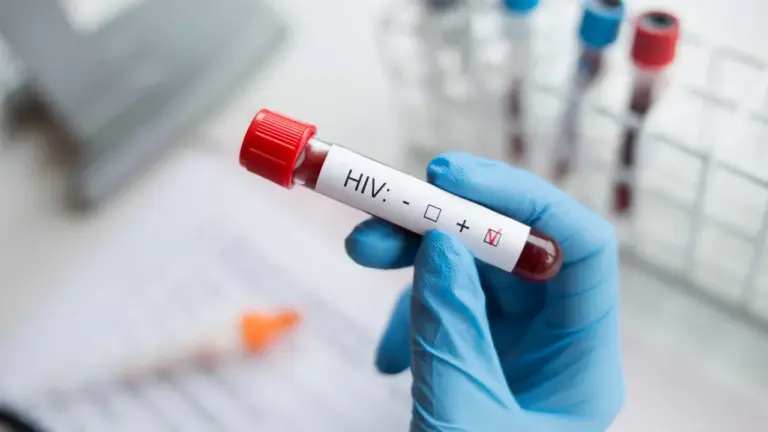
AIDS organisations today warned that young people aged 25 to 29 have maintained, since 2012, the highest rate of new HIV diagnoses, defending the strengthening of prevention and access to pre-exposure prophylaxis.
© Shutterstock
26/11/2026
by
Lusa
OaIDS organisations have today warned that young people aged 25 to 29 have maintained, since 2012, the highest rate of new HIV diagnoses, defending the strengthening of prevention and access to pre-exposure prophylaxis.
“ When the same age group presents the highest rate of new diagnoses for more than a decade, it is no longer possible to view the phenomenon as punctual”, says the Director-General of the Group of Treatment Activists GAT, Luís Mendão, quoted in a statement.
For the GAT and AIDS Healthcare Foundation (AHF), the persistence of this trend requires a strengthening of prevention strategies aimed at younger people and wider access to pre-exposure prophylaxis (PrEP).
The situation of the migrant population also concerns organizations, with Luís Mendão warning that “more than 70% of migrants diagnosed with HIV report having acquired the infection in Portugal”.
“ We are failing the migratory population that is being infected in our country. Public health policies are urgent to ensure information and prevention in these populations, in addition to early diagnosis ", defended.
The Report HIV Infection in Portugal 2026, prepared by the Directorate-General for Health and the National Institute of Health Doctor Ricardo Jorge, according to which Portugal reached UNAIDS 95-95-95 targets, with 95% of people living with HIV knowing the diagnosis, 97.9% fulfilling the treatment and of these 96.1% already being in virological suppression.
The GAT and the AHF welcome Portugal for achieving these goals, but warn that the results show “persistent challenges in preventing and early diagnosis of HIV”.
With a consolidated presence in the Setúbal Peninsula and in Greater Lisbon, the two regions with the highest rates of new diagnoses in the country, organizations carry out thousands of screenings annually, having identified, in 2025, more than half of the new diagnoses registered in these regions: 242 of the 422 cases, about 57%.
“ The data in the new national report confirm progress, but also identify late diagnosis and infection among young people as the main challenges,” the organisations stress.
They observe that more than half of people diagnosed with HIV had a late diagnosis and, among people aged 50 or over, this figure rises to almost three out of four. In the younger age groups, the trend of the high infection rate between 25 and 29 years has been maintained for over a decade with 29.3 diagnoses per 100,000 inhabitants.
“ The continuation of late diagnosis in more than half of diagnosed people shows that there is a structural problem. While there is no diagnosis, more HIV transmission occurs, opportunities are lost to start treatment earlier and to protect the health of the population. Portugal needs to get to people sooner”, says Luís Mendão.
“ Despite the attempt to expand PrEP in recent years, there are still unavailability of PrEP consultations for effective demand, especially in the Lisbon region”, one of the most affected by the epidemic.
The GAT advocates the financing of PrEP consultations in the Community-based organisations, which says it does not advance by “lack of political will” to resolve the bureaucratic blockade.
“ Despite the updating of the national standard and the capacity already existing in organizations, it remains unsolved the financing model of these consultations, limiting a response that could bring the prevention closer to the people who need it most”, regrets.
In the context of World AIDS Day (1 December), they advocate the urgent creation of a technical committee, with the participation of civil society organizations and affected communities, dedicated to reducing late diagnosis and identifying populations and territories where current prevention and screening strategies are not producing the necessary results.