
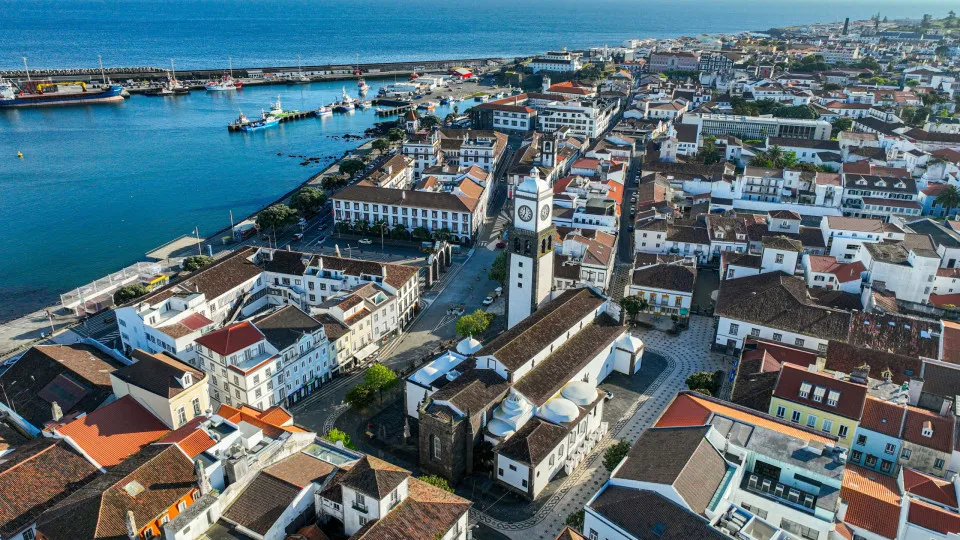
Several entities and associations of the Central Group of the Azores today argued that the limitations on air and sea links remain the main constraint on the development of the Terceira, Faial, Pico, São Jorge and Graciosa islands.
© Shutterstock
06/11/2026
by
Lusa
Vin the case of the Azores Central Group, organizations and associations have today argued that the limitations on air and sea links continue to constitute the “main constraint” to the development of the Terceira, Faial, Pico, São Jorge and Graciosa islands.
In a press release released today, representatives of entities and associations of the Central Group indicated that they held a meeting on October 30, in São Jorge, in which they discussed how air and sea links “condition the mobility of populations, business activity, the circulation of goods and tourism dynamics”.
According to the note, the meeting “resulted in a clear understanding of the need to overcome a logic of isolated development of each island”.
“ The Central Group should be assumed as a true economic and territorial unity, capable of building joint responses to problems that are largely common”, they said.
The associations considered that “it is not possible to talk about territorial cohesion, business competitiveness or integrated tourism development without ensuring regular, adequate and articulated transport between the five islands”.
In air transport, particular concern was expressed about the “insufficient connections, available timetables and mobility difficulties of smaller islands, particularly Graciosa”.
Regarding maritime passenger transport, the need to review the current model of operation was defended, “increasing links between islands, particularly during the high season, and ensuring solutions that meet the needs of populations and visitors.”.
Also in the maritime freight transport it was considered “fundamental to ensure greater regularity, capacity and predictability, promoting the competitiveness of companies and better supply conditions”.
In the tourism sector, the importance of “consolidating an integrated offer that values the differentiating characteristics of each island and encourages visitors to know more than one destination during their stay” was highlighted.
A “more diversified, productive and value-added economy, capable of reducing dependence on subsidies and transfers and strengthening the region’s production and export capacity” was also advocated.
The participants considered it “fundamental to strengthen the articulation between the representative entities of the five islands, building a concerted position with policy makers and contributing to the identification of concrete solutions to common problems”.
“The Central Group cannot remain just a geographical designation. It must be stated as a true unit of development, cooperation and opportunity, where the combined dimension of the five islands is a competitive advantage and an effective instrument of territorial cohesion”, concluded.