
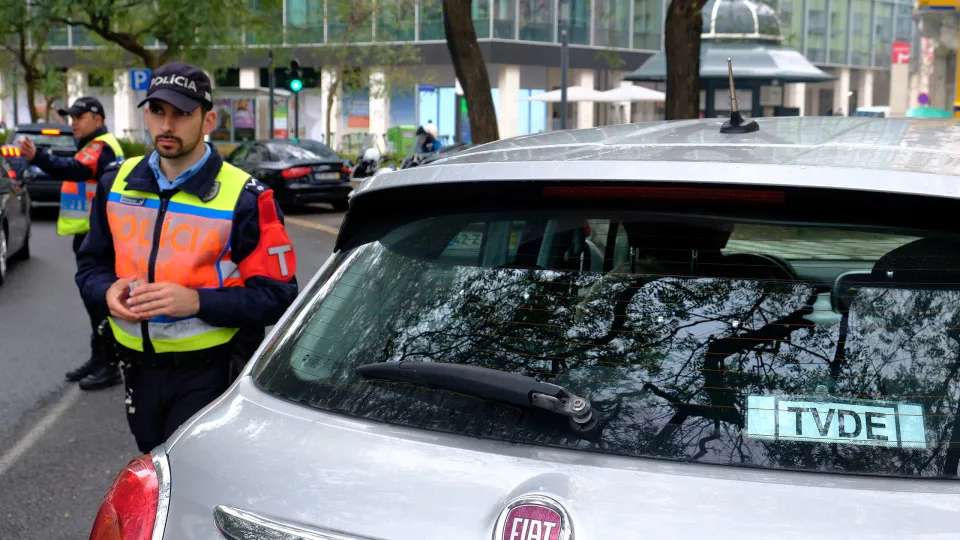
The chairman of the Mobility and Transport Authority (AMT), Ana Paula Vitorino, said that “it is not yet clear” how taxis can do TVDE service, as foreseen in the new sector law.
© Álvaro Isidoro / Global Images
13/10/2026
by
Lusa
A president of the Mobility and Transport Authority, Ana Paula Vitorino, said today that for the body “it is not yet clear” how taxis can do TVDE service, as explained in the new sector law.
“I must say to AMT it is not yet clear how taxis can do TVDE service and it is not clear why the demands that are made for taxis and TVDEs are completely different,” said Ana Paula Vitorino.
The leader spoke in the parliamentary committee on Infrastructure, Mobility and Housing, where she was heard today in the context of the request made by the parliamentary group of the Aquida, on “the new tariff regulation of the Taxi Transport Service”.
As an example, the person responsible spoke of the possibility of a taxi leaving Lisbon to the Algarve, “staying there for a few days and doing [after] TVDE service”, considering that such “viola the taxi service”, and that “he is registered as a taxi”.
“ For the MTA, it is not yet clear how everything can work, without creating complications, without creating additional complications, especially for those who supervise these matters,” Ana Paula Vitorino said.
The new legal regime for the paid passenger transport activity in electronic vehicles and electronic platforms (TVDE) was published on 1 September in the Diário da República.
Eight years after the beginning of the regulation of this type of transport, Law 59/2026 – which amends the previous Law 45/2018 – came into force in the midst of some dispute.
The most objectionable amendment was that taxis could be “registered for TVDE activity, provided they meet the requirements for vehicles assigned to this activity and are registered with a licensed electronic platform manager”.
During the hearing, the president of AMT stated that there will be a “period between six and nine months” in which a “monitoring and evaluation” of the rules of the new tariff regulation of the taxi service will be carried out so that the result of its implementation can be realized.
However, he stressed, in order to carry out this evaluation the body needs information from the sector, with 13,000 registered taxis, although not all “have a license to operate” so they cannot be considered operational.
Also according to Ana Paula Vitorino, about 12,000 taxis are active, being eight thousand registered in the National Association of Road Transport in Light Cars (ANTRAL) and between 2,500 to 3,000 in the Portuguese Taxi Federation.
“ Almost 11,000 taxis are registered in these two associations and the rest or will be in others with less representativeness or without it”, said Ana Paula Vitorino.
About the new fixed tariff for the routes originating in the square of Humberto Delgado Airport, in Lisbon, which becomes 16 or 19 euros according to the crown – and which will come into force on Thursday – Ana Paula Vitorino recognized that AMT was not consulted, it is a tripartite agreement – between ANA – Airports, Lisbon City Hall and taxi sector associations – and that “it is partially illegal” because it sets tariffs out of Lisbon, namely Cascais and South Bank.
The new regulation for the simplification of taxi fares was published on June 3 in Diário da República, establishing a lower flag, but varying tariffs according to time and distance, which can rise in festive times.
The representative associations of the sector asked the regulator to clarify several rules of the new taxi regulation, with the AMT suspending the entry into force for 60 days for the associations to send “amendment/adjustment proposals”.
FPT and ANTRAL defend the “consecration of transition factors (time and distance), which allow a phased adaptation to the new tariff model, avoiding abrupt price and demand shocks”, considering that this is essential for the economic sustainability of the activity, the protection of users and consistency with the current price agreement.
The associations raised doubts about the services initiated outside the area where the car is licensed, considering that the new tariff model creates “strong territorial inequalities, favoring large urban centers and penalizing low density areas”.
The associations also disagree with the new calculation method based on value per minute.
The new calculation system maintains the flagship at a lower price than the current one, but adds values depending on time and distance, and further aggravation by travel time on festive dates and holidays, and seasonal rates in tourist regions.