
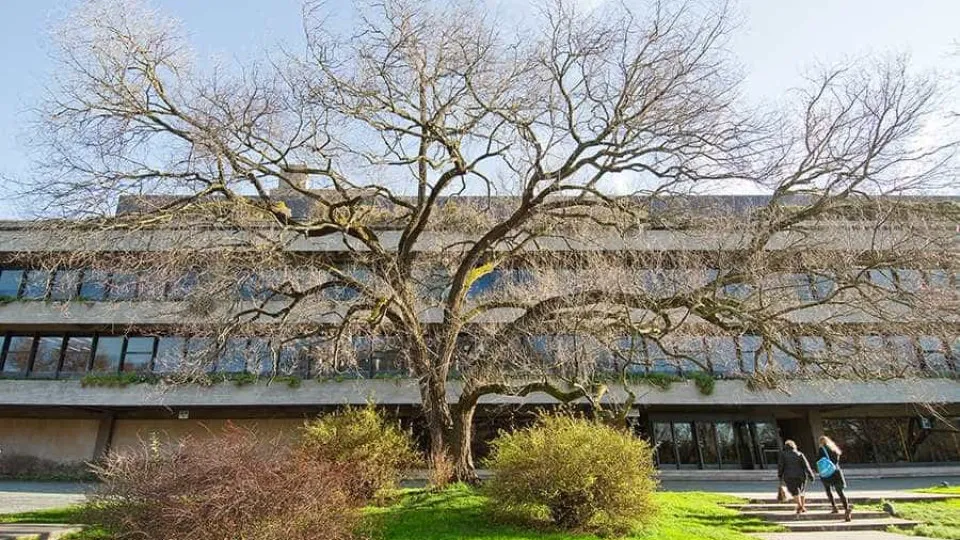
Labor harassment in performing arts is the central theme of a cycle of debates organized by the MUDA project, which begins on Saturday at the Calouste Gulbenkian Foundation in Lisbon.
© Márcia Lessa – Calouste Gulbenkian Foundation
05/11/2026
by
Lusa
CHANGE
O labor harassment of professionals in performing arts and disciplinary crossings is the central theme of a cycle of debates organized by the MUDA project, which begins on Saturday at the Calouste Gulbenkian Foundation in Lisbon.
The MUDA event will take place for three days and, in addition to debates, will have a training action and the presentation of an unprecedented manual to prevent and act in case of harassment in the context of work in performing arts (such as theater, dance and circus) and disciplinary crossings.
This initiative comes months after the first technical-scientific study in Portugal on labor harassment was presented, exposing “a structural phenomenon, amplified by precariousness, with power asymmetries and literacy gaps, with significant and persistent psychological impacts”, as was revealed in March.
The MUDA event will open with a reflection debate on the conclusions of that study, with the participation of the director-general of the Arts, Américo Rodrigues, sociologist Dália Costa, labor inspector Sofia Nabais and Margarida Barata, union Cena-STE.
Another debate will be on “responsibility and repair”, “public institutions, professionals, activists, political organizations and different agents in the sector for the creation of healthy work environments”.
Joana Pinto Coelho (Portuguese Association of Jurist Women), Pedro Penim (director of the National Theatre D. Maria II) and Rui Lopes Graça (director of Victor Cordon Studios).
We also highlight the presentation of a practical manual to prevent and act in cases of labor and sexual harassment in performing arts and disciplinary crossings, as a response to some of the conclusions presented in March in the scientific study.
A first free training action is also planned for “knowledge sharing, discussion of standard cases and practical tools”, as read in the program.
The MUDA project was launched in 2025 on the initiative of Catarina Vieira, Raquel André and Sara de Castro, linked to the creation, research and training in arts, in order to survey situations of workplace harassment and prepare answers to improve the sector.
The scientific study presented last March, based on a national survey and interviews, concluded that about 75% of the workers in the performing arts surveyed admitted having experienced situations of bullying and half reported cases of sexual harassment, in both cases occurring more than three years ago.
Regarding bullying, 76% of workers felt “systematic disrespect for pause times or rest periods in the name of the creative process” and 71% mentioned “hosty environments of intimidation”, such as shouting, manipulation and aggressive language.
The survey also shows that more than 80% of respondents never complained or complained about situations of moral or sexual harassment, for lack of evidence and witnesses with “the fear of not being believed”.
Among the data revealed by the researchers, it is reported that “the predominance of independent jobs and unstable bonds increases not only the likelihood of people being harassed, but also the difficulty in reporting”.
At the same presentation session, in March, the Director General of the Arts, Américo Rodrigues, recognized the existence of the “phenomenon” of labor harassment in performing arts and the need to act, including at political level.
“ I knew the phenomenon existed, but I didn't know this dimension, but it's very important. ... Now there's credible and informed information. Before there was perception. From the moment there is [data], some action is required by the sector and the entities that deal with it. A number of measures must now be taken,” he said.