
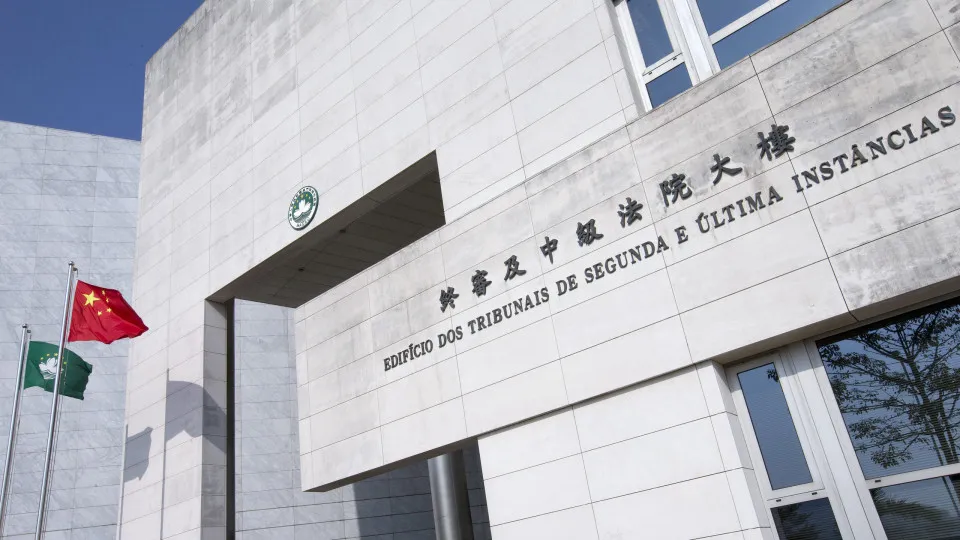
The Macau Association of Lawyers (AAM) stated that it does not consider discrimination against the Portuguese the requirement of Chinese nationality in the examination to exercise in nine cities in southern China.
© Lusa
12/10/2026
by
Lusa
Macau Bar Association
A Macau Lawyers Association (AAM) today told Lusa that it does not consider as discrimination against the Portuguese the requirement of Chinese nationality in the examination to exercise in nine cities in southern China.
“ I do not see this as an exclusion from anyone, but simply one of the criteria, such as the requirement to know how to write and speak Chinese,” said AAM Secretary General Oriana Inacio Pun.
At the end of August, the Permanent Committee of the National People's Assembly, the Chinese maximum legislative body, approved amendments to the law governing the exercise of law in mainland China.
The changes open the doors of the Greater Bay region to lawyers from the two semi-autonomous regions of Macau and Hong Kong, who can provide specific legal services in civil and commercial areas.
The Greater Bay is a Beijing project to create a world metropolis that integrates Hong Kong, Macau and nine cities in Guangdong Province, with about 86 million inhabitants and an economy of over a billion euros.
To practice in the neighboring province, Macau’s lawyers will first have to pass a legal examination that, according to an order from the Chinese Ministry of Justice, will only be open to “Chinese citizens”.
The measure excludes, at the outset, the overwhelming majority of Portuguese lawyers from Macao, since Chinese citizenship is attributed only by descent and not by residence or marriage.
The examination may, however, involve Macaan lawyers who have Chinese nationality.
The Macarians are a Euro-Asian community, composed mainly of Lusodescendants, with roots in the territory.
Oriana Pun stressed that the requirement of Chinese nationality “is not something new”, as it was already part of the pilot programme launched in August 2020 and that the reform adopted at the end of August eventually became final.
The pilot programme allowed more than 650 Hong Kong and Macau lawyers to provide legal services in the Greater Bay. Some even acted before continental China courts as representatives in litigation and conducted arbitration cases.
Oriana Pun devalued the impact among Macau’s Portuguese lawyers, especially because the program involves “matters linked to mainland China’s law, not Macau’s right or Portugal’s law”.
Macau’s legal system has a different legal basis than that of mainland China, since it is based on Portugal’s system. As such, even the Chinese lawyers, magistrates and judges of Macau are usually trained in Portuguese universities.
Macau’s Portuguese lawyers “continue to have open paths to exercise in mainland China in matters involving Macau’s right,” Oriana Pun said.
In 2024, the president of AAM, Vong Hin Fai, said that, of the 450 registered, 40% came from Portuguese-speaking countries and 80% dominated the Portuguese language.
Vong Hin Fai spoke before leading an association delegation on a visit to Portugal, where he met the Bar Association of Portugal.
However, there was no announcement on a possible reactivation of a protocol between the two organizations that facilitated the registration and the beginning of the exercise for Portuguese lawyers in Macau, and which has been suspended since 2013.