
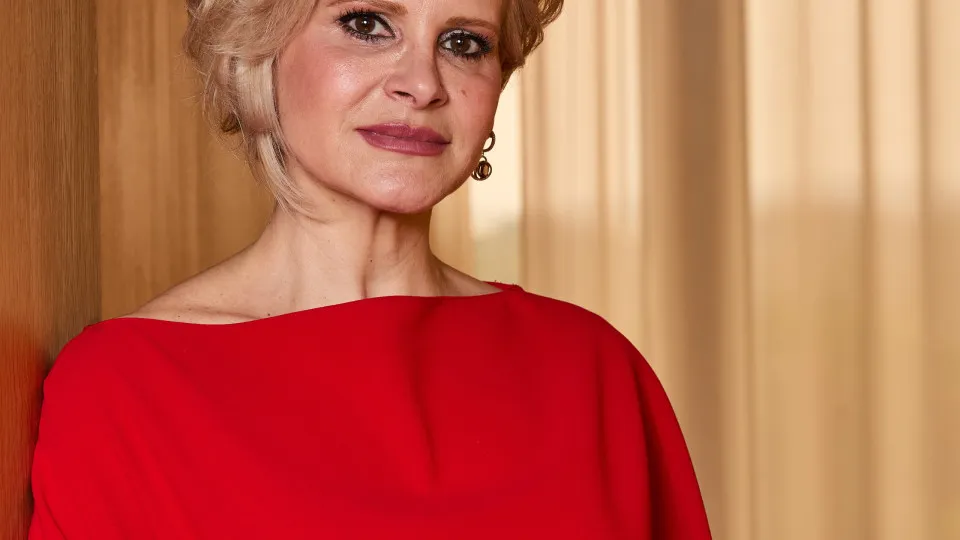
The opinion space of Sónia Soares Coelho, Clinical psychologist, Psychotherapist and Psychoanalyst, recognized by the Order of Portuguese Psychologists, over more than 30 years of career.
© Rui Bandeira
12/10/2026
by
News to Minutes
ANDaugust, I wrote here in the chronicle “We're all rehearsing a farewell“ that the country was preparing to lose its hero. Cristiano Ronaldo had said, in Dallas, after the elimination in front of Spain, that that would be his last World Cup, but that he needed time to think. Jorge Jesus, who had just arrived as a selector, was going to summon him to the League of Nations. I wrote that this call would not only be technical, it would be symbolic, and that any decision would be felt by someone as a loss.
Six weeks later, the goodbye seemed to arrive. However, not as we had rehearsed it.
On September 27, in Norway, Ronaldo stayed in the bank. Portugal won by 2-1. A few days later, in Copenhagen, the selector told journalists that “the status is one thing” and that “the rules are the same for all”. Shortly afterwards, Ronaldo announced on social networks that he left the internship and promised, “in due time”, to tell “the truth to all Portuguese”. The next day, without him, the team won Denmark by 4-2. On 6 October, in a statement, Ronaldo said that the selector had failed to speak, apologized to the supporters, accepted the punishment that will be applied to him and declared himself available to return.
As usual, I don't care who's right about what was promised. Nor do I know what Christian feels, nor what Jorge Jesus thinks: as I wrote in August, we cannot assume what is going on inside someone we have never heard. However, public gestures, a press conference, an abandoned internship, a communiqué, also communicate. I am interested in what they give us to think, and above all what this moment awakens in us Portuguese, and reveals how we relate to our heroes.
Illustrate so you can disappoint
Donald Winnicott, English pediatrician and psychoanalyst, described a task he considered essential in the relationship between the mother and the baby. At first, the “sufficiently good” mother adapts almost completely to her child’s needs. The breast appears when there is hunger, the lap when there is crying. The baby thus lives the illusion that the world responds to his desire, almost as if he were the one to create it.
For Winnicott, it is from this illusion that our ability to relate to the world is born in a creative way, and to feel that life is worth living. But Winnicotta added that, after offering the illusion, the mother's main task is gradually to disappoint. Gradually, she fails a little more: it takes a minute, then two, don't always guess. Inadvertently, of course. And the child, who meanwhile gained some ability to wait, discovers that the world is not her, and that it exists beyond her.
Disillusionment grows when it happens at the pace of what the child can endure. When it's sudden, when it falls at once, it stops being a path and becomes a shock. In the office, we see him a lot: it is not disappointment that makes us sick, it is disappointment without time.
A country also needs to be disappointed
For more than twenty years, Ronaldo was, for many Portuguese people, a necessary illusion: proof that a small country could have the best in the world. Illusion in Winnicott's sense, not in the sense of a lie. It helped generations feel bigger.
Why, a country also needs to be disappointed by its heroes. Not to diminish them, but to be able to see them as they are: extraordinary and finite, admirable and fallible. That's what allows you to keep them without getting stuck with them. That was the job I said we were doing in August: an anticipatory, slow mourning that was preparing us.
There is, by the way, an entire generation for whom the selection has always existed with Ronaldo. Children – Portuguese and foreign – who celebrated goals to imitate the same leap, with that name on their backs, to utter the same cry. For them, what's happening is not just an episode of a career. It is often the first experience of seeing an idol cease to be perfect. And the way adults around you deal with it – with anger, contempt, or gratitude – will teach you something about how to lose what you like.
What happened in Copenhagen interrupted this work. So far, there hasn't been a last game, a standing stadium, a goodbye with time. There was a bank, a press conference and a publication on social media. The disappointment, which was being gradual, became sudden.
When disappointment comes too fast
What do we do with a disappointment that comes too fast? We often return to what I described in the last chronicle, “ Guilt dies single”: we divide the world into good and bad. Some are with the captain, mistreated by the one who just arrived. Others are with the selector, who finally had the courage to impose rules. The two positions relieve, because they dispense the hardest: accepting that there may not be a culprit, and that what hurts is simply the coming end.
4-2 to Denmark brought something else. For some, it was a relief: after all, the team survives. For others, almost an offense: how is it possible to win without it? But to continue without him is not to stop liking him, it is not to betray him. Anyone who's ever mourned knows this guilt of moving on.
Surviving is not cheating. This is precisely what disappointment teaches: the world continues beyond our desire. And that's what allows us to love what we're missing as something real, outside of us, and not just within our illusion.
Between the end and the return
In July, we heard it took time to think. In September, the truth would come “in due time”. Now that there's a willingness to return. For the third time, the end is suspended. And the country oscillates, as if it doesn't know whether to say goodbye or to keep waiting.
Perhaps this suspension is an opportunity after all. If Ronaldo returns, he won't return the untouchable hero of the past: Copenhagen has already happened, and so has disappointment. But we may be returned to the gradual farewell that hastened us. For that, the healthy one is not choosing a side. It is doing the work that remained undone: thanking, remembering, and beginning to imagine the selection that follows. Not because the hero stopped caring, but because we can only truly keep what we are able to separate ourselves from.