
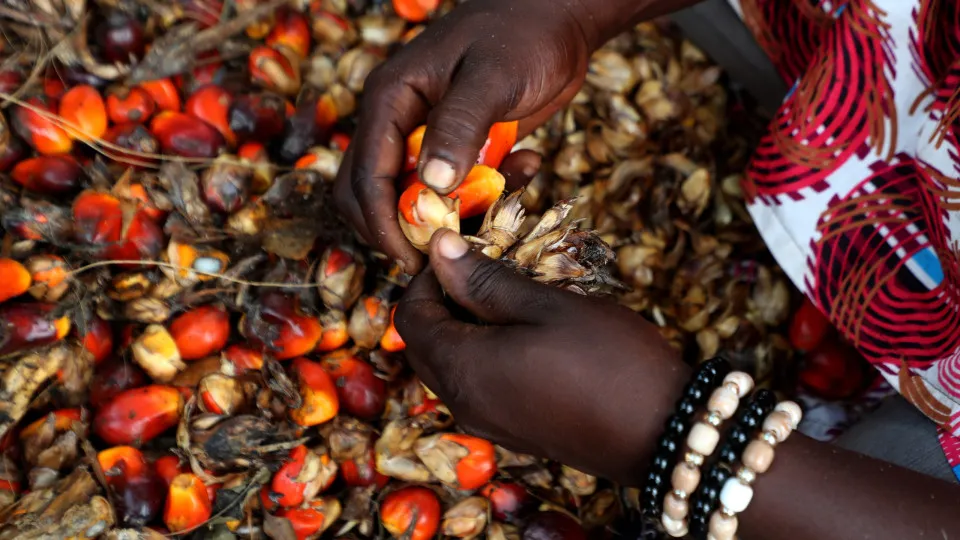
The regional director of IFC for West Africa and Sahel told Lusa that the organization bets on agribusiness, tourism and logistics as sectors capable of boosting employment and economic growth in Lusophone Africa.
© Lusa
27/10/2026
by
Lusa
O regional director of the International Financial Corporation (IFC) for West Africa and Sahel told Lusa that the organization bets on agribusiness, tourism and logistics as sectors capable of boosting employment and economic growth in Lusophone Africa.
“Agribusiness and tourism are focal sectors in the BM [World Bank] because they have the ability to create jobs for many people,” with the aggregation of small producers and multiplier effects, said Sameh Wahba, regional manager of the IFC – arm of the BM for the private sector.
“ For each direct job created by tourism, there are two or three indirect jobs,” he explained.
The two sectors “are a great focus of the WB and logistics is very important for the movement of loads and people, it is a main pillar for economic growth,” he pointed out, on the margin of the 2nd Lusophone Africa Business Forum, which today ends in Cape Verde and dedicated to those areas.
“That’s why these sectors were prioritized” alongside infrastructure, including energy, which it classified as essential for growth.
The number of registrations in the forum has increased from 250 to 420 since the 2025 edition, said, among investors and representatives of various governments, allowing examples of what is advancing in a fragmented market from Cape Verde to Mozambique to be known in the same room.
“ In Africa, for example, there is a lot of talk about the Francophone area, which is a market which is established and has its support. Lusophonia, perhaps due to the distancing of markets, has never been constituted as a market, it has always been more fragmented”, added IFC regional director for Southern Africa, Claudia da Conceição.
The forum allows “to look more consolidated” for the block that speaks Portuguese, defended.
“From the point of view of new business [between the two editions], there were several to happen in the agribusiness sector,” especially in Mozambique and Angola, along with new initiatives in the energy sector “where IFC is involved.”.
The portfolio of active projects in PALOP has grown, he said, amounting to $750 million (EUR 672 million), with new partnerships in agricultural companies working with local producers to be announced soon.
Although much of the financial volume is dedicated to the area of infrastructure, “the area of agribusiness, including processing, is in fact increasing greatly,” said Cláudia da Conceição.
In cumulative terms, in the last five years, the institution has mobilised around 1.2 billion dollars (about EUR 1 billion) in 10 projects in the six countries: Cape Verde, Guinea-Bissau, Equatorial Guinea, São Tomé and Príncipe, Angola and Mozambique.
The IFC is a multilateral development financing institution dedicated to the private sector of developing countries, which provides loans, participates in corporate capital, mobilises investment and provides technical assistance, but is not the only one.
“ The needs are enormous, but there is coordination between funding institutions that never existed,” said Sameh Wahba, pointing out examples of partnerships with the African Development Bank (BAD) or the European Investment Bank (EIB).
Asked about the effect of global geopolitical disruptions, he considers that responses vary between sectors, “but are creating opportunities, not [represent] only insecurity.”.
The increase in fuel prices “is creating many opportunities for countries to introduce renewable energy projects or create gas to electricity conversion projects” in order to compensate for “geopolitical dynamics”.
“ Also in the agriculture sector, with food insecurity that increased with the war in Ukraine, there are more opportunities to “invest in agribusiness,” with the disruption of world trade systems to encourage local production, he said.
Cláudia da Conceição argued that projects in Africa are less likely to fail and returns higher than those in other geographies.
“ We have two objectives: to increase the presence of IFC”, either through loans such as equity participation, “and to add support for micro, small and medium-sized enterprises. But where it will happen, we will see ", concludes Sameh Wahba.
The IFC will monitor the contacts resulting from the forum focused on Lusophone Africa, as a market with a population around 80 million people and a combined gross domestic product (GDP) of around 174 billion dollars.