
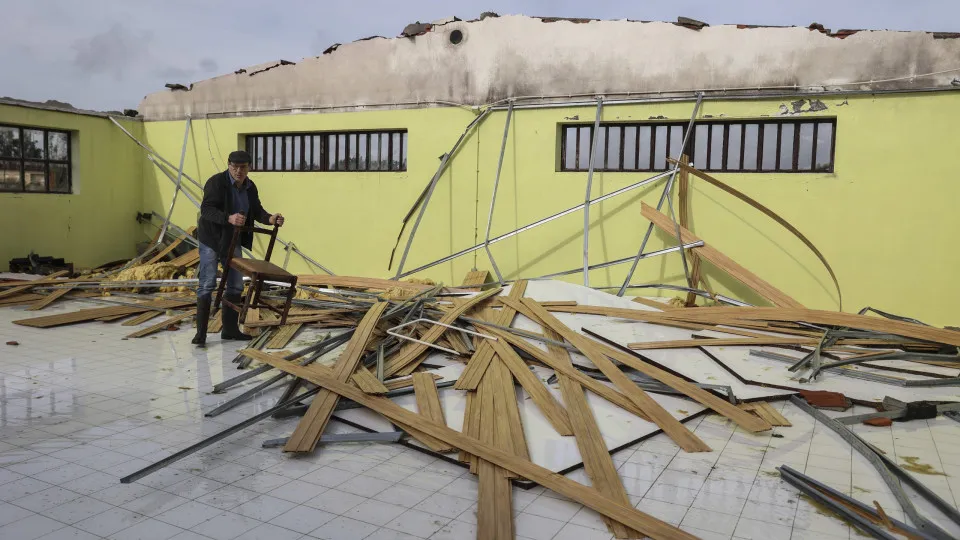
The European Central Bank (ECB) warns that the reduction in insurance coverage against natural disasters may represent an economic burden for families, businesses and governments, and infecting the banking sector, was announced today.
© Lusa
09/11/2026
by
Lusa
O European Central Bank (ECB) warns that the reduction in insurance coverage against natural disasters can represent an economic burden for families, businesses and governments, and infecting the banking sector, was announced today.
In an article in the next economic bulletin, economists at the ECB warn that the coverage of insurance against natural disasters has recently decreased and can be further reduced.
Less than a quarter of the losses caused by natural disasters in the European Union (EU) are covered by insurance.
In several countries, this coverage is even less than 5%, according to an analysis by the insurance and pension supervisor (EIOPA, European Insurance and Occupational Pensions Authority) and the ECB.
EIOPA and the ECB propose to create public-private reinsurance within the EU to share risks and expand coverage in countries.
They also suggest establishing a European public disaster fund to improve disaster risk management and coordination.
ECB President Christine Lagarde considered last week that “Europe needs better protection against the financial repercussions of climate change and a more flexible energy system that makes the most of clean energy”.
Lagarde said on an ECB blog that Europe should extend the coverage of climate insurance.
A recent proposal from the European Commission (EC) offers the opportunity to boost the ECB and EIOPA proposal to extend climate insurance coverage through an EU-wide public-private reinsurance mechanism, according to Lagarde.
In addition, the ECB considers in the economic bulletin that “reducing EU dependence on fossil fuels could help contain” one of the causes of high inflation and current economic and financial uncertainty.
Energy markets are increasingly exposed to geopolitical disturbances and rely heavily on fossil fuels, so “a more sustainable energy matrix would favour price stability and support the disposable income of European households,” the ECB adds.
The ECB estimates that an additional green investment of approximately 3% of EU gross domestic product (GDP) will be required each year by 2030 to achieve the EU climate targets.
Between 20% and 25% of the total green investment should be covered by the public sector, while the rest should come from private capital, ECB economists add.
It is therefore important that Europe has deeper European capital markets, adequate public policies and efficient capital allocation.
The article also mentions the strong impact that droughts and floods have on growth.
For example, low water levels on the Rhine River in July reduced real GDP growth in Germany by around 0.2 percentage points in the third quarter, although economic activity is expected to recover at the end of the year, according to the Kiel Institute.
Forest fires in Spain and France have led many companies to suspend their operations.