
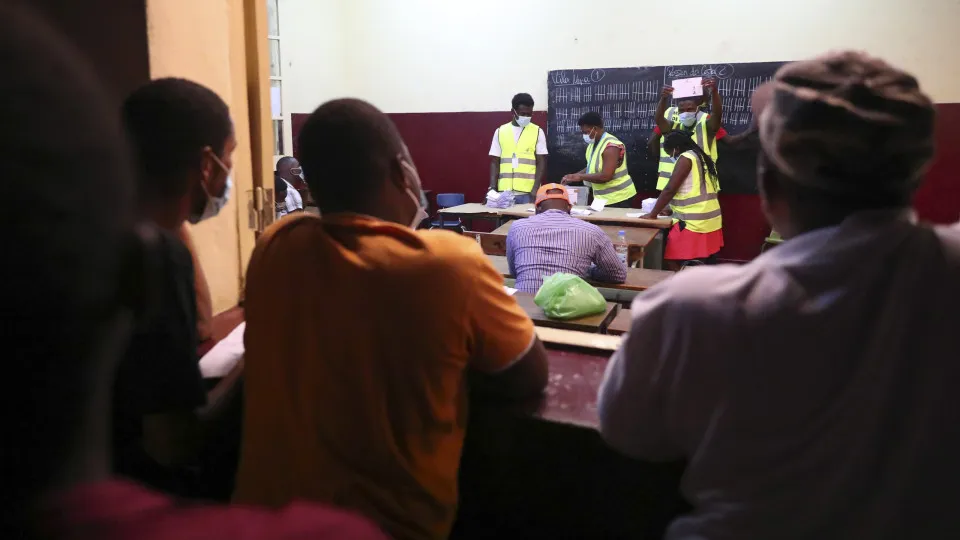
Japan and the United Nations Development Programme (UNDP) today welcomed the election, for the first time, of 19 women to the Santomese parliament, making themselves available to support to ensure that they have “full participation” and “free of intimidation and violence”.
© Lusa
09/11/2026
by
Lusa
O Japan and the United Nations Development Programme (UNDP) today welcomed the election, for the first time, of 19 women to the Santomese parliament, making themselves available to support to ensure that they have “full participation” and “free of intimidation and violence”.
According to an article of opinion signed by the Japanese ambassador to São Tomé and Príncipe, Yoshio Ando, and the resident representative of the (PNUD) in the country, Luc Gnonlonfoun, the number of women elected to parliament increased from eight (14.5%) in the last legislature to 19 (34.5%) Members, among the 55 elected of the new legislature that will begin on Tuesday.
“ Behind these figures is an important step forward for political representation and for San Tomese democracy. A breakthrough that needs to be welcomed and, above all, consolidated”, they stress, recalling that the advance is the result of “a sovereign decision of the country, which in 2022 adopted a parity law that provides for a minimum representation of 40% of each sex on the lists of candidates and lays down rules for ordering applications on those lists”.
The law was implemented for the first time in the elections on 27 September this year, and relied on support from Japan and UNDP, which together with other institutions, including a Committee on the Follow-up of the Parity Law, promoted debates, formations and awareness to state bodies, political parties, media and other authors.
According to the article, of the 19 elected Members, “16 had never exercised an elective mandate”, and they argue that “they will have to become familiar with the procedures of the Assembly, the work in committee, the assessment of texts, the supervision of public action and the debate on the budget”.
“ They should be able to do so in an environment that promotes full and effective participation, free from intimidation and violence, including in the digital space”, the representatives of Japan and UNDP emphasize.
For them, “to move from places to influence means, therefore, to go beyond increasing the visibility of elected Members”, meaning the need to “create conditions so that they can effectively exercise their mandate, contribute to national priorities and assume parliamentary responsibilities, respecting the rules of the institution and the prerogatives of its members”.
“It goes beyond this legislature. It is also important to preserve the achievements of the law, draw lessons from its application, strengthen citizens’ confidence in democratic institutions and open perspectives to the next generation of leading women”, they defend, highlighting everyone’s involvement in political participation to become “a real possibility in all regions of the country and no longer be an exception reserved for some individual paths”.
They also ensure that “Japan and UNDP maintain their commitment to this common ambition” in dialogue with the national authorities and partners involved.
Japan has been one of the main funders of the elections in São Tomé and Príncipe, through a counterpart fund for the sale of tonnes of rice that the Japanese Government offers to the archipelago annually.