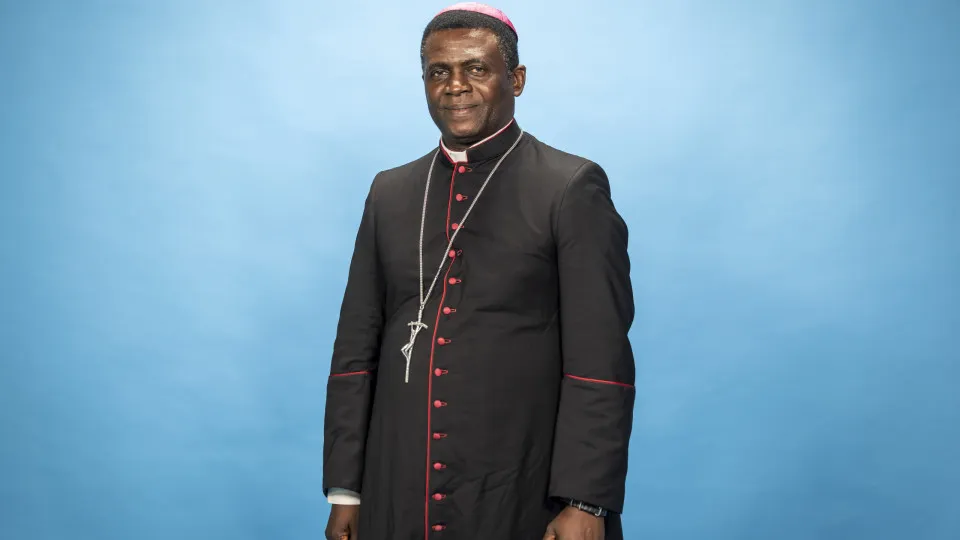
The Catholic bishop of Katsina in Nigeria considered to Lusa that insecurity, the expansion of extremist ideologies and inflation are the main challenges of Africa's most populous country.
© Lusa
18/11/2026
by
Lusa
O catholic bishop of Katsina, Nigeria, considered to Lusa that insecurity, the expansion of extremist ideologies and inflation are the main challenges of Africa's most populous country.
In an interview with Lusa, during a visit to Portugal, Gerald Mamman Musa described his country as having vast natural resources, a rapidly growing population and high human potential. However, he also said that Nigeria is faced with violence, kidnapping and forced displacement of communities.
In this follow-up, asked about the biggest problems facing the country, he replied: “The greatest difficulty we are facing at the moment is insecurity”, caused by different forms of crime and by the action of extremist religious groups.
In addition, according to the head of the diocese of Katsina in northwest Nigeria, the other major concern of Nigerians is the economy, due to the rise in food prices and other essential goods.
The diocese of Katsina was founded three years ago by Pope Francis in a region where 98% of the population is Muslim.
On religious coexistence, he replied that coexistence between Christians and Muslims was marked for decades by good relations, even in regions where Christians are a minority, as is the case with him.
For his part, he warned that new religious movements with extremist positions are emerging and that they are politically instrumentalizing religion undermine the relations and coexistence that existed.
“There are groups that are emerging, new religious movements that bring all kinds of extremist views and introduce politics into religion,” he said.
An example of this is the fact that, last year, during Ramadan – the most sacred month of Islam – schools closed and Catholic children could not attend classes, he reported, adding that justifications were requested from the local government, but that the answers never arrived.
The person responsible says that this measure harms Christian children and worsens the educational difficulties of the region.
The pontiff also reported cases of Christians who had been refused professional promotions due to religion and candidates allegedly prevented from accessing certain institutions for having Christian names.
But despite some extremists offending Christians, he reported, calling them, in particular, infidels, or trying to keep them from political life, he stressed that “most Muslims maintain a relationship of respect with Christians” and “not all Muslims persecute Christians.”.
Violence, in general, has caused people to flee to other regions of Nigeria and neighbouring countries, including Niger, Cameroon and Chad.
Just last week, the UN refugee agency reported that nearly 64,000 Nigerians have fled to Niger since the beginning of the year.
The bishop explained that the Church seeks to accompany the displaced through priests and catechists, but stressed that assistance is not limited to Christians and that they also support Muslims.
In the state of Katsina the Church develops social and educational support initiatives, including literacy programs and teacher availability, he said.
“ Even not belonging to the same religion, we do our best to support them ", said.
Asked about the abductions in the country, he replied that these are one of the main criminal activities in Nigeria.
The clergyman confirmed that the motive is to obtain money by paying ransoms, a practice that is not legal, but is known, according to his account, that the government itself pays ransoms.
“ Although some have religious or political reasons, in the end large ransoms are paid to the kidnappers ", explained.
The bishop also denounced alleged links between insecurity, exploitation of mineral resources and interests of political leaders, arguing that certain situations of violence may favor mining activities.
Bishop Gerald Mamman Musa is in Portugal between 15 and 22 November, at the invitation of the AIS Foundation for the ‘RedWeek’ 2026, the organization’s annual initiative to raise awareness of issues such as religious persecution and the defense of religious freedom.