
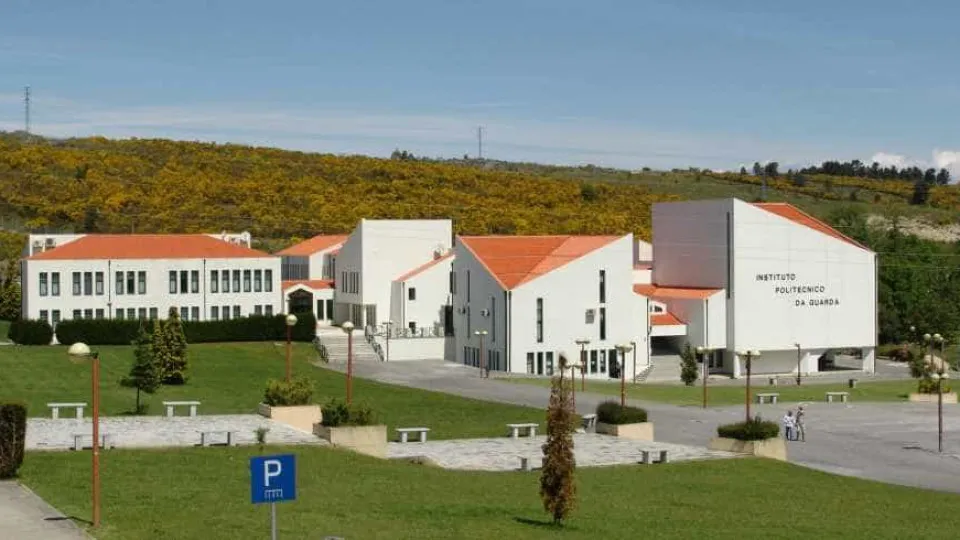
The Polytechnic Guard University (UPG) has, for the second consecutive year, five researchers among the 2% of the most cited scientists in the world, according to the most prestigious world research ranking, announced the institution today.
© Wikimedia Commons
16/10/2026
by
Lusa
A Polytechnic Guard University (UPG) has, for the second consecutive year, five researchers among the 2% of the most cited scientists in the world, according to the most prestigious world research ranking, announced today the institution.
The prestigious World’s Top 2% Scientists list 2026 was prepared by Stanford University (USA) in collaboration with Elsevier.
“The confirmation, for the second consecutive year, of the interest that the work of researchers from the Polytechnic Guard University awakens in the world academic media is an important recognition of the scientific capacity we have been building,” says Joaquim Brigas, rector of UPG, quoted in a statement sent to the Lusa agency.
For the person responsible, this result “values the work of our researchers and teams and demonstrates that UPG has the skills and scientific capacity to continue to grow and assert itself inside and outside the country”.
The presence of five UPG professors and researchers in this group “restricted and with the greatest scientific impact worldwide” results from the Scopus database citation indicators, one of the largest and most complete indexing platforms for scientific publications worldwide – also managed by Elsevier.
According to UPG, the maintenance of these researchers in the World’s Top 2% Scientists ranking is “a new indicator of the scientific capacity of the Polytechnic Guard University” and results from “the priority given to research” in the institution.
The list is based on standardized citation metrics that include total citations, and data extracted from the Scopus database are updated by the end of 2025.
The selection is based on the 100,000 best scientists per c-score (with and without self-citations) or a percentile classification equal to or greater than 2% in the sub-area, specifies the UPG.
The version now released is based on the snapshot of Scopus on August 1, 2026, updated until the end of the 2025 citation year.
“ This result is a good reflection of the work carried out by teams and research units working in their schools, as well as the participation of UPP in scientific projects and in national and international collaboration networks.”.
The UPG leads six international projects and 15 national projects, developed in partnership with universities, research centers, companies, municipalities, IPSS (private institutions of social solidarity) and other organizations.
The institution also participates in 71 projects launched in recent years, almost all still ongoing.
“It’s a universe of 136 million euros applied in science, of which the UPG directly manages 15.5 million. Only last June and July, this work resulted in two applications for national patents and an international patent application”, recalls the UPG.
Joaquim Brigas stresses that these results and the international recognition of the institution have “a particular meaning when we are developing the process of evolution for University”.
“ Scientific research, advanced training and the ability to produce and transfer knowledge are fundamental dimensions of the institutional project we are building,” he added.
According to the dean of UPG, the University wants to combine “academic and scientific excellence with a strong connection to the territory, capable of contributing to innovation, the competitiveness of companies and the development of the region”.
The UPG currently participates in six research & development units (R&D) active in various scientific and technological areas with a positive classification of the Foundation for Science and Technology (FCT), four of them with the classification “Very Good”.