
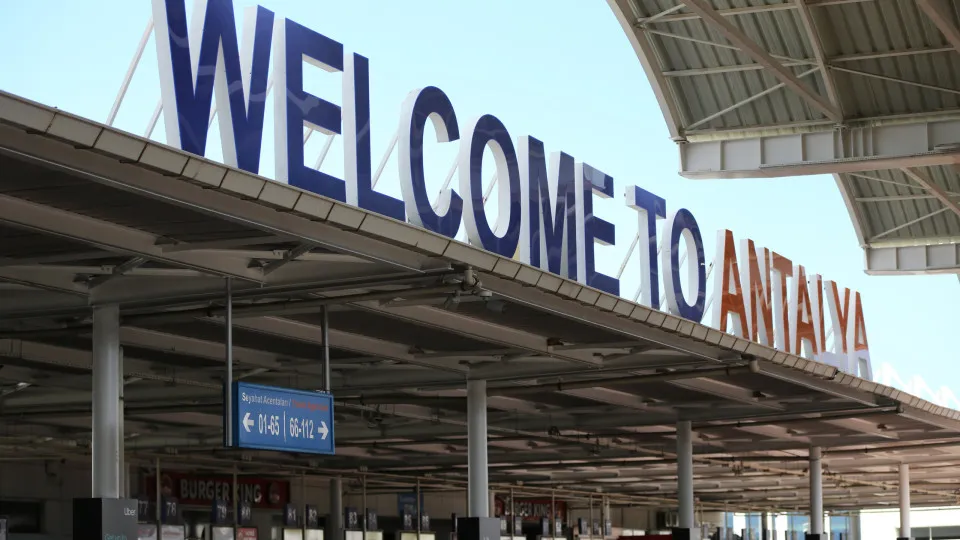
Portuguese environmental organizations heard by Lusa require COP31 to implement the climate commitments made at previous conferences, with decisions on the energy transition, climate financing and the protection of the most vulnerable communities.
© Fatih Hepokur/Anadolu via Getty Images
07/11/2026
by
Lusa
Oportuguese environmental organizations heard by Lusa argued that the climate summit should implement the commitments made at previous conferences, with decisions on energy transition, climate financing and the protection of the most vulnerable communities.
“ If this is not the COP of implementation, it really is the bankruptcy of a whole system ", said Lusa the Policy and Climate Coordinator of WWF Portugal, Bianca Mattos.
The 31st United Nations Conference on Climate Change (COP31) will take place from 9 to 20 November in the Turkish city of Antalia, with the mission of accelerating emissions reduction and strengthening funding for the adaptation of developing countries, which, according to the United Nations Environment Programme, receive only one tenth of what they need for this purpose.
“ Everybody says what they're gonna do, put it on paper, make deals. And when it comes to implementing, it is the big problem,” said Bianca Mattos, denouncing that developed countries “continue to make this conversation a little difficult and try to reduce their responsibilities.”.
WWF Portugal therefore wants funding to reduce emissions, strengthen adaptation to climate change and finance to compensate for losses and damage to countries and vulnerable populations in particular.
It also argues that biodiversity conservation, including ocean conservation, is part of the climate response: “These two agendas need to keep going together more and more,” he said.
The United Nations Environment Programme (UNEP) estimated this week that developing countries need around 305 billion dollars (EUR 272 billion) per year by 2035 to protect themselves from droughts, floods, heat waves and other climate impacts.
In 2024, last year with available data, international public funding for adaptation was between $28.2 and $31.7 billion, according to the report released on Wednesday.
In order to strengthen climate finance, Greenpeace Portugal wants the countries gathered in Antalia to make oil companies contribute directly to climate finance through a progressive tax on their extraordinary profits.
The environmental organization argues that global climate finance “must be based on the polluter – payer principle” and that, in addition to tax revenue, funds saved with the end of public subsidies for fossil fuels are used to finance climate response.
“ We cannot accept that the response to the most vulnerable communities, which contributed less to the problem, will continue to depend on charity or new debt,” said the director of Greenpeace Portugal to Lusa.
Toni Melajoki Roseiro argued that COP31 should formalise the Santa Marta process (an international initiative outside the formal UN negotiations) and force countries to present national roadmaps with dates to stop using oil, gas and coal.
“Greenpeace Portugal considers that the planet cannot accept generic declarations of intent or commitments without legal force. The COP31 will only be a success if it produces immediate and binding decisions”, he stressed, adding that it understands “perfectly the skepticism of those who remember that in Bethlehem already called for a ‘COP of realization’”
“The difference is that today planetary physics and the real economy have no longer left room for diplomatic postponement” and that “science has exhausted excuses,” he said.
“ Overrun the 1.5 threshold °C will trigger irreversible non-return points in the Amazon, the Atlantic and polar ice, so immediate action is no longer a political choice to be a matter of survival,” he stressed.
The President of Quercus, Alexandra Azevedo, argued to Lusa that COP31 should give practical application to the Belém mechanism for a fair transition and bring to the high-level negotiations sectors such as agriculture, forest and food, which she still considers to be too forward for parallel events.
“ Policies cannot be missed by communities,” he said.
The fair transition should guide the policies of all countries and rely on funding to enable the necessary investments, even when the amounts are modest, it considered.