
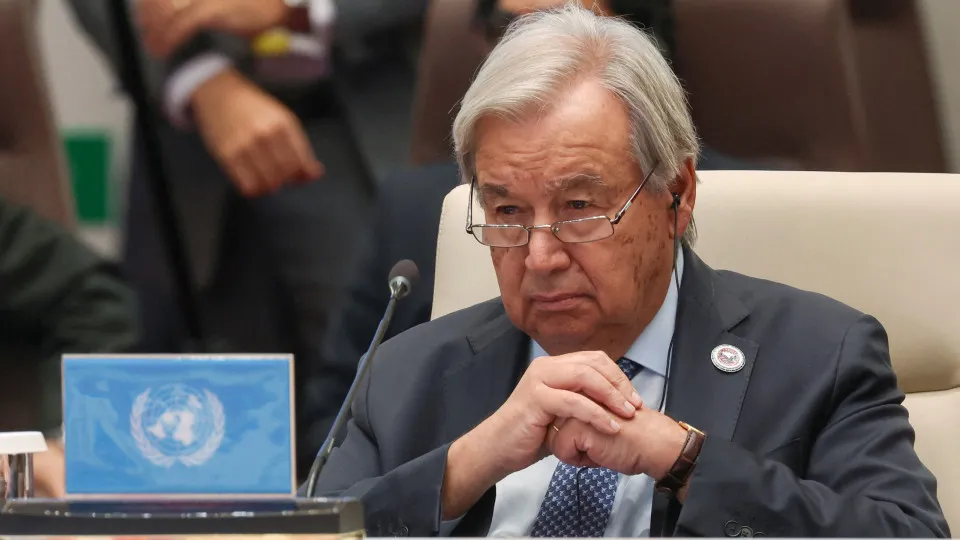
The Secretary-General of the United Nations, António Guterres, asked on Monday for a “permanent ceasefire” in Gaza between Israel and Hamas, two days before the third anniversary of the attack of October 7, 2023.
© Vyacheslav PROKOFYEV / POOL / AFP via Getty Images
06/10/2026
by
Lusa
“IT IS time for the ceasefire to become permanent. It is time for large-scale humanitarian aid. And it is time to respect international law,” Guterres said in a statement.
“ We must build a political path to lasting peace throughout the region. The United Nations remains firm in its commitment to these imperatives,” he added, calling for the construction of “a future in which Israelis and Palestinians can live side by side in peace and security, with their rights, dignity and aspirations fully fulfilled”.
The attacks led by the Palestinian Islamist group Hamas on Israeli soil on 7 October 2023, described as “abhorable” by the UN Secretary-General, resulted in the death of more than 1,200 Israelis, most of whom were civilians, and took 250 hostages.
The retaliation offensive launched by Israel in Gaza has killed more than 74,200 people, according to the Ministry of Health of the Palestinian territory, which is under Hamas control, but whose figures are considered reliable by the UN.
“ I deeply regret the deaths suffered in the attacks and those of those who died in captivity. Their suffering and the uncountable pain of their families should never be forgotten”, he wrote. Guterres, recalling that in the Palestinian enclave, “civilians continue to endure intolerable conditions. His suffering also requires this to end now.”.
Since the ceasefire announced by American President Donald Trump in October 2025, the political future of the territory remains uncertain.
Israel, which still controls most of Gaza, refuses to withdraw its forces until Hamas is disarmed.
Hamas, in turn, advocates gradual disarmament rather than an immediate and unilateral surrender of its arsenal.
Following the Hamas attack, Israel fought on several fronts, mainly in Lebanon against the Shia group Hezbollah, supported by Tehran, as well as Iran.