
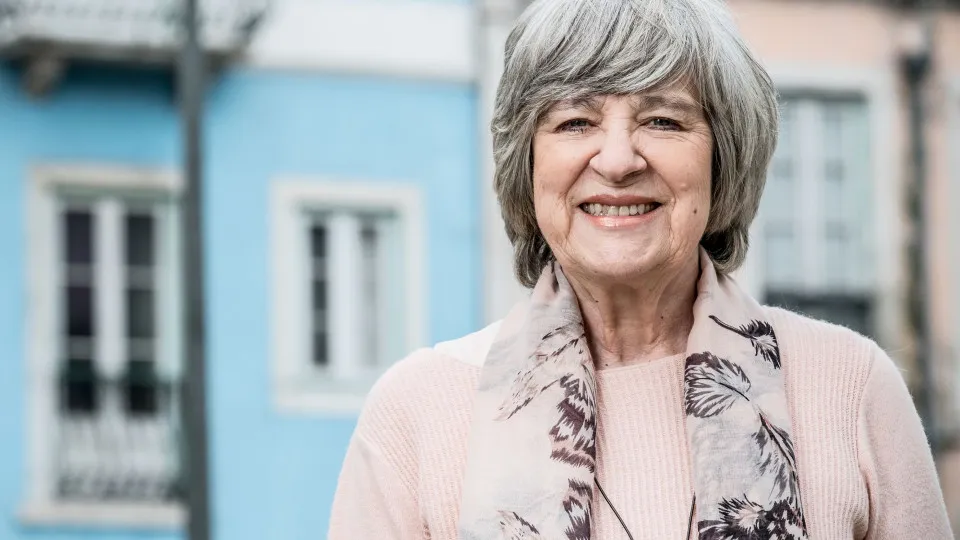
The architect and former deputy Helena Roseta sees in the camped by the right to housing “collective intelligence demonstrations”, highlighting a mix of people, including a stuck middle class and a new generation of leadership.
© Global Images
03/11/2026
by
Lusa
A architect and former deputy Helena Roseta sees in the camped by the right to housing “collective intelligence demonstrations”, of which participates “a mixture” of people, standing out “a stuck middle class”, and “a new generation of leadership is being born”.
Member of the Constituent Assembly, in 1975, Helena Roseta has regularly attended the popular assemblies that take place at Praça D. Pedro IV in Lisbon.
“ They are manifestations of collective intelligence, which is being built, which is why I am very interested in going there to see them, to go there to hear them, to understand who they are (...), who these people are”, he said, in an interview with Lusa.
And who are they, in your opinion? “It’s a stuck middle class, many of those people have never been to any demonstration,” he says, considering that “the government is completely mistaken in its reading.”.
Among the protesters there are also “people who come from the old days” and “kids already very mobilized, with political awareness, who are very radical and demanding and want urgent change”.
But there are above all “many people who are simply saying ‘this can’t, can’t, can’t, can’t, can’t’”.
The movement in progress has similar and new characteristics in relation to previous ones, but what does not have “is an infiltration of left-wing parties”, he stresses.
“ It’s not like that, there are people there who have never been anywhere, they’re people who want to participate, but don’t even find a way to participate in the existing parties” and “very young people who are participating for the first time”, he describes.
“To not understand this is not to understand anything that is going on,” he says, urging the rulers to go to the demonstrations, “without more or less persecutory intent”, to see as “they are mistaken in reading”.
In the current scenario, the former deputy – elected, at different times, in lists of PPD/PSD and PS – does not doubt the relevance of António José Seguro in the current scenario of political and social tension.
“It’s the President’s time, the President of the Republic has a central role in moments of great social disturbance, he has to use the power of the word, the power of influence, (...) to calm the hosts, to create space for mediation”, he calls, praising Insurance for, “through the Civil House, to indicate that he wants to hear the protesters” for the right to housing.
In Helena Roseta’s opinion, the Minister of Internal Administration “has already given what he had to give” and was “a monumental casting error”, so “it has to be quickly replaced”.
Luís Neves “is being the author of these messes, because it is from him that the orders come out, the Prime Minister hides,” says the architect, recalling that, in 2000, when he was President of the Republic, Jorge Sampaio, “also put enormous pressure” on the equally socialist António Guterres, when he was Prime Minister, to fire the then Minister of Sport, Armando Vara, and the “problem” of that time was not “authority, but ethical in nature”.
Knowing that the composition of the Government is the responsibility of Luís Montenegro, “the President has a say to the Prime Minister when things are going beyond the limits of what is reasonable, which is the case,” he understands.
The protesters arrested in police interventions – “on pretexts that we are still to be ascertained” – “they risked a lot”, notes, recalling that they were accused of a crime of qualified disobedience, which has a criminal frame up to two years in prison.
“This makes me even more considerate of them,” he admits, noting that “disobedience to authority is only a crime if it is a legitimate order.”.
Having as “criteria” the Constitution – which helped to draft – Helena Roseta recalls that there is the right to demonstrate and the right to housing.
The fundamental law “says that it is up to the State to establish a system of income compatible with family income”, says the author of the Housing Bases Act.
“ Where is that, what are you doing to make this a match? ‘Oh, we are taking many steps to increase the supply’. How long does that take? Compatible with family income already, there are many people who are already paying things completely out of their capacity. What measures are they taking to do this?”, he asks, accusing the government of adopting “a law that further aggravates this, which still makes it possible to increase the value of rents, which still allows people to be evicted with shorter deadlines, more expeditiously and with contracts that do not reach three years”.
For Roseta, the new urban lease law – already passed in general, in parliament, with the votes in favour of PSD and CDS-PP and the abstention of the Aquiza – “is completely contrary to what is in the Constitution”.
In the streets, the architect has sensed “indignation and revolt”, observing a social movement in “the nascent state”, as the Italian sociologist Francesco Alberoni classified, and “this is something that gives enormous enthusiasm”, notes the former autarch (president of the House of Cascais, councilor of the Lisbon City Council, president of the Lisbon Municipal Assembly).
Camps have shown “a great effort” to organize themselves “without being by the traditional model of political parties”, leadership and bases.
This “democratic innovation” must be accompanied by: “We need to learn to have shared leaderships. Traditional leadership, which is inspired by armies and churches, has already called out. The world no longer works that way.”