
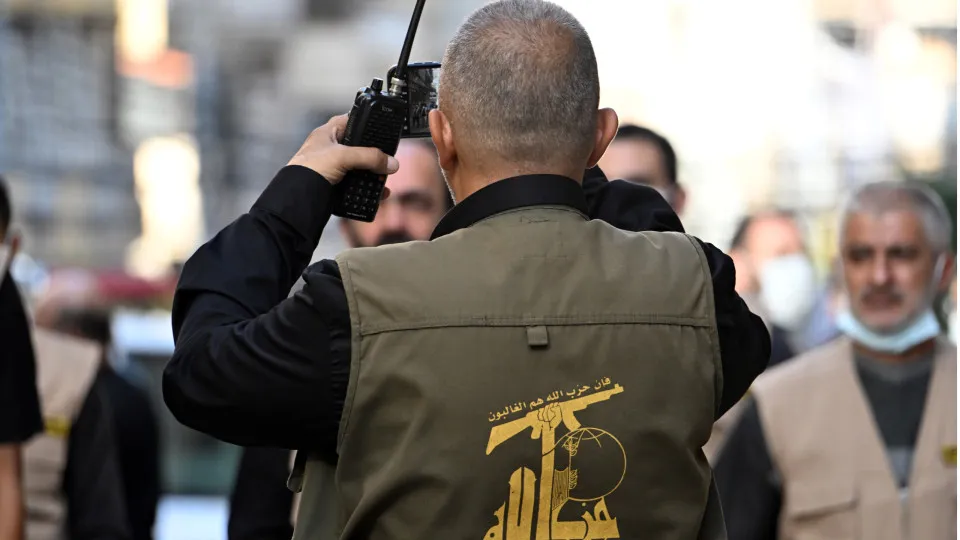
The Lebanese Shia group Hezbollah will pay up to $14,000 (12.5 thousand) of aid to families whose homes in Lebanon have been destroyed or become uninhabitable in the war with Israel, announced today.
© Getty Images/Houssam Shbaro/Anadolu
13/10/2026
by
Lusa
O lebanese Shiite group Hezbollah will pay up to $14,000 (12.5 thousand) of aid to families whose homes in Lebanon were destroyed or became uninhabitable in the war with Israel, it was announced today.
Accusing the Lebanese State of failing to fulfil its obligations to assist displaced persons, the head of the Group’s Executive Board advised, at a press conference, that families who lost their homes will receive a repair.
Whoever had a home in Beirut and in its southern suburbs will receive 12.5 thousand euros each, whoever had other parts of Lebanon will receive $10,000, he explained.
Each payment includes €7,000 for furniture, and the remainder is intended to cover the rent.
Daamoush did not advance how many families will benefit nor the total value of payments.
The money for this measure probably came from Iran, which provided billions of euros and weapons to Hezbollah over decades.
The initiative seems to aim to strengthen support between the militant group base and Iran-supported political party and signal a challenge to the Lebanese government and the United States, which have sought to cut Hezbollah funding.
The press conference was the first in the group on repairs since the last two wars with Israel, which killed over 8,000 people and destroyed tens of thousands of homes in Lebanon.
In recent years, the United States has increased sanctions against individuals and institutions that Washington claims to be used by Hezbollah to channel money to Lebanon.
Iran's flights to Lebanon have been banned for almost two years as part of efforts to pressure the Shia group.
The last war began when Hezbollah launched rockets against Israel in early March, two days after the US and Israel started a war against Iran.
Israel launched a land invasion, capturing dozens of Lebanese villages and cities along the border, before a US-mediated ceasefire ended the conflict at the end of June.
About 1.2 million people were displaced in Lebanon at the height of the war.
Most have returned home since the ceasefire, but more than 300,000 remain displaced, according to the International Organization for Migration.
A framework agreement signed by Lebanon, Israel and the United States in Washington on 26 June commits Lebanon and the US to prevent reconstruction funds from reaching entities or individuals affiliated with non-state armed groups and taking appropriate legal measures to prohibit their activities.
According to the document, Israeli forces should gradually withdraw from southern Lebanon and surrender control to the Lebanese army, while Hezbollah should be disarmed, but implementation is paralyzed.
Hezbollah rejected the agreements signed earlier this year, following rare direct talks in Washington and Rome between Lebanon and Israel, which officially still remain in a state of war.
U.S. State Department spokesman Tommy Pigott told Lebanese news agency This is Beirut last week that the money Hezbollah is promising doesn't exist.
If the money were in Iran, he added, “it would not be possible to deliver it to Hezbollah due to the [North American] efforts to isolate the Iranian regime from its terrorist groups.”.
Asked about these statements, Daamoush rejected being concerned, adding that Hezbollah is “working to serve the people.”.