
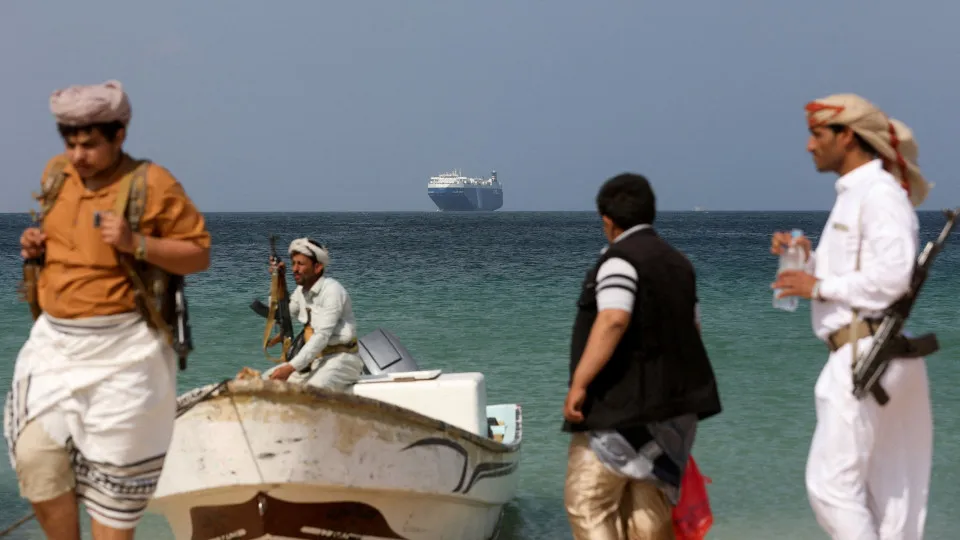
The Huthis rebels of Yemen today confirmed that the number of deaths in an attack on a market in the southwest of the country rose to 30, with eight wounded, according to a statement released by the agency Saba.
© Reuters
06/11/2026
by
Lusa
Othe Huthis rebels of Yemen announced today that they have risen to 30 deaths in an attack on a market in the southwest of the country, which they attribute to Saudi Arabia.
In a statement released by the news agency of the Saba movement, the Ministry of Health Huthi reported 30 dead and eight injured, adding that the rescue teams continued “the search operations of bodies under the rubble.”.
The rebels' previous balance sheet accounted for at least 20 dead and ten wounded.
The bombings took place in Taiz Province, whose homonymous city in the west of the country has been surrounded for weeks by the Huthis.
Saudi aviation carried out three attacks on a market, causing 30 deaths and eight injuries among the civilian population, said the Ministry of Health controlled by the pro-Iran armed group.
The military spokesman for the movement, Yahya Saree, required that the attacks were carried out by a plane that took off from the Saudi base of Khamis Mushait in the south of the Saudi kingdom.
For their part, the government forces, supported by Riyadh, accused the enemy of attacking the market with a ballistic missile, and their spokesman, Majid al-Nazili, denounced a “war crime”.
Yemen plunged again into the war in July, after years of calm, opening a new front in the conflict in the Middle East.
Pro-Iranian fighters launched an offensive in the west of the country in September, which allowed them to strengthen their dominance over Bab el-Mandeb's narrow strategic, linking Europe to Asia via the Suez Canal.
Huthis rebels, a pro-Iran group, dominate much of Yemeni territory, including the capital Sana.
The internationally recognized Yemeni Government Army is fighting the rebels with the help of a coalition led by Saudi Arabia.
Started in 2014, the conflict in Yemen, the poorest country in the Arabian Peninsula, was resumed in July, in the context of the regional war, after four years of relative calm.
Since the summer, clashes have caused more than 1,600 deaths and 300,000 displaced, according to UN data, with no prospect of a diplomatic solution in the short term.