
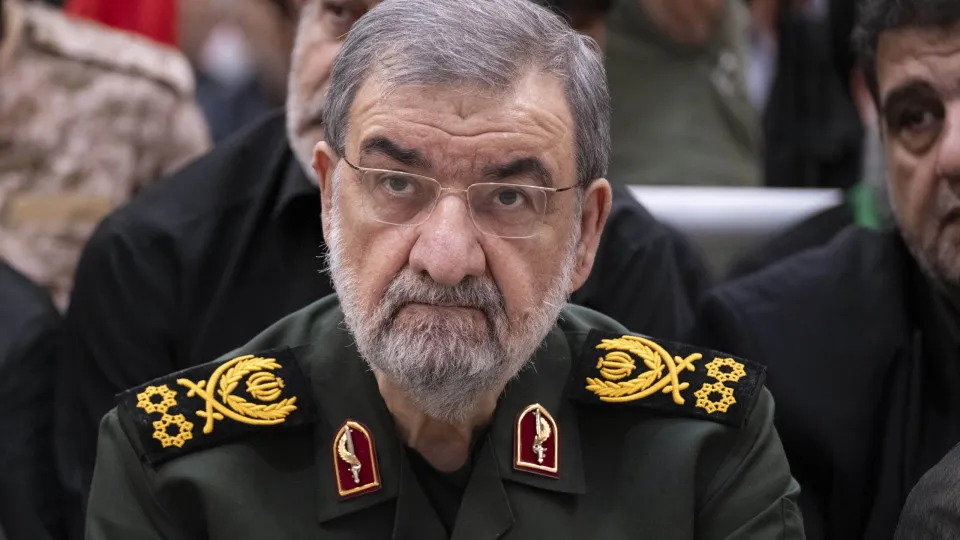
Iran’s Secretary of the Supreme National Security Council, Mohsen Rezaei, spoke to Russian President Vladimir Putin about the war in the Middle East today, reported to the Iranian state agency without further details.
© Morteza Nikoubazl/NurPhoto via Getty Images
02/11/2026
by
Lusa
O secretary of Iran’s Supreme National Security Council, Mohsen Rezaei, spoke with Russian President Vladimir Putin about the war in the Middle East, reported today to the Iranian state agency without further details.
Pray and Putin “discussed the current situation [...] in the Middle East,” he limited himself to reporting to the official news agency Irna, at a time when the United States and Israel have intensified in recent days the threats of a resumption of hostilities against the Islamic Republic.
Also today, the Russian Ministry of Foreign Affairs expressed concern about the situation in Iran following signs that further US military attacks may occur against the Islamic Republic.
“ The signs that new military actions are being planned against the Islamic Republic are extremely worrying,” said Russian minister Maria Zakhrova, who also stressed the need to intensify diplomatic efforts to normalize the situation in the country.
“ We support the efforts of the mediators and, on our part, we facilitate the negotiation process. We reiterate our willingness to contribute both to the search for mutually acceptable solutions and to their further implementation,” he said.
In early October, Putin assured Iran's counterpart Masoud Pezeshkian that Russia was ready to contribute to mediation efforts between Iran and the United States in the Middle East war.
On Sunday, during a rally in Iowa and a few days from Tuesday's mid-term elections, American President Donald Trump threatened to launch new attacks against Iran.
At the same time, the US media reported that Trump approached with Israeli Prime Minister Benjamin Netanyahu the possibility of resuming the bombings.
The American publication The Atlantic has presented several possible scenarios for a military campaign in Iran that Washington may consider after the mid-term elections, including attacks on the Iranian nuclear program and military infrastructure. However, publication does not exclude a diplomatic solution.
The war in the Middle East began on 28 February with US and Israeli attacks on Iran.
Tehran retaliated with attacks against Israel and US facilities throughout the region, also restricting maritime traffic in the strategic Strait of Ormuz.
Qatar and Pakistan have played the role of mediators in their efforts to resume peace negotiations after a ceasefire agreement reached in April.
Diplomatic diligence has not resulted in a lasting agreement.
Iranian Foreign Minister Abbas Araghchi declared in recent days that Tehran was discussing with the two mediators a plan to end the war and reopen the Strait of Ormuz.
At the same time, the United States imposed a blockade on Iranian ports, further restricting Tehran's ability to export its oil and trade.
Among other conditions for reopening the strait, Tehran demands that Washington cease-fire throughout the Middle East, thawing Iranian goods abroad, lifting sanctions and ending the US naval blockade.