
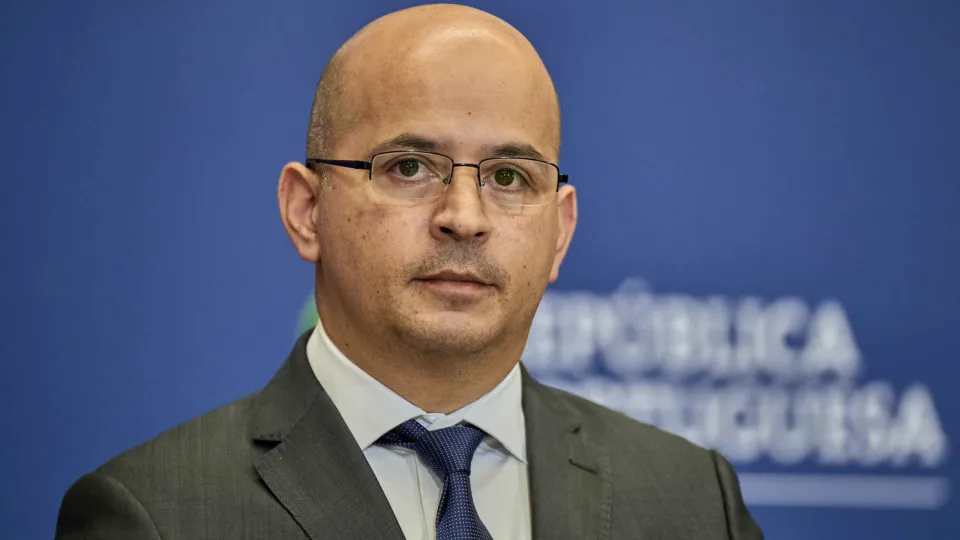
The Portuguese member of the European Court of Auditors, João Leão, today defended the need to define clearer milestones and targets for assessing the implementation of European funds, ensuring greater transparency and ease of verification of compliance.
© Horacio Villalobos#Corbis/Corbis via Getty Images
09/10/2026
by
Lusa
John Lion
O portuguese member of the European Court of Auditors (ECA), former Minister João Leão, today recommended that the milestones and targets to assess the implementation of European funds be better defined to make it easier to verify whether they are met.
“ One of the recommendations we make for the future is that there should be much more defined milestones and targets – more rigorously – and that it should be easier to assess whether they have actually been fulfilled,” he said during the presentation today in Lisbon of the annual ECA report on the European Union (EU) budget for 2025.
In presenting the conclusions to those responsible for the Portuguese public administration, in an open session for journalists, João Leão stressed that sometimes it was not always easy for the ECA to monitor the implementation of the funds associated with the Recovery and Resilience Mechanism (MRR), the European instrument that in Portugal was translated into the Recovery and Resilience Plan (PRR).
“ We felt that in some cases the milestones and targets were unclear. It was not always easy to ascertain whether they had been fulfilled or not,” said the former Minister of Finance of the Government of António Costa (PS) between 2020 and 2022, during the covid-19 pandemic, referring to the experience of the European court, of which it has been part since 1 March 2024.
The recommendation for a greater definition of milestones and targets takes place at a time when the new Multiannual Financial Framework (MFF) of the European Union (EU) for the period 2028 to 2034 proposed by the European Commission, in negotiations between the European Parliament and the Member States, provides for a change of philosophy in the delivery of financial envelopes.
As with the MRR and its national RRPs, the functioning of European funds goes from the traditional model of reimbursement of eligible costs to a model of financing dependent on meeting milestones and targets, linked to reforms and investments, with a reduction in the number of programmes (from 52 to 16) and the number of indicators (from 5,000 to 900).
With regard to the annual ECA report released in Brussels this week, João Leão recalled today in Lisbon that the court examined 37 grant payments in 2025, covering 200 milestones and 220 targets, and found that 16 of the 420 milestones and targets examined did not meet the eligibility and payment conditions.
This circumstance, he said, has “a financial impact higher than materiality”, hence the European Court of Auditors has issued “an opinion with reservations.
João Leão also stated that in 2025 the court reported 17 cases of suspected fraud in respect of years prior to the European Anti-Fraud Office (OLAF), the European Union body responsible for investigating cases of fraud affecting the European budget and cases of corruption and serious shortcomings in the institutions. Of this universe, 12 cases were also reported to the European Public Prosecutor's Office.
One of the 17 cases of suspected fraud with Community funds is associated with Portugal, with a value close to EUR 1 million.
On Wednesday, October 7, in Brussels, João Leão had already mentioned that this is “a situation involving a particular company” and a total amount of EUR 755 thousand, with European funding of EUR 391,000 from Portugal 2020.
“ The case has been forwarded to OLAF as well as to the European Public Prosecutor’s Office and the investigation is currently in charge of the European Public Prosecutor’s Office,” he said.