The Kuomintang (KMT), the main opposition party in Taiwan, announced that it will carry out an exhaustive review of the results of the local elections, in which it conquered three municipal chambers less than in 2022.
© Vera Sung / Hans Lucas / AFP via Getty Images
29/11/2026
by
Lusa
O Kuomintang (KMT), the main opposition party in Taiwan, announced that it will carry out a “exhaustive review” of the results of the local Saturday elections, in which it conquered three city councils less than in 2022.
“ We don't have time for self-pity or licking our wounds. Tomorrow, at dawn, we return to work”, said KMT president Cheng Li-wun this Saturday, at a press conference at the party headquarters in Taipei, admitting that the results were below expectations in some regions.
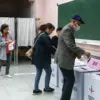
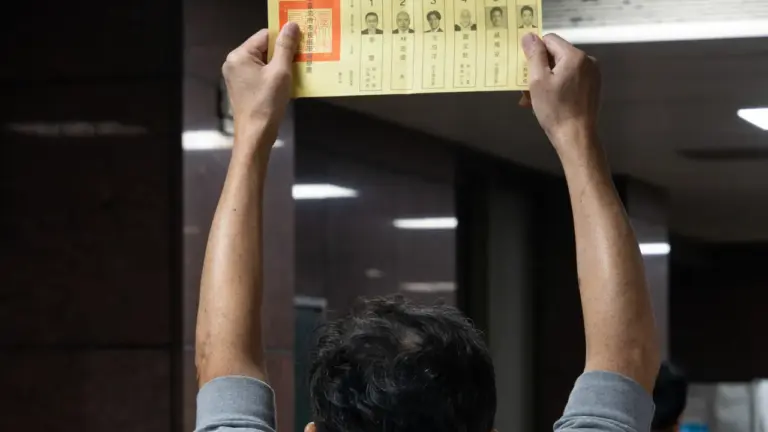
About 20 million citizens were called to the polls to elect public office from all levels of local government, including the presidents of the six special municipalities of Taipei, New Taipei, Taoyuan, Taichung, Tainan and Kaohsiung.
The PDP, the most sobering and ruling party since 2016, has conquered ten of the 22 municipal councils, twice as many as in the last local elections in 2022, while the main opposition party, the Kuomintang (KMT), the defender of closer relations with Beijing, achieved eleven, fewer than in the previous elections.
The KMT, maintained the presidencies of the Taipei and New Taipei Chambers, its two main bastions in the north of the island, but lost Taichung, Taiwan's second most populous city, and obtained fewer PDP votes in the general statement.
Cheng, who met in Beijing last April with Chinese President Xi Jinping, said that these elections were marked by the “widest and most intense judicial interference since the democratisation” of Taiwan, although he acknowledged that unfavorable results cannot be attributed only to this factor.
“There is much to examine and even more room for improvement,” said opposition leader, calling for immediate preparation for the presidential and legislative elections of 2028.
With regard to the referendum promoted by the opposition to recover nuclear power, which received the support of most voters, Cheng defended its reactivation “as quickly and comprehensively as possible”.
“ At this decisive moment, Taiwan cannot allow itself to be left behind on ideological grounds. We must remain at the forefront of change”, he said.
With these results, the KMT faces an uncertain future for the Presidents scheduled for January 2028, as none of its main potential candidates, the outgoing mayor of Taichung, Lu Shiow-yen, and the newly elected mayor of Taipei, Chiang Wan-an, were clearly strengthened from these elections.
The results may favor the current Taiwanese leader, William Lai Ching-te, classified by the Chinese authorities as “independent” and “agitator”, and who will predictably seek a second term in the 2028 presidential elections.
A possible victory would prolong the PDP's stay in power until 2032, making 16 consecutive years of governance.
This view does not please Beijing, which considers Taiwan an “inalienable part” of Chinese territory and does not exclude the use of force to take control of the island.
After the elections, the Chinese Government today warned that “reunification” with Taiwan is an “inevitable” historical trend.
“ As much as the political landscape of the island changes, it cannot change the direction and trend of the development of relations through the narrow. Much less will it be able to stop the great historical trend that the country must meet and inevitably meet,” said Zhang Han, spokesperson for the Taiwanese Affairs Office of the Chinese Council of State.