
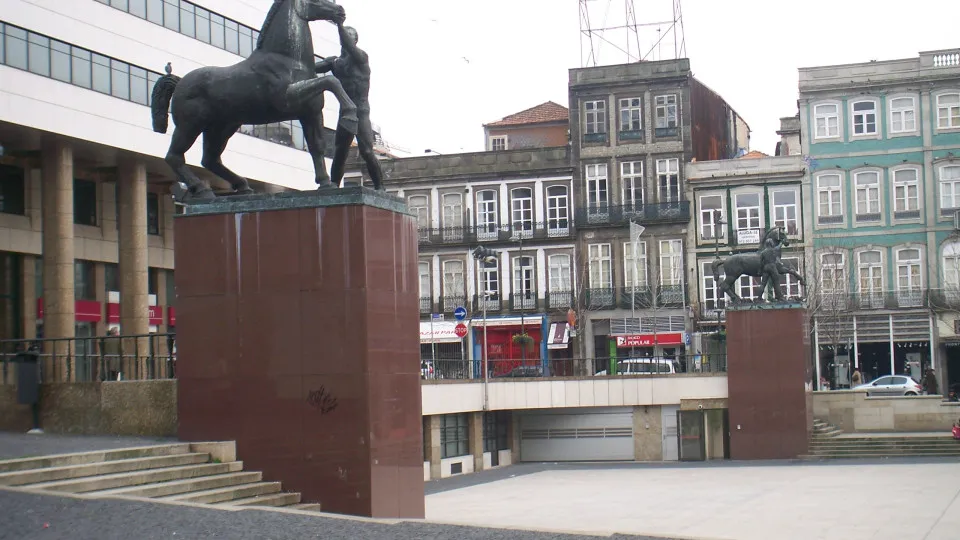
The protest for housing in Praça D. João I, in Porto, remains with logistics, activities and juggling, while the protesters await answers from the mayor.
© Wikimedia Commons/ AntoniusJ
19/10/2026
by
Lusa
O protest time for the dwelling in the camp in Praça D. João I, in Porto, is this morning occupied with logistics, activities, juggling and “many questions” of tourists, facing the attentive look of traders of the area.
In statements to Lusa, Diana Lourenço, one of the spokespersons of the movement that since the 10th is in protest in that square in the city center, explained that last night “was harder”.
“ It was a more complicated night, harder because of the cold. Rest is not complete because we are always afraid of police action, whether there is, or not, we are always vigilant ", he explained.
By 11:00 he said, “about 80 tents are set up in an organized, clean and peaceful manner.”.
Around the square, the life of the city continues. There are tourists, curious, and many questions: “We know that there are protests in various cities in Europe, but we did not think to find tents here,” a Swedish tourist, visiting Portugal, told Lusa “for good weather and food.”.
Curiosity also has tent set up in the square: “They ask us many questions. Tourists, from various countries, children, the population, in general, has been very nice to us, bring food, support words and one or other blanket ", Ana said, who slept in one of the tents of the camp.
How do you spend your time here during the day? “Preparing the logistics of food, safety, cleaning. We are very organized by groups and we take turns so that nothing is missing”, explained Diana Lourenço.
In the center of the square a group juggles, “helps pass the time and entertain, keep the good spirit”, they explain.
“We do not want to be seen as occupied, we have studies, we have jobs, we have ideas and we are fighting for our future. We are not a bunch of unemployed, as some want to make believe”, explained Pedro Ramos, another of the demonstrators.
The protest is also closely followed by local traders, some concerned that there is violence, others sympathetic, all surprised: “I was afraid this would become a circus, but no. They're peaceful. They ask to go to the bathroom, do not consume but ready ", highlighted a coffee maid in the area.
“We don’t use coffee here very much because we can’t be paying two, three or four euros for a coffee to go to the bathroom. These are the prices here. We are not tourists and this is a cost we cannot bear”, complained Amilcar.
The sun began to warm the stone of the square, among the protesters there is talk of the cold, what is expected of them and what is awaited by the popular assembly for the housing, scheduled for the end of the afternoon.
“ We will see today what the group will decide”, said Amilcar.
The time is also occupied with waiting for the decision of the mayor of Porto, Pedro Duarte, on whether to go to the place to talk to the demonstrators: “It was decided to send the invitation to the mayor. Let's see what he decides, we are ready and willing to dialogue, we want answers solutions ", explained the spokesman.
On Sunday afternoon, in statements to journalists, Pedro Duarte (PSD/CDS-PP/IL) said he looked forward to a response from the housing movement to the invitation to a meeting, with the doors of the municipality “always open”.
“ On Thursday, my office contacted the organizers [of the demonstration] so that we could promote a meeting so that we could talk about the housing problem and the invitation remains”, said the mayor.
The movement for housing, which has been held in D. João I Square since the 10th, extended on Sunday evening the notice of demonstration until the 31st of December.
“ We made a warning to stay here from October 21 [Wednesday] to December 31, 2026. Our goal is not to stay until December 31 is to find solutions and an understanding,” the spokesman for the movement, Maria João Callisto, told journalists.
The spokesman pointed out that the current demonstration notice is until Tuesday, hence the need to prolong it.
“ It is a very bad sign if we have to stay here until December 31”, said Maria João Callisto.