
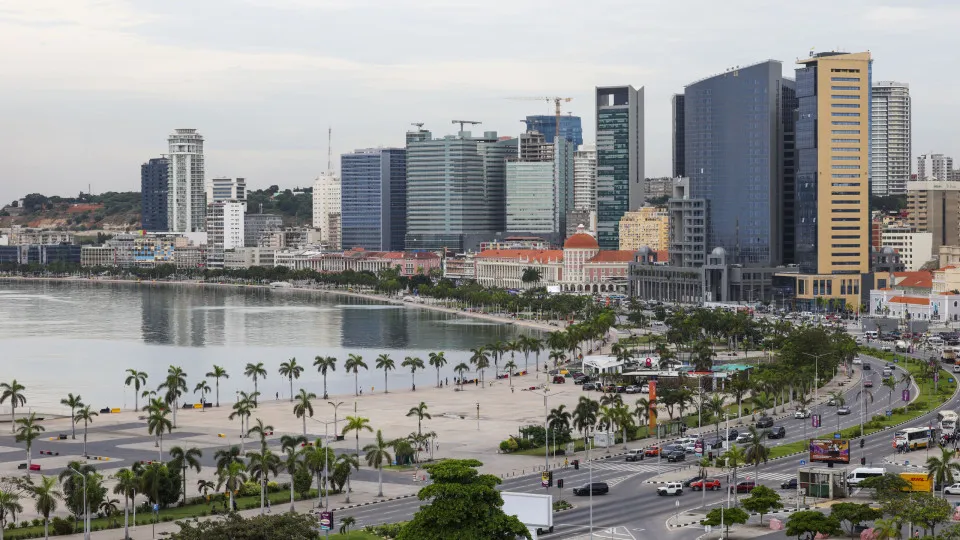
Angola's capital, Luanda, will be the most populous city in sub-Saharan Africa in 2050, with 20.3 million inhabitants, according to the World Bank.
© Lusa
29/10/2026
by
Lusa
A angola's capital, Luanda, will be the most populous sub-Saharan African city in 2050, with 20.3 million inhabitants, supplanting Lagos, Nigeria, due to the growth of 78% in the next two decades, the World Bank is forecast.
“ By 2050, the population of Luanda, the capital of Angola, is expected to increase by 78%, from 11.4 million to 20.3 million, exceeding Lagos as the most populous city in sub-Saharan Africa, reads in the World Bank's report on the cities of the region, which is entitled "The Urban Awakening of Sub-Saharan Africa".
In the forecasts of population growth and the deep economic implications for the region, the World Bank notes that although Lagos loses the title of largest city in the African region, it will grow by 25% by 2050, from 12.8 million to 16.2 million inhabitants.
In the list of the 15 most populous cities in the middle of this century there are no major changes compared to the current ones, except for the entry of the capitals of Mali and Somalia, Bamaco and Mogadishu, respectively, with 7.6 and 7.2 million people.
Kinshasa, in the Democratic Republic of Congo, Dar es Salaam, Tanzania, and Addis Ababa, Ethiopia, will also be among the most populous cities in Africa in 2050, all with more than 10 million inhabitants.
Since 1975, the number of people in urban areas of sub-Saharan Africa has increased by 742.4 million, from 170.2 to 912.6 million, and by 2050, the region will have an almost identical increase, 748 million, bringing the total number of urban inhabitants to 1.7 billion.
With this population growth, the World Bank says that in the coming decades the continent will have to create 15 million new jobs “only to keep pace with the growth of its rapidly expanding young workforce”.
The institution also warns that governments must take “decisive measures to address the main restrictions on urban performance and thus take advantage of a window of opportunity that is closing rapidly”.
Guiding public investment to where it will have the greatest impact on employment and private investment, shaping urban expansion and differentiating approaches to smaller cities are some of the main recommendations.
In the report, the World Bank also states that it views private capital as essential for African development.
Recognising that budgetary constraints do not allow all at the same time, the World Bank says that, in this context of scarcity, “the task is to make a good choice: to invest where public action can stimulate private investment and job creation, to plan ahead enough to guide growth before costs increase and concentrate resources where they can create better economic opportunities.”.