
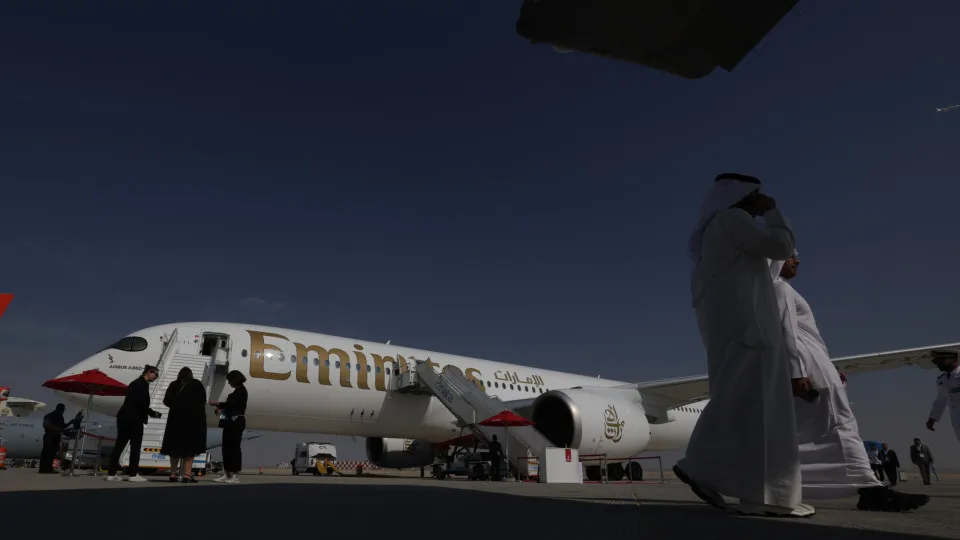
The profit of the Emirates group, owner of the largest airline in the Middle East, fell by 66% in the first half of the fiscal year compared to the homologous period, impacted by war and the rise in oil prices.
© Lusa
05/11/2026
by
Lusa
Emirates
O profit of the Emirates group, owner of the largest airline in the Middle East, fell 66% in the first half of the fiscal year against the homologous period, impacted by war and the rise in oil prices.
Dubai’s main company made a net profit of USD 1 billion (EUR 889.2 million) from April 2026 to March 2027, compared to USD 2.9 billion (EUR 2.5 billion) in the same period last year.
“These last six months have been challenging,” said Emirates’ executive president, Sheikh Ahmed bin Saeed Al Maktoum, in a statement citing “unprecedented regional challenges” and high oil prices.
However, “customer demand remained sound and cargo operations made an important contribution, allowing the revenue and cash to be kept at a satisfactory level, even with the doubling of global aviation kerosene prices compared to the same period last year, which weighed on our costs,” he added.
During this period, the number of employees in the group fell by 2%, to 128,237 people, says the statement.
Air traffic disruptions and travel restrictions linked to the conflict in the Middle East — triggered by attacks by the United States and Israel against Iran on 28 February — affected the results of the group’s airline.
With this, Emirates saw its revenue drop by 13% compared to the previous year, reaching $15.5 billion (EUR 13.7 billion) in the first half, while net profit fell by 66% to $903 million.
Dynata's net profits, another company in the group that provides services at Dubai airport, fell by 56% in a year to $84 million.