
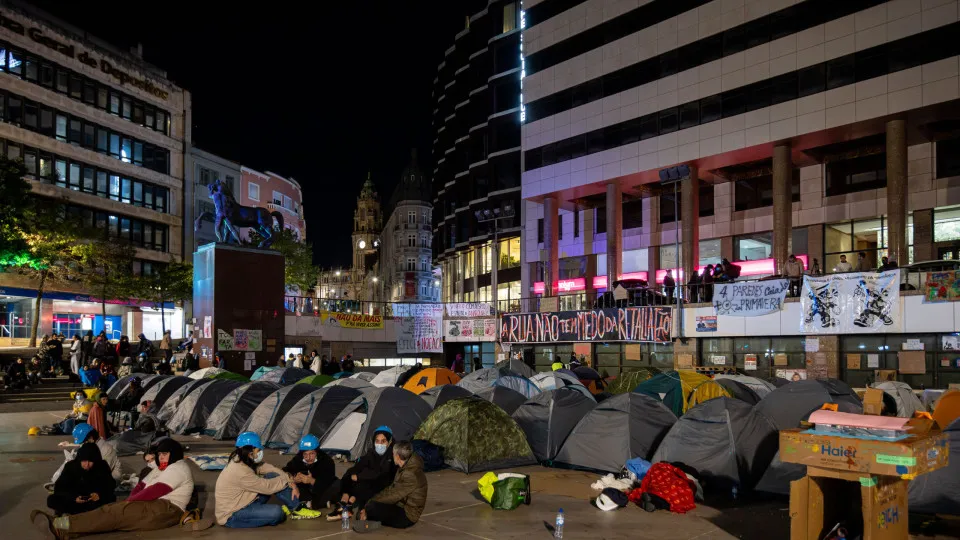
The popular assembly of protesters for the right to housing, which brings together more than 100 people in Praça D. João I, voted and approved to remain in that space during the night and return to "arm the tents".
© Diogo Baptista/SOPA Images/LightRocket via Getty Images
02/11/2026
by
Lusa
A popular assembly of protesters for the right to housing, which gathers more than 100 people in Praça D. João I, in Porto, voted and approved to remain in that space tonight and to "arse the tents".
In an arm-on-arms vote, as has been the case since the beginning of the demonstrations by the right to housing, it was decided by «staying in the square and armed tent».
He explained that the table that conducts the proceedings of the House, which began at 8 p.m. and still takes place, will be the only vote of the evening, and the rest of the House will be dedicated to hearing 'all those who wish to speak' and discussing the subject of housing.
In the square, in addition to that assembly, is being organized the already usual popular canteen, which will serve dozens of meals to protesters and homeless people who have been enjoying dinner there.
On Sunday night, also in popular assembly, the protesters also decided to "arrange tents" and stay overnight in the square, with 10 tents being set up.
At 02:00 in the morning, PSP moved to Praça D. João I, but remained away from the group, having abandoned the place about 90 minutes later and returned already near 05:00, when the protesters yielded to the call to disarm the tents.
In the early hours of Sunday, PSP dispersed the camped by the right to housing in Rossio, in Lisbon, and in Praça D. João I, in Porto, removing about 100 tents. The intervention culminated in police charges and throwing objects, causing more than two dozen wounded between demonstrators and police.
In the camps, which began on October 10, protesters demand the reversal of the new rental law, the end of demolitions and wastes without an alternative housing, a brake on housing purchase by real estate funds, the increase in public housing, the recovery of vacant buildings for housing purposes and ‘truely accessible’ roofs to income.