
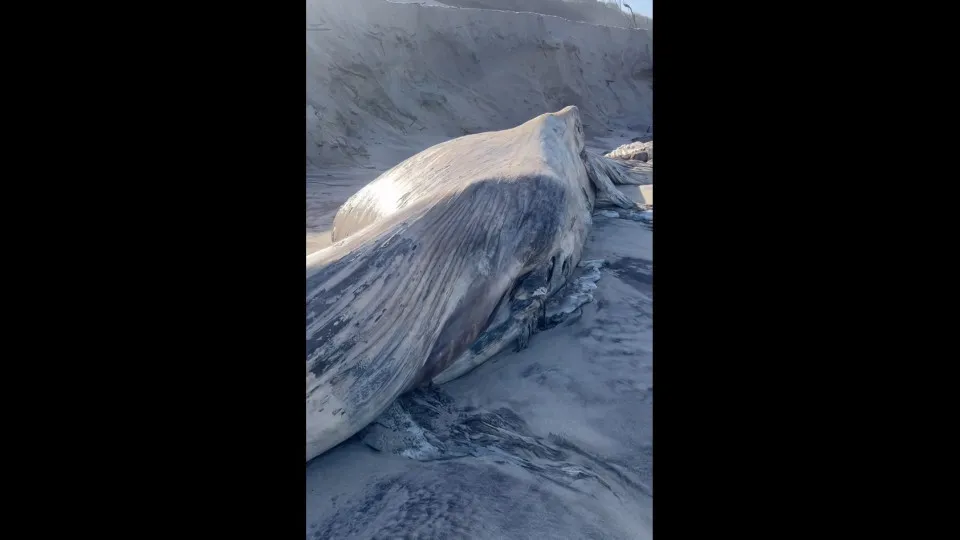
The corpse of a whale that the tides left exposed in a coastal zone of Ovar was again buried by technicians of the municipality, Maritime Police and Captaincy of the Port of Aveiro to enable the natural decomposition of the animal.
© Sandro Carapuço
13/10/2026
by
Lusa
O corpse of a whale that the tides left exposed in a coastal zone of Ovar was again buried today by technicians of the municipality, Maritime Police and Captaincy of the Port of Aveiro, to enable the natural decomposition of the animal.
In question is a cetacean about 20 meters long and 20 tons of weight whose remains gave to the coast in March in the parish of Maceda and already forced a special intervention of the team of the Centre for the Rehabilitation of Marine Animals, given the location of the corpse in a difficult access place near the dunar and forest system.
According to the Ovar City Council, the technicians resorted at the time to the usual mechanical means to remove the carcass, but the physical characteristics of the site and the operational constraints associated with the whale's dimensions prevented the complete removal of the corpse, so “the body was eventually incorporated into the sediments next to the escarpment”.
This option then had “the sanctioning of the competent entities in the matter” and enabled the natural process of decomposition of a cetacean, “similar to what would happen if the animal remained in the marine environment – and not in itself corresponding to a situation of pollution of the beach”.
This month, however, the strong maritime unrest recorded in Maceda again left the corpse in sight. The city council says that the movement of the waters “provoked a significant change in the share of the sand, again exposing part of the carcass that was covered by sediment”.
This forced the new intervention of the local technicians, the Port Captaincy of Aveiro and the Maritime Police, who, in a joint operation this morning, re-buried the whale corpse according to the current conditions of the area and anticipating the most likely changes to the site in the medium and long term.
The municipality is now proposing to continue monitoring the area to ensure that the decomposition of the animal is completed as natural as possible and without risk to the environment.