
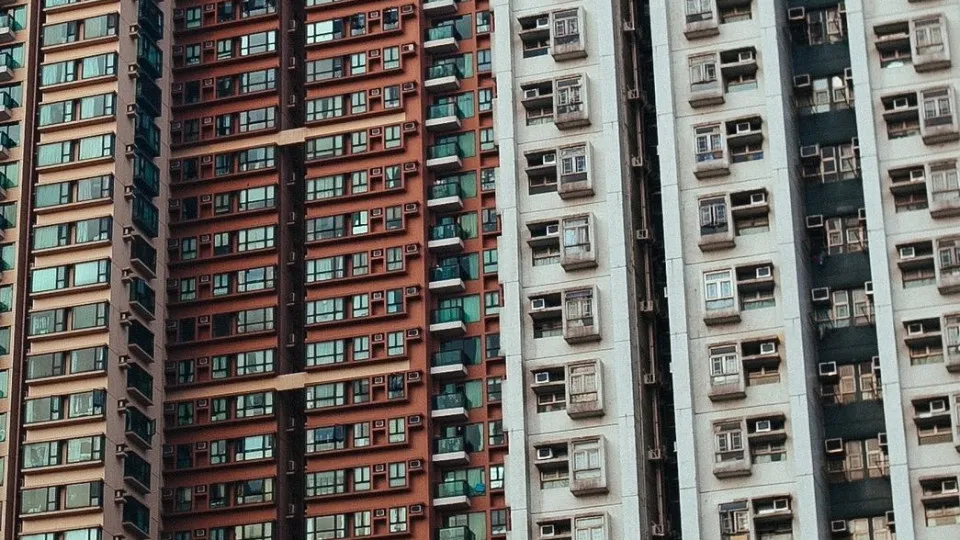
The Portuguese real estate market is more demanding and selective, according to real estate analysis, with difficult access to housing, shortage of supply and high financial effort for families.
© PixaBay
29/10/2026
by
Lusa
portuguese real estate market
O portuguese residential market is more “demanding” and “selective”, according to the analysis made by the real estate mediators, conditioned by the difficulty of access to housing, the shortage of adequate supply and the financial effort required to families.
In statements to Lusa, Century 21 Executive President (CEO) states that the available data continue to show an active market, but “clearly more selective”, with the interest of families in buying homes not always being able to “become in transactions“.
“ The market remains very strong, with sales slowing down and the number of transactions falling, but it is not due to lack of demand, the market is putting more people out of business, because this price rise continues at a higher rate than the average income of the Portuguese.”, says Ricardo Sousa.
Coldwell Banker’s CEO, Frederico Abecassis, points out “a sign of greater demand” in the residential market, with the average time taken to absorb the properties accompanied by the real estate company from 107 to 119 days.
“ Although the number of sales has increased, the time it takes to complete a business has also increased”, says in a statement.
He explains that “for owners, this means that if the price is not aligned with demand, it can cost weeks of exposure without a solid offer”, while for buyers “it reveals a more comparative and negotiating stance”.
With the increase in the average provision of loan contracts for housing, Euribor rates and the price of fuel to be weighed in the family budgets, Coldwell Banker Portugal expects “longer decision-making processes, especially in the most credit-dependent purchases”, if this context persists.
Century 21 CEO points out a “great division” in the country among those who already own a house – “more than 70% of households, and of these, the overwhelming majority have the house paid or already with marginal benefits” – and who is not.
“ This part of the population that owns it has a great advantage, because the market is moving for the heritage, for the exchange of home”, he maintains, stressing that this is why it is the houses used “that have valued most”.
According to Ricardo Sousa, “it is these families who are buying houses of 600, 700, 800,000 euros”, relying on the assets and savings they hold to “upgrade” to a larger house or help their children in buying housing.
In order for this ‘upgrade’ to be possible, these families also try to maximize the selling value of their current home, making it very difficult for those who have no assets or savings to enter the market.
“ Although there is the demand, the requests for contact and the visits, it is not possible to carry out” the transaction, because the buyer “even has approved credit”, but not of sufficient value to purchase the desired property, summarizes.
Ricardo Sousa realizes that “for the average income of the Portuguese, a house should cost up to EUR 330,000”, but “there is very little supply” of this level in the market, also as a result of a problem of inadequateness between existing properties (in terms of area and typology) and the current reality of aggregates.
Along the same lines, the CEO of real estate Zome points to a second semester of 2026 “consistent, although more selective than in recent years”, with the residential market “gradually diversifying beyond the large urban centers, accompanying new demographic dynamics, better mobility conditions and different priorities of families”.
“The demand is still present, but decisions are now more weighted and increasingly depend on the availability of supply and the evolution of the economic environment,” says Carlos Santos, sustaining that “the biggest challenge will continue to be to increase supply and create conditions for more housing to reach the market effectively.”.
“ Until that happens, the sector will continue to operate under pressure ", emphasizes, quoted in a statement.