
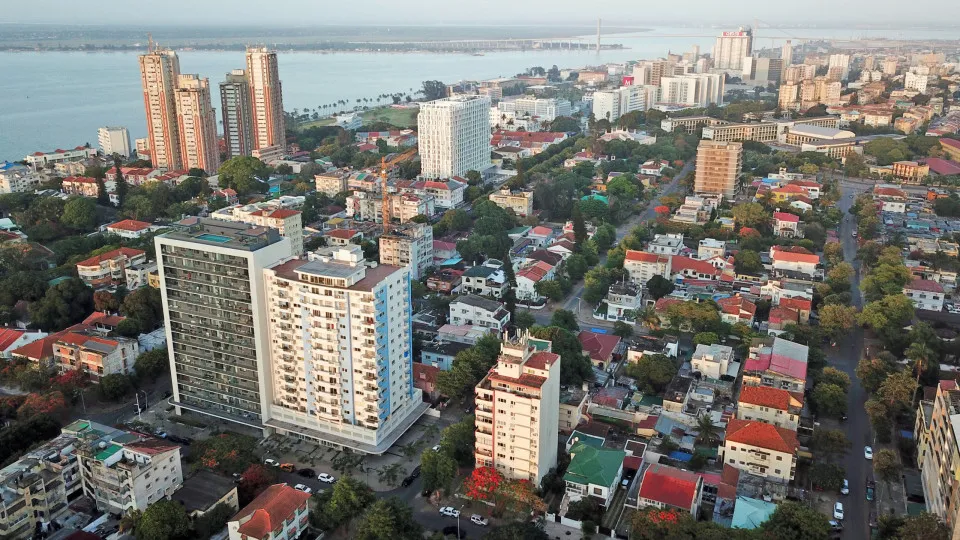
The Government of Mozambique intends to increase tax revenue from 17% to 26.2% of GDP by 2035, with the aim of reducing dependence on external financing and investing in social and economic policies.
© Lusa
08/10/2026
by
Lusa
Opublic wages and debt service absorb almost 90% of revenues from the Mozambican state, a situation that the government intends to reverse with reforms to increase tax revenue from 17% to 26.2% of GDP by 2035.
Civil Service salaries and debt service continue to limit the financial capacity of the Mozambican State, according to the diagnosis that supports the Public Finance Management Strategy (EGFP) 2026-2035, a document recently approved and to which Lusa had access today.
These two expenditure aggregates (wages and debt) “absorb about 90% of the state’s revenue, which leaves no room for public investment and for the expansion of priority social and economic policies”, he adds.
The document identifies fiscal sustainability as one of the main challenges of the next decade, defending the increase in internal revenue, the reduction of dependence on external funding and a more efficient use of public resources.
The strategy also points to the worsening of public debt indicators in recent years, with the stock recording “an exponential growth during the period 2020 to 2025, from 30% to 43%, resulting from the increase in internal debt”.
In order to respond to these constraints, the government has set the target of raising the tax revenue from the current 17% to 26.2% of Gross Domestic Product (GDP) by 2035 and reducing the present debt value ratio from 76% to 40% of GDP.
It provides for a reform based on the extension of the tax base, the gradual integration of the informal economy, the taxation of digital activities and the review of tax benefits and incentives.
The Government plans to strengthen tax surveillance and increase the digitisation of revenue collection, with a view to increasing from 30% to 85% the proportion of taxpayers who comply with tax obligations through the electronic platforms of the Tax Authority.
Another axis is the collection of revenue associated with natural resources, including mining, oil and natural gas activities, as well as emerging mechanisms linked to carbon credits, biodiversity and environmental services.
One of the new features of the strategy is the gradual introduction of green taxation, integrated into the future climate finance reform.
“ The introduction of green taxation will allow the mobilisation of national resources to support climate adaptation and mitigation, as well as support for energy transition,” he said.
The strategy provides for the progressive adoption of fiscal instruments based on the ‘polluter pays’ principle, the creation of green tax incentives and the implementation of green budget marking systems to identify public expenditure associated with combating climate change.
The reform should integrate climate considerations into the tax system and budget cycle, also providing for the gradual introduction of green taxation, the development of incentives for sustainable investments and the strengthening of disaster risk financing through the Calamity Management Fund.
The strategy also advocates the development of green financial instruments, including green bonds, guarantees and credit lines for climate adaptation and mitigation projects, as well as strengthening the country’s capacity to mobilise international climate finance.
In addition to the mobilisation of internal revenue, the Government intends to continue to favour external financing under concessional conditions and to strengthen public debt management mechanisms, seeking to reduce the risks associated with interest, refinancing and exchange rates.
The strategy maintains that fiscal consolidation will be crucial for reducing dependence on external financing, creating space for public investment and supporting the planned economic transformation in the country's development instruments.