
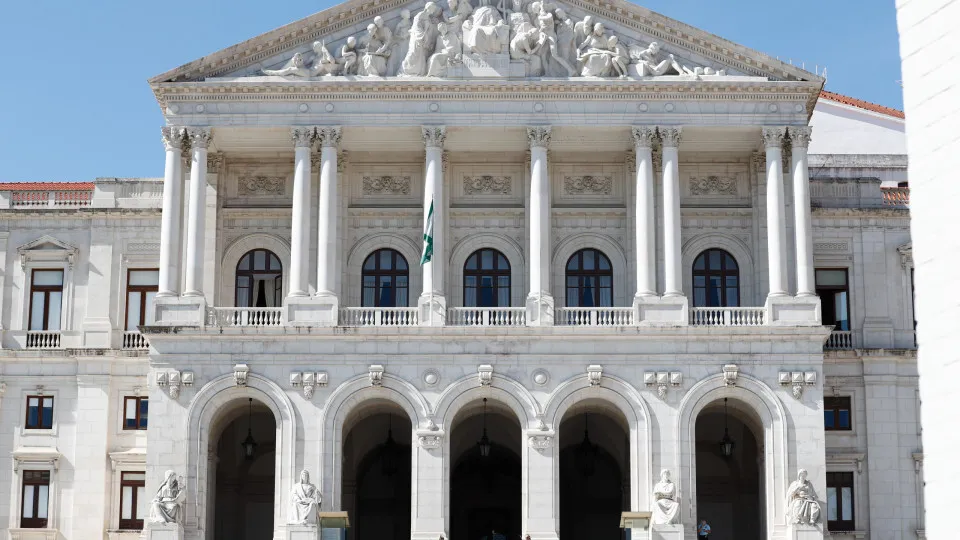
Proposals to judge the elements of PIDE, to establish popular assemblies and courts or to confer on the tenant the status of rightholder to the house were rejected 50 years ago and are now displayed in Parliament.
© Lusa
08/11/2026
by
Lusa
1976 Constitution
Propostas to judge the elements of PIDE, to establish popular assemblies and courts or to confer on the tenant the status of rightholder of the house were rejected 50 years ago and are today exposed in parliament.
“What if we also knew the proposals that were left out of the Constitution?” It is the challenge presented by the Assembly of the Republic as part of the commemorations of the 50th anniversary of the 1976 Constitution, in an exhibition devoted to the articles rejected during the work of the Constituent Assembly.
Among the documents selected for this exhibition, there are manuscripts by the founder of the CDS, Diogo Freitas do Amaral, Ms. Helena Roseta (then PPD-PSD) and the constitutionalist Vital Moreira (PCP).
Over the course of 10 months, 250 deputies from different political parties have worked to draft the Constitution, presenting proposals that have been debated, altered or rejected and are now recovered, in a historical framework illustrated by headlines and newspaper articles of the time, such as the Diário de Lisboa.
The lot includes a proposal from the UDP to have, within three months of the date of enactment of the Constitution, the trials of the agents and political police officers of the dictatorship (PIDE/DGS) were initiated.
Further ahead, the same political force was advancing towards an equally rejected initiative aimed at removing electoral capacity “to those responsible for the fascist state and its terrorist organizations, PIDE/DGS, Portuguese Legion and others”.
Of the many proposals that were in the way, the organization of the exhibition selected a proposal from the same party force so that popular courts would be instituted to judge the issues more directly related to “the People’s struggle for Bread, for Earth, for Freedom and for Social Justice”.
Many handwritten documents, in ballpoint, with some erasures, show the work of the constituents and the convictions that led to the elaboration of the Constitution.
Helena Roseta, an architect and even today an activist for housing, proposed the addition of a point with the following wording: “promoting the transformation of the tenant status into the rightholder of the house”.
In the same discussion, the deputy of the UDP Américo Duarte proposed the expropriation of large urban owners without compensation, with the distribution of houses to the people and the prohibition of the sublocation of housing, as well as the recovery of degraded housing areas, according to the decisions taken by the committees of residents in plenary. Rejected.
The same fate followed a proposal from Freitas do Amaral to determine that no law could impose duties that limited or restricted “individual rights, freedoms and guarantees”.
Also rejected was the proposal of the centrists for Article 1 to contemplate a revision of the Constitution by the Assembly of the Republic in the first legislature. The President of the Republic could not refuse to enact the revision law.
By the Parliamentary Group of the CFP, Vital Moreira saw rejected a proposal so that the Civil Service regime could not harm the labor and trade union rights guaranteed by the Constitution to all workers.
In the field of gender equality, two proposals by the party in defence of equal rights and duties for men and women were rejected.
“ Women cannot be discriminated against in any sphere of economic, cultural or political life”, reads the text of the CFP, which claimed equality in the right to work and equal pay for equal work.
It took 132 plenary sessions, 327 committee meetings and about 1,500 hours of work to prepare the Constitution, approved on April 2, 1976.
In total, 326 proposals were rejected in committee. The exhibition with some of these copies is patent until December in the lobby of the Biblioteca Passos Manuel, in the palace of São Bento, half walls with the plenary where day after day the country continues to be discussed.