
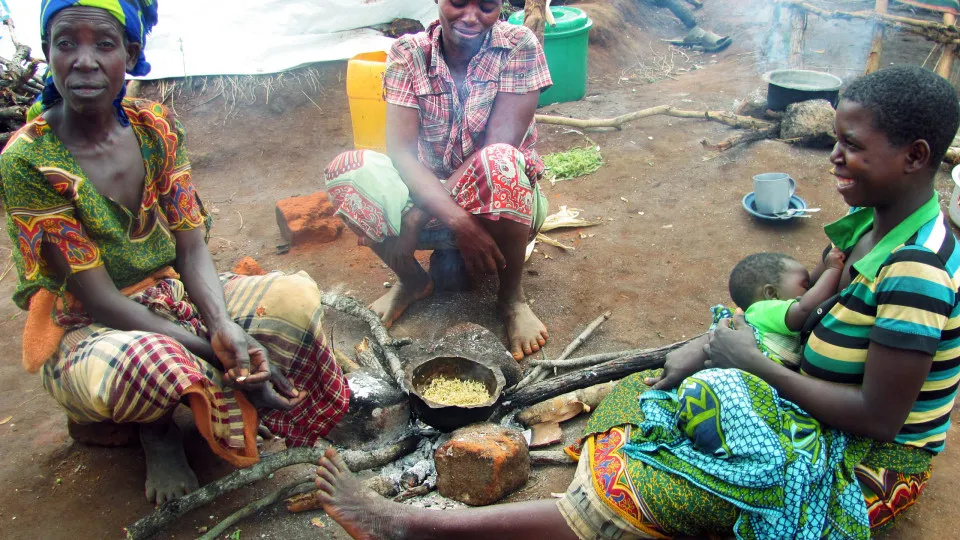
At least 1.2 billion people live under multidimensional poverty, warned the UN in a study that highlights the three most affected Lusophone countries: Mozambique, Guinea-Bissau and Angola.
© Lusa
12/10/2026
by
Lusa
Plink minus 1.2 billion people live under multidimensional poverty, today warned the UN in a study that highlights that the three most affected Lusophone countries are Mozambique, Guinea-Bissau and Angola.
According to the Global Multidimensional Poverty Index, which considers, in addition to income sources, factors related to well-being, quality of life and access to opportunities, it is the first time since 2010, that multidimensional poverty increases, and more than half of the affected people are children.
“ The increase indicates another 51.5 million people in poverty in 2026 compared to the previous year. Of the total 1.2 billion, 83% live in rural areas and more than half are children”, he characterized.
Regarding the Lusophone countries mentioned, “Mozambique has 38.8% of the affected population, Guinea-Bissau 35.9%, Angola 29.6%, East Timor 17.4%, São Tomé and Príncipe 2.1%, and Brazil 0.9%,” the UN said.
However, the UN warns that the data collected in Brazil, Timor-Leste, Guinea-Bissau and São Tomé and Príncipe are from research from 2014 to 2019. “The data from Mozambique and Angola are more recent, from surveys made between 2020 and 2025,” he said.
According to the document, Mozambique “is facing high rates of structural deprivation. Brazil maintains comparatively lower rates, but deals with persistent inequalities”.
“São Tomé and Príncipe and Guinea-Bissau face serious structural challenges linked to geographical, climatic and economic vulnerabilities. In Asia, East Timor deals with post-conflict impacts, economic transition and consolidation of basic infrastructure,” he added.
This report is prepared by the United Nations Development Programme (UNDP) and the University of Oxford’s Human Poverty and Development Initiative in the United Kingdom and covers 78% of the world’s population, the UN explained.
“The multidimensional poverty index of 2026 used ten indicators in areas such as health, education and living standards, covering 108 countries in developing regions, representing 78% of the world’s population,” he concluded.