
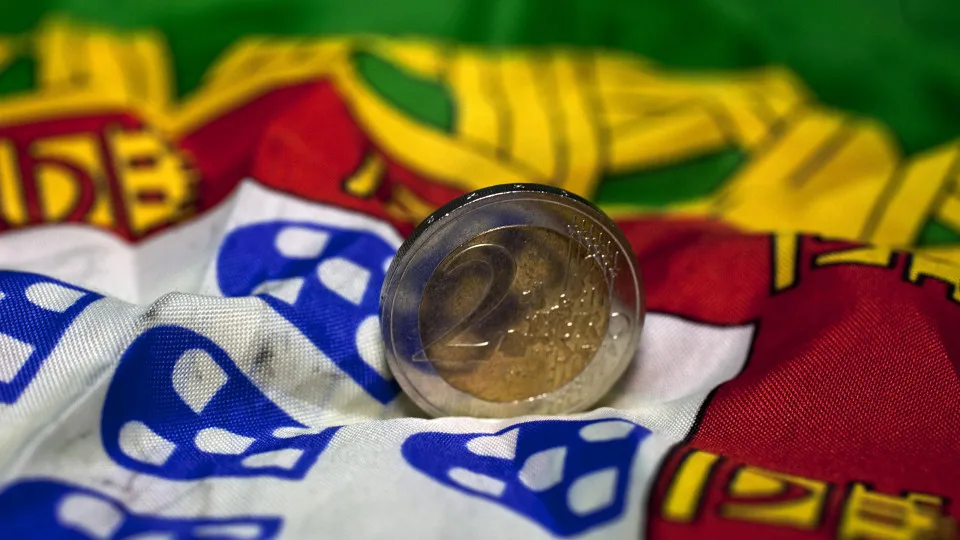
The Portuguese are the seventh population in the EU who have experienced the highest cost of living, with two out of three claiming that their purchasing power has fallen significantly in the last year, according to a European Investment Bank (EIB) survey.
© Lusa
05/11/2026
by
Lusa
Othe Portuguese are the seventh population of the EU who felt the most increased cost of living, with two out of three claiming that their purchasing power dropped significantly in the last year, according to a survey released today.
According to this survey of the European Investment Bank (EIB), dedicated to the energy transition, 68% of respondents in Portugal claim that their purchasing power in the last 12 months has fallen significantly due to the rise in prices of natural gas, electricity, fuel and diesel for heating.
This is the seventh highest rate across the European Union (EU), above the European average (60%). The highest rate in the block is in Romania (80%) and the lowest in Malta (23%).
In addition to being those who feel the increase in the cost of living, the Portuguese are also among Europeans who have opted most to change the use of the car: almost two out of three (65%) admit that they now make fewer trips, drive slower to save fuel or opt for public transport more often.
This is the sixth highest rate across the EU, again above the EU average of 60%.
However, with regard to daily expenditure on food or health, the Portuguese are among those who have least altered their consumption habits: 34% of respondents claim that they have sought to reduce this expenditure, the tenth lowest rate among the 27 Member States and below the European average (38%).
With regard to the issues of the energy transition – the main focus of this survey – more than eight out of ten Portuguese (85%) consider it urgent for their country, with the vast majority (85%) pointing to the fact that it allows for less dependence on oil and gas imports.
Around 84% of respondents in Portugal also indicate that it will bring “stabler or lower prices” and another 79% a “climate change mitigation”.
Four years ago, in a survey by the EIB on the same subject, the main benefit of the energy transition mentioned by the Portuguese was that it allowed climate change to be mitigated. The reduction in oil and gas imports was only the eighth most mentioned benefit, while the fact that it allowed prices to be stabilised or lowered was not mentioned at all.
On the type of energy they consider most important for the energy transition to take place in their country, 64% of respondents in Portugal refer to solar energy (above the European average of 52%) and 49% to wind energy (again above the European average of 37%).
More than two out of three Portuguese (69%) also call for the development of this energy transition to be done at European and non-national level, with an almost similar percentage (68%) to argue that the Member States must pool the resources to make the transition rather than each country to finance it alone.
Most of the Portuguese (59%) are also in favour of energy transition in the EU through the development of a European clean technology industry, even if it takes longer, while 30% believe that it should be done faster, but using imported equipment.
Cited in a communiqué to disseminate this survey, EIB President Nadia Calviño said that Portugal “has been playing a leading role in the transition from Europe to clean energy”.
“ The country’s excellent renewable energy sources are a key opportunity to reduce Europe’s dependence on imported fossil fuels, strengthen our strategic autonomy and energy security and reduce energy costs for businesses and citizens,” he said.
This survey was based on 23 thousand interviews conducted between August 3 and 25 in the 27 EU Member States. A thousand people were interviewed in Portugal.