
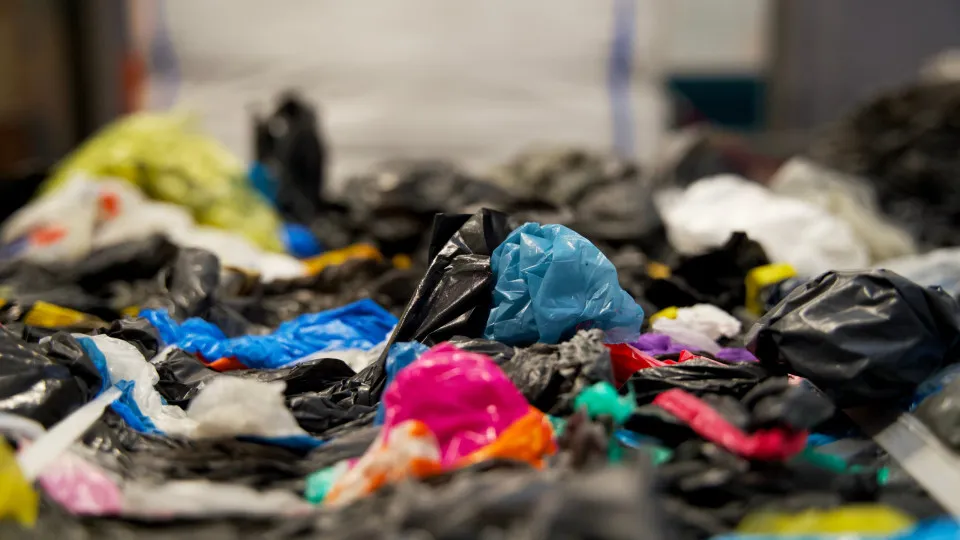
Portugal produced 5.667 million tonnes of municipal waste in 2025, an increase of 2.11% over 2024, according to data from the Portuguese Environment Agency (APA). Production has been growing since 2021, with emphasis on the last two years.
© ShutterStock
13/10/2026
by
Lusa
Portugal produced 5.667 million tons of municipal waste (RU) last year, more 2.11% than in 2024, indicate data released today by the Portuguese Environment Agency (APA).
On the continent alone, the production of UK was more than five million tons, corresponding to 494 kilos of garbage per inhabitant, something like 1.35 kilos per day per person.
According to the data, published on the official APA page, production has always been increasing in the continent since 2021, with the highest increases in the last two years. In Madeira there has been a trend of increase, but more pronounced in the last two years, and in the Azores production has fallen in 2023, but also increased in 2024 and 2025.
As for the collection of RUs, there are no significant differences in recent years, with undifferentiated collection being the preferred (75%), even if the selective collection increases each year, although in a very slight development, representing 24% of the total urban waste collected in the country.
In the referral of RUs, the differences of 2025 in relation to the other years are not significant. There was a reduction in landfill deposition, remained in mechanical and biological treatment as a preferred destination and with the same expression of previous years.
The APA charts show that last year 32% of RUs were for mechanical and biological treatment, 25% for landfill, 19% for energy recovery, 13% for material recovery, 8% for recycling at source and 3% for organic recovery.
Data only from the continent show that over the last five years landfill has not been much out of 55%, while recycling has been 14%.
Among all wastes, biowaste (37.42%) is the large slice, followed by plastic with 10%, paper and cardboard and textiles with about 9%. Hazardous waste represents 0.05%.
The targets indicate that landfill should not go beyond 10% in 2035, currently being 52%.
In the area of preparation for reuse and recycling, the process that allows waste to be reused or processed, the target was 55% in 2025, but the real value was 39% that year.
In bioresidues, most municipalities have a catch rate ranging from 1 to 5% of the total biowaste produced in their area of intervention. And there are, according to APA, 34 municipalities that have not yet implemented any model of collection and/or treatment of biowaste.
In short, says APA, the results of 2025 reveal “signs of positive evolution in the urban waste sector, but also the need for a significant acceleration of its performance”.
The strengthening of prevention, selective collection — in particular bio-waste —, recovery of materials and efficiency of treatment operations is a determining factor in approaching the established objectives and targets.