
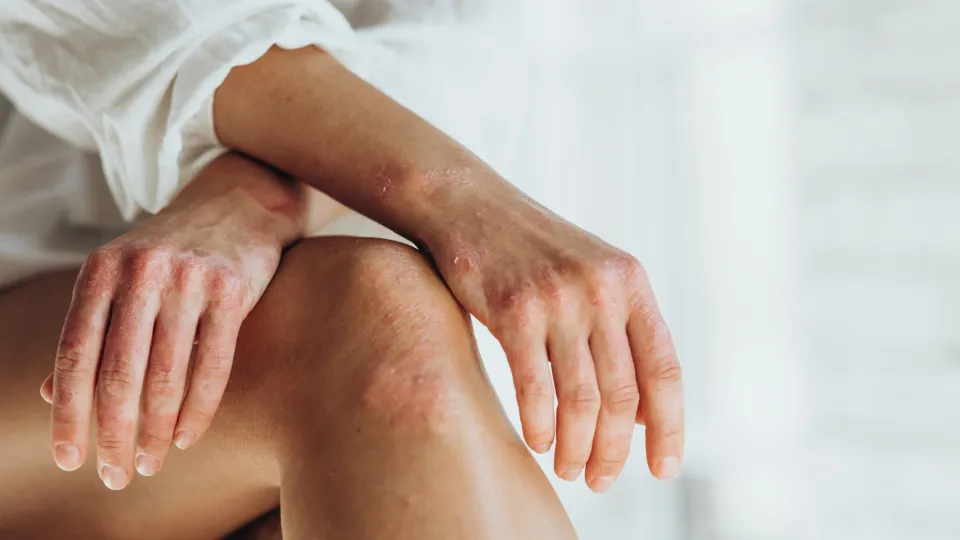
This Thursday, October 29th, marks the World Day of Psoriasis. Dermatologist Ana Paula Cunha clarifies 8 common myths about the disease that affects the skin and can have impacts on mental health and general well-being.
© Shutterstock
29/10/2026
by
Sis psoriasis caused by poor hygiene? On the other hand, does it really only affect the skin? These are some of the myths that need to be clarified about this inflammatory disease.
This Thursday, October 29th, marks the World Day of Psoriasis. In an interview with Lifestyle to Minute, dermatologist Ana Paula Cunha, from the Espregueira Clinic, clarified some of the myths that most associate with this condition. He also spoke about what this is about and the impact it has.
“ Psoriasis is a chronic inflammatory disease affecting the skin and is related to the functioning of the immune system. It is manifested through reddish and peeling plaques, which can cause itching and sometimes pain. In view of these signs, it is important to seek a dermatologist to obtain a diagnosis and initiate appropriate treatment.”
Read Also: You have diabetes and you don't know it? 5 symptoms that may go unnoticed
This is a condition that has a strong impact on mental health and the quality of life of diseases. “It has a significant impact on self-esteem, personal relationships and professional life. Many patients feel ashamed and insecure due to skin lesions and comments or looks of others. The disease is also associated with an increased risk of anxiety, depression and social isolation”, continues the dermatologist.
Know some myths of psoriasis and the explanations of the expert.
Psoriasis. Dermatologist undoes 8 myths
Myth 1- Poor hygiene causes psoriasis
The explanation: Psoriasis is not caused by lack of hygiene. It is a disease related to genetic and environmental factors. This is one of the myths and associations that contributes most to the prejudice and discrimination of the affected.
Myth 2 – Psoriasis is just a skin problem
The explanation: Although manifested mainly in the skin, psoriasis may have consequences in other parts of the body. It is associated, for example, with psoriatic arthritis, which causes inflammation in the joints and may be disabling. Patients also have a higher incidence of diseases such as type 2 diabetes, hypertension and cardiovascular disease.
Myth 3 – Only adults can have psoriasis
The explanation: Psoriasis may arise from the first childhood to the later phase, and may manifest itself in the elderly, but babies may also show psoriasis lesions.
Myth 4 – The psoriasis is contagious
The explanation: Psoriasis is not an infectious or contagious disease. It is not transmitted through physical contact, sharing objects or living with an affected person. The lack of information on this aspect continues to contribute to the prejudice and discrimination of people living with the disease.
Myth 5- Psoriasis is only superficial
The explanation: Psoriasis is a chronic inflammatory disease that can affect other areas of health besides the skin. It may be associated with joint problems and other diseases, besides having an important impact on mental health and quality of life. Treatment should therefore take into account not only skin lesions but also general health status and needs of each patient.
Myth 6- Psoriasis is a rare condition
The explanation: Psoriasis is a relatively common disease and one of the most frequently evaluated skin pathologies in the clinical practice of dermatology.
Myth 7 – Psoriasis has no cure and cannot be treated
The explanation: Although there is currently no definitive cure, there are several treatments that allow controlling the disease, reducing lesions and improving quality of life. In addition to creams and phototherapy, there are biological drugs that act on the mechanisms of inflammation and have significantly improved psoriasis control.
Myth 8 – In the case of a patient, if the skin improves the treatment may be discontinued
The explanation: Therapy varies from general treatments to systemic treatments that should not be discontinued without medical advice and after improvement some treatments may be discontinued.