
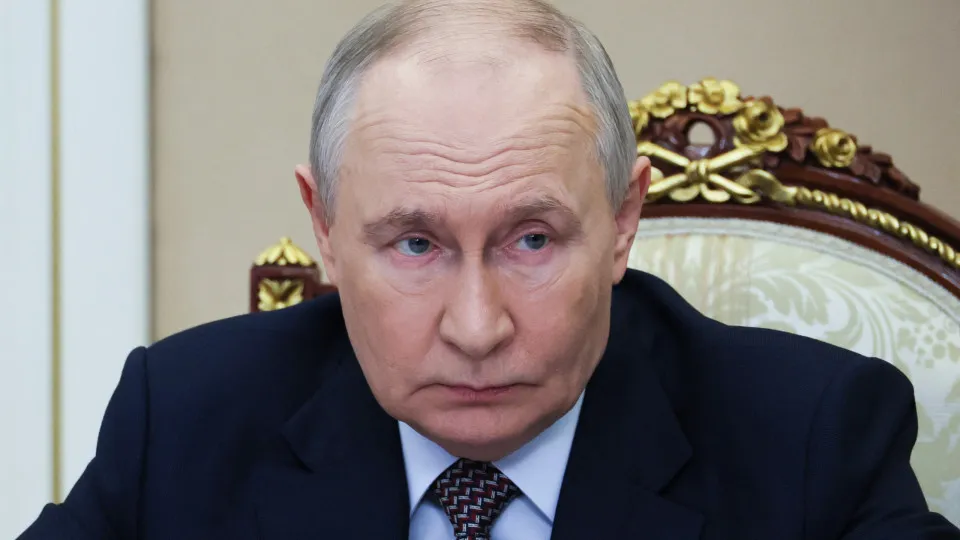
Russian President Vladimir Putin today received in Moscow the Iranian High Commissioner Mohsen Rezaei, to strengthen bilateral ties and discuss the installation of gas pipelines, aimed at the shortage of gas in Iran aggravated by the war.
© Alexey BABUSHKIN / POOL / AFP via Getty Images
05/11/2026
by
Lusa
O russian president Vladimir Putin today received in Moscow the Iranian high-ranking security officer, Mohsen Rezaei, to strengthen bilateral ties and discuss the installation of gas pipelines, aimed at the gas shortage in Iran aggravated by the war.
Russia and Iran, two of the most severely sanctioned states internationally, maintain close political relations.
The military and economic partnership between them has been considerably strengthened since the start of the large-scale Russian offensive in Ukraine in 2022.
In statements to journalists after the meeting, the secretary of the Iranian Supreme Council of National Security revealed that he had “an extremely important exchange on the prospects” of relations between Moscow and Tehran, according to statements made by the Iranian embassy.
Mohsen Rezaei said that Putin emphasized “the need for regional security mechanisms” and “the inadmissibility of any interference from external forces” to resolve the situation in the Middle East.
The Iranian representative added that he conveyed to the Russian President a personal message from the supreme leader of Iran, Mojtaba Khamenei, without further details.
In early October, Vladimir Putin assured his Iranian counterpart, Masoud Pezeshkian, that Russia is willing to contribute to the mediation efforts aimed at ending the war against Iran by the United States and Israel.
The two countries also discussed “the issue of the installation of pipelines between Russia and Iran, which will not only cover the lack of gas in the Iranian internal market, but also organise the transit of Russian gas to neighbouring countries,” said Rezaei.
Iran has long been facing a shortage of natural gas, which is essential for heating, a situation aggravated by the war that took place in late February by Israeli and American attacks.
At the height of the bombing, gas installations, especially in the south of the country, were the target of U.S. attacks that left refineries inoperative, according to Tehran.
Faced with this scenario, at the end of October, the authorities asked the inhabitants to reduce their consumption by 10% as winter approached, in order to relieve pressure on the supply.
During the winter, temperatures often drop below 0°C, especially in the north of the country.