
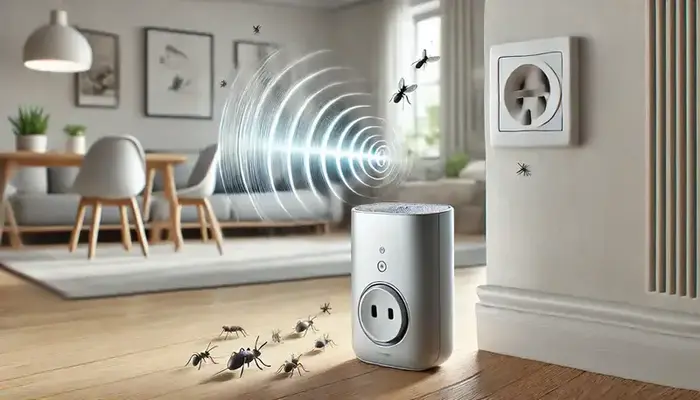
The ultrasonic repellent has gained popularity as a non-toxic and clean solution for pest control, such as insects and rodents.
But the question many people ask is: do these devices really work? In this article, we will explore how repellents ultrasonics work, the frequencies used, their effectiveness in different pests and the limitations of this technology.
What is an Ultrasonic Repellent?
An ultrasonic repellent is a device that emits high frequency sound waves (usually above 20 kHz) to ward off insects and rodents. These frequencies are inaudible for humans, but supposedly uncomfortable for pests, leading them to flee the environment where the device is installed.
How Does Ultrasonic Repellent Work?
The idea behind ultrasonic repellents is that the sound emitted by the devices causes discomfort or disturbance in the animals, hindering their ability to communicate, navigate or even reproduce. Thus, it creates an inhospitable environment for insects and rodents, encouraging them to leave the site.
Frequency Used and Target Animals
The effectiveness of the ultrasonic repellent depends directly on the frequency of the sound emitted and the kind of plague that is wanted to repel. Different animals have different hearing levels, which means that the frequency should be adjusted for each pest.
Frequency and Insects
- Mosquitoes: Ultrasonic repellents designed to ward off mosquitoes usually operate in the range of 16 to 20 kHz. However, there are many doubts about the effectiveness of these devices, since there is no scientific consensus.
- Cheap: The cockroaches have a hearing sensitivity in the range of 20 to 50 kHz, which causes some ultrasonic repellents to operate within this range. However, there are few studies proving the effectiveness of these devices in cockroaches.
Frequencies and rodents
- Rats and Mouse: Rats can hear frequencies ranging from 1 kHz to 90 kHz, with a particular sensitivity in the range from 50 to 90 kHz. Ultrasonic rodent repellents usually operate in the range of 30 to 60 kHz, since this is an uncomfortable range for these animals. However, it is important to note that long-term efficacy is questionable as rodents can get used to sound.
- Bats: Bats use echolocation in frequencies ranging from 20 kHz to 200 kHz. Ultrasonic repellents for bats usually operate at frequencies greater than 50 kHz, which can interfere with bat navigation, pushing them away from the area.
What Science Says About the Effectiveness of Ultrasonic Repellents?
Several studies have been conducted over the years to evaluate the efficacy of ultrasonic repellents. Unfortunately, the results are inconclusive, with most studies showing little efficacy in the long-term control of insects and rodents.
However, in the short term there are results in several situations.
Scientific Studies and Results
- Rodents: Studies in controlled laboratories suggest that rodents, such as rats and mice, may initially show aversion to the sound emitted by ultrasonic repellents. However, there is evidence that animals get used to sound after prolonged exposure, thus reducing the effectiveness of the device.
- Bugs: Most studies on the efficacy of ultrasonic repellents in insects, such as mosquitoes, cockroaches and ants, show that sound does not significantly affect the behavior of these insects. In fact, many species of insects do not have the ability to hear at the frequencies emitted by devices.
- Cheap: A specific study with cockroaches showed that although some ultrasonic repellents may affect their behavior in the short term, there was no clear evidence that devices effectively reduce populations.
Limitations of Ultrasonic Repellents
Ultrasonic repellents, although they seem promising in theory, face several limitations in practice. Some of the limitations include:
Limited Range
Ultrasonic sound does not well cross solid obstacles such as walls, furniture or doors. This means that the device only works in an open environment or in a limited area, making it difficult to protect large spaces.
Housing and Housing
Rodents and other animals may get used to sound after prolonged exposure. Over time, the discomfort caused by ultrasound can be overcome.
Scientific Evidence
Although manufacturers claim that their products work, the lack of conclusive scientific studies questions the real effectiveness of ultrasonic repellents. Some studies show mixed results.
Differences Among Species
Not all insects and rodents are sensitive to the frequencies used by these devices. For example, ants and termites are harder to repel with ultrasonic waves.
Advantages and Disadvantages of Ultrasonic Repelants
Advantages
- Non-toxic: Unlike pesticides and poisons, ultrasonic repellents do not introduce toxic substances into the environment, being a safer option for use in homes with children and pets.
- Easy Installation: Devices are usually easy to install and do not require regular maintenance.
- Inaudible for Humans: Most devices are designed to operate at frequencies that are inaudible to the human ear, causing no discomfort to residents.
Disadvantages
- Doubtful Efficiency: As already mentioned, many studies suggest that the effectiveness of these devices is limited, and the results vary widely.
- Limited Coverage: The inability of ultrasonic sound to penetrate solid obstacles limits its area of activity.
- Possible Housing: Animals like rats can get used to sound after prolonged exposure.
What care to have with pets
Using ultrasonic repellents for pest control in pet environments, it is important to take some precautions to ensure the safety and well-being of their pets. Although these devices emit inaudible sounds to humans, some pets are affected by ultrasonic frequencies. Here's some care to take:
1. Meet the Hearing of Your Animal
Different species of pets have different auditory abilities. Dogs, cats and other small mammals have an auditory range that can coincide with the frequencies emitted by ultrasonic repellents.
Dogs
- Dogs can hear sounds in the range of 40 Hz to 60 kHz, which means that some ultrasonic repellents may be within their auditory range.
- Be sure to observe the behavior of your dog after installing an ultrasonic repellent. If he looks agitated, uncomfortable, or anxious, that could be an indication that the sound is bothering him.
Cats
- Cats also have a very sensitive hearing, capable of detecting sounds in the range from 48 Hz to 85 kHz. As cats are usually more discreet in their reactions, watch closely changes in behavior such as nervousness or attempt to avoid certain areas of the house.
- However, if your intention is to remove a cat from a specific location, this may be a method to use. For example, if your cat urinates (or marks territory) in an unwanted location and where it is not usually long, this is a proven method!
If you want to remove a cat or dog from a specific location with an ultrasonic repellent, be careful to check that the repellent sound is located and does not bother animals elsewhere.
Small rodents and birds
- Animals like rabbits, hamsters, guinea pigs and birds can also have a sensitive hearing. Small mammals, such as domestic rodents, are negatively affected, as the frequencies of repellents often coincide with those used to ward off undesirable rodents.
2. Appropriate Device Positioning
- Safe Distance: Put the device away from the areas where pets spend most of their time. Avoiding installing the repellent in places where the animal feeds, sleeps or rests is essential to prevent discomfort.
- Closed Environments: As ultrasound does not penetrate solid objects well, limiting the use of the device to closed environments can help reduce the unnecessary exposure of your pets to sound.
3. Observe Animal Behavior
After installing an ultrasonic repellent, it is important to monitor the behavior of your pet:
- Behavioral Changes: If you notice that your pet is avoiding certain spaces, getting agitated or showing signs of stress, it may be a sign that the device is bothering you.
- Physical Reactions: Behaviors like constantly low ears, restless movements or attempts to hide may indicate that sound is causing discomfort.
4. Prague Control Alternatives
If your pet is sensitive to ultrasonic repellents, consider safer alternatives such as:
- Physical Methods: Traps, barriers and sealing of cracks and cracks can be effective to prevent pest entry without affecting pets.
- Natural Repellents: The use of essential oils, such as lavender and peppermint, can be effective against insects, although it is necessary to verify that these oils are safe for your pets, especially cats.
How to know if the repellent is working
One of the most practical ways is to install an app to measure sound waves on your phone. There are several for download both in environment Android like IOS. So with it you can confirm the frequencies emitted by the repellent. Besides, you can sense your range of action.
Conclusion
The short answer is: depends. For ultrasonic repellents can be effective in very specific situations, especially in small areas with pests susceptible to the frequencies emitted. However, its efficacy is highly variable and often limited by factors such as animal habituation, pest type and environment configuration.
Therefore, while ultrasonic repellents serve as a complementary measure.
For effective control of insects and rodents, a combination of methods such as traps, physical barriers and pesticides can be more effective.
These repellents work in several cases, but you have to know how to use them. For example, there are people who use these devices to keep a cat from a specific location. So its use can be very diverse!