The International Court of Justice (TIJ) today decided that Myanmar intended to destroy a substantial part of the Rohingya population in the 2017 repression campaign, a fundamental criterion for establishing genocide.
© Reuters
19/11/2026
by
Lusa
O International Court of Justice (TIJ) today decided that Myanmar intended to destroy a substantial part of the Rohingya population in the 2017 repression campaign, a fundamental criterion for establishing genocide.
“ In the light of all the evidence, the court considers that the only reasonable inference to explain Myanmar’s [old Burma] actions is the intention to destroy a substantial part of the Rohingya population in northern Rakhine state,” TIJ President Yuji Iwasawa said.
The intention to totally or partially destroy a group is a key element in establishing whether crimes constitute genocide in accordance with international law.
The conclusion was advanced during the reading of the TIJ decision on whether Myanmar committed genocide in a brutal offensive against the Rohingya almost a decade ago.
The reading is taking place at the headquarters of the court in The Hague, the Netherlands, and is expected to last for three hours.
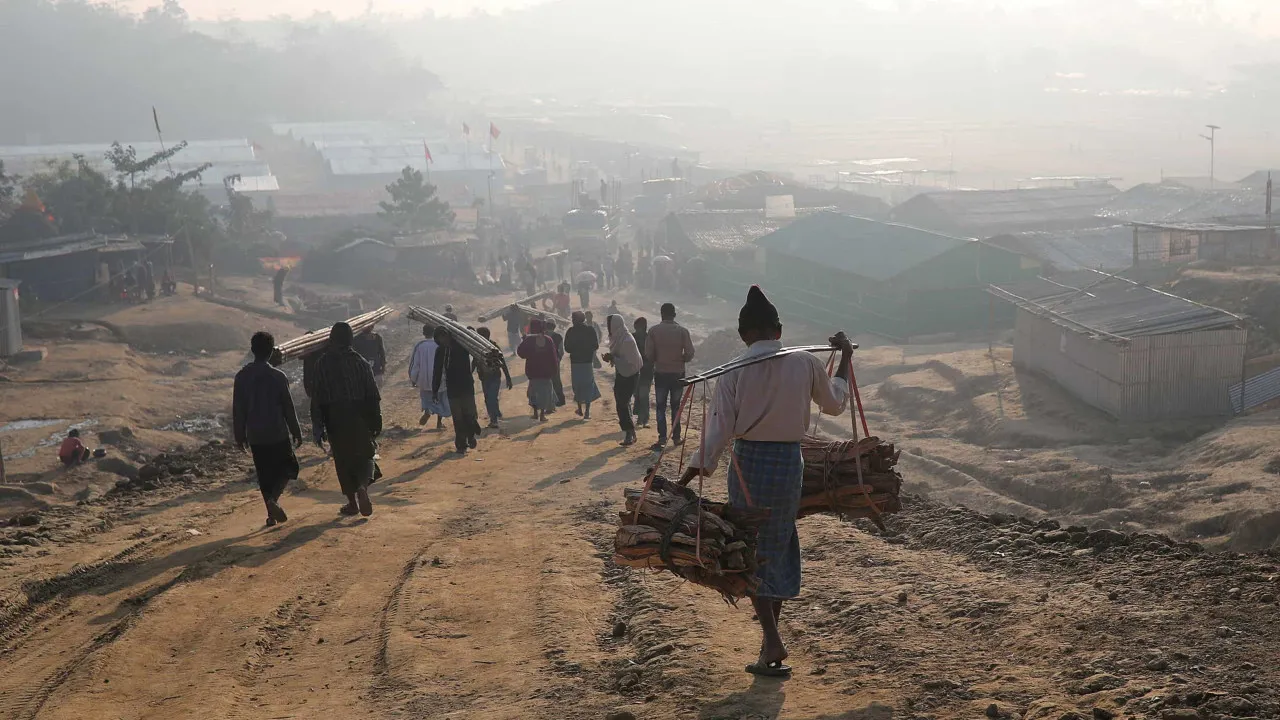
The violence of repression forced hundreds of thousands of Muslims, mostly belonging to the Rohingya minority, to flee to the neighbouring Bangladesh.
The court had already stated that the evidence showed that Myanmar's forces killed about 10,000 Rohingya.
“The court notes that Myanmar’s security forces killed thousands of Rohingya civilians, perpetrated widespread acts of sexual violence, as well as acts of extreme violence against children, and attacked Rohingya on the run,” said TIJ president in a crowded Hall of Justice.
The Gambia, an African nation of Muslim majority, initiated proceedings in the International Court of Justice in 2019, asking the latter to declare that Myanmar violated the 1948 Genocide Convention, ordered the country to stop any illegal activities against Rohingya and to ensure the punishment of those responsible for the genocide.
In 80 years of existence, the International Court of Justice has never issued a genocide sentence.
In 2007, he stated that Serbia “violent the obligation to prevent genocide” in the Srebrenica massacre in 1995 when Bosnian Serb forces murdered about 8,000 men and boys, mostly Muslims, in the Bosnian city.
The decision comes at a time when the court is also examining allegations of genocide linked to the conflict in Gaza and the war in Ukraine, so the decision can be a precedent.