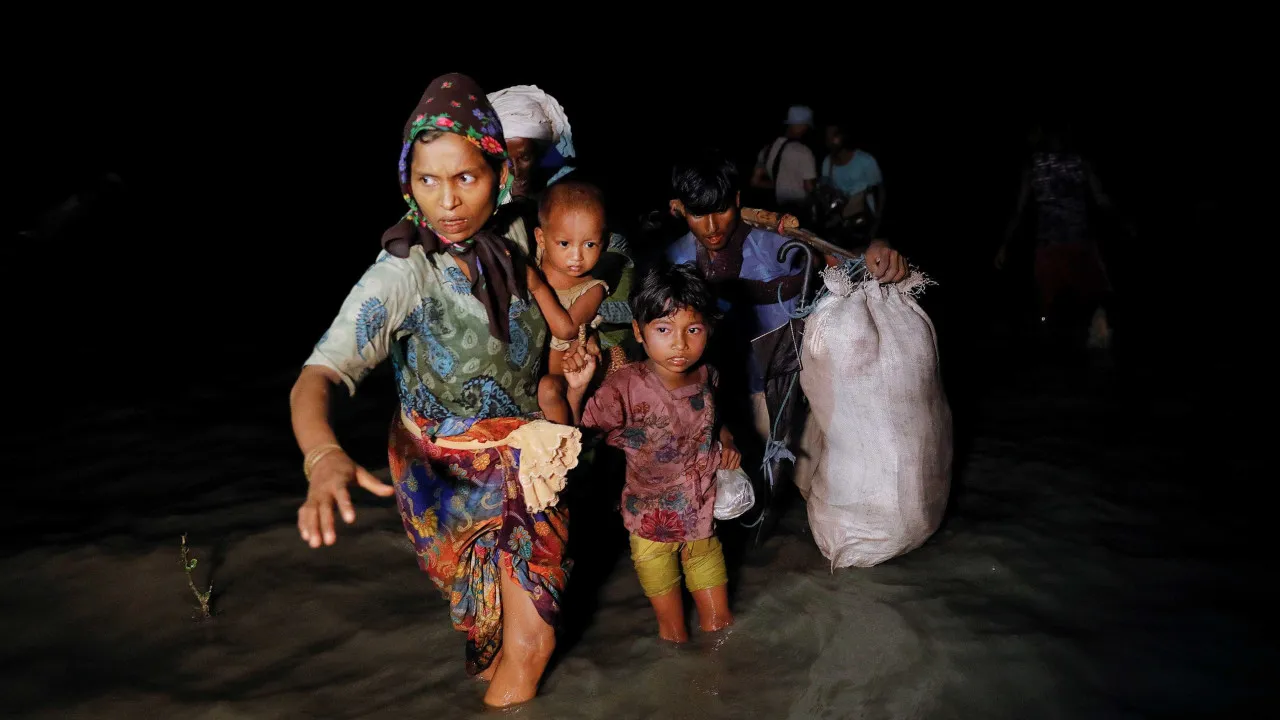
The International Court of Justice accused Myanmar of committing genocide against the Rohingya minority and demanded reparations and the return of those who fled, in a historic decision.
© Reuters
19/11/2026
by
Lusa
O The International Court of Justice today accused Myanmar of committing genocide against the Rohingya minority and demanded reparations and the return of those who fled, in a historic decision that may be precedent for verdicts on Gaza and Ukraine.
The decision was announced by the president of the main court of the United Nations and is the first time, in the 80-year history of the TIJ, that the judges declare a state directly guilty and responsible for committing this crime.
Myanmar “committed genocide against the Rohingya group in northern Rakhine state, in violation of its obligations under the Convention on Genocide,” 1948, said the President of the International Court of Justice, Yuji Iwasawa, stating that the decision was taken with the agreement of nine of the 15 judges.
In view of this decision, the TIJ ordered Myanmar (former Burma) to facilitate the return “safe, voluntary and worthy” of the Rohingya displaced by the 2017 military offensive, both within the country and abroad, and to ensure the reunification of separate families, among other measures to repair the damage caused to the Muslim minority.
The court also demanded that the country of Southeast Asia return or replace lost or damaged individual and collective property, facilitate the search for missing persons and ensure the physical and psychological rehabilitation of victims who have suffered injuries or mental damage.
The judges rejected Myanmar’s defense that the 2017 campaign was a legitimate operation against insurgents, having the president stated that “the court considers that Myanmar’s security forces killed thousands of Rohingya civilians, perpetrated widespread acts of sexual violence, as well as acts of extreme violence against children, and attacked Rohingya on the run while trying to escape in large numbers.”.
“ This is a great day for Rohingya and a great day for all oppressed peoples, everywhere, to whom it has been said that their suffering does not matter and that no one hears them”, said the activist for the rights of Rohingya Yasmin Ullah, who was sitting in the sumptuous Hall of Justice, where, for three hours, the sentence was read.
The intention to destroy a group, in whole or in part, is a key element in establishing whether crimes constitute genocide in accordance with international law.
The court has claimed evidence that shows that Myanmar's forces killed about 10,000 Rohingya.
The process was initiated in 2019 by Gambia, an African nation of Muslim majority, asking TIJ to declare that Myanmar violated the Genocide Convention, ordered the country to stop any illegal activities against the Rohingya and ensure that those responsible for the genocide were punished.
In August 2017, Myanmar's military launched what they called an anti-terrorist campaign in northern Rakine, in response to an attack by a rebel group Rohingya.
The campaign led to accusations that security forces committed mass rape and murder and burned thousands of homes.
According to the 1948 convention, to establish that genocide occurred, the court had to prove the intention of destroying the Rohingya “in whole or in part”.
About 1.2 million Rohingya refugees now live in Bangladesh, mainly in overcrowded camps in the Cox’s Bazar district, where they face adverse conditions marked by fire risks, infectious diseases, land flooding during monsoons, inadequate sanitation and strict work restrictions.
The decisions of the court are final and legally binding, but the ICJ has no way of implementing them, in addition to reporting non-compliance to the UN Security Council.