
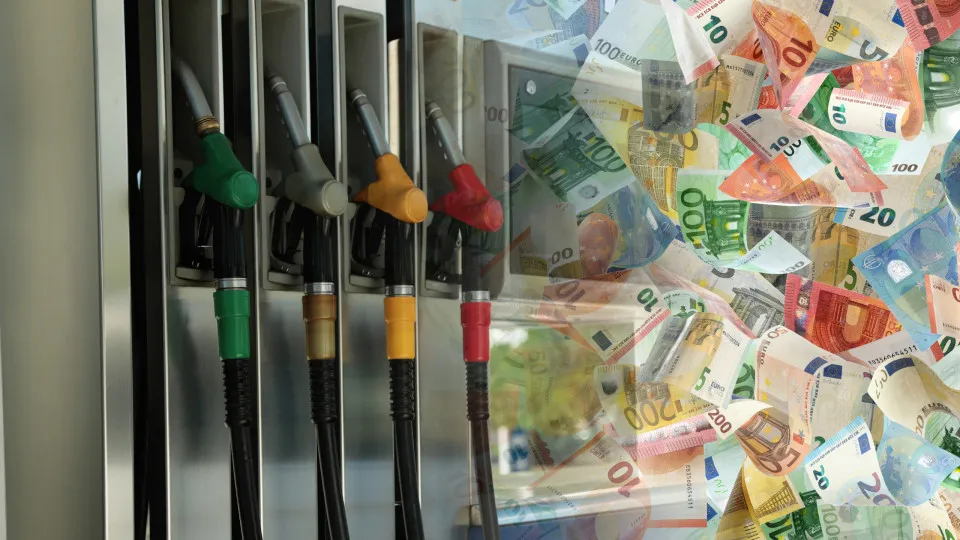
Fuel prices were mixed at the beginning of the week, with diesel rising and gasoline falling as expected.
© Shutterstock
03/11/2026
by
News to Minute, Lusa
Ofuel prices were mixed earlier this week, diesel became more expensive, while petrol became cheaper, as forecast.
Simple diesel rose from EUR 2,19 per litre to EUR 2,205 per litre and gasoline dropped from EUR 2,03 per litre to EUR 2,006 per litre between Friday and Monday, according to the average prices updated this Tuesday by the Directorate-General for Energy and Geology (DGEG).
Accounts made, diesel increased 1.5 cents and the price of gasoline fell 2.4 cents.
These average prices, refer to “are calculated on the basis of the prices reported by the fuel stations, weighted by the quantities sold in the last known period, incorporating the discounts charged at the supply stations as fleet cards and others.
About 25,000 companies concentrate 42% of fuel spending
More than 40% of total fuel spending in Portugal is concentrated in only 25,000 companies, especially in the transport, industry and construction sector, according to an analysis published today by Informa D&B.
According to the study, in these companies – which account for 6% of the business fabric and make almost EUR 14,000 million – fuel spending represents more than 5% of turnover.
“These 25,000 companies are particularly exposed to the increase in fuel prices, as in the entire business fabric the average percentage of fuel spending is about 1% of turnover,” he says.
According to the analysis of Informa D&B, the transport, industry and construction sectors together represent more than two thirds of the amount of fuel spending between national companies.
According to details, among the various economic activities, seven of the 15 main activities in which fuel spending weighs more on the turnover of companies belong to the transport sector.
Also with the fuels to represent an important percentage in the billing there are fishing activities, forest related activities and some specialized construction activities.
In transport, fuel spending corresponds to 6.3% of the company's turnover, and then agriculture and other natural resources arise, with fuels weighing 3.0% in their business, and, thirdly, construction, with 1.7%.
In 2025, all companies spent more than EUR 4,200 million on fuels, 25% more than in 2021, still points to work.
D&B notes that, despite the rise in fuels, namely the ‘jet fue’l’, it also affected air transport, “it was not possible to measure its impact with confidence on issues related to the reporting of some of these companies’ financial accounts”.