
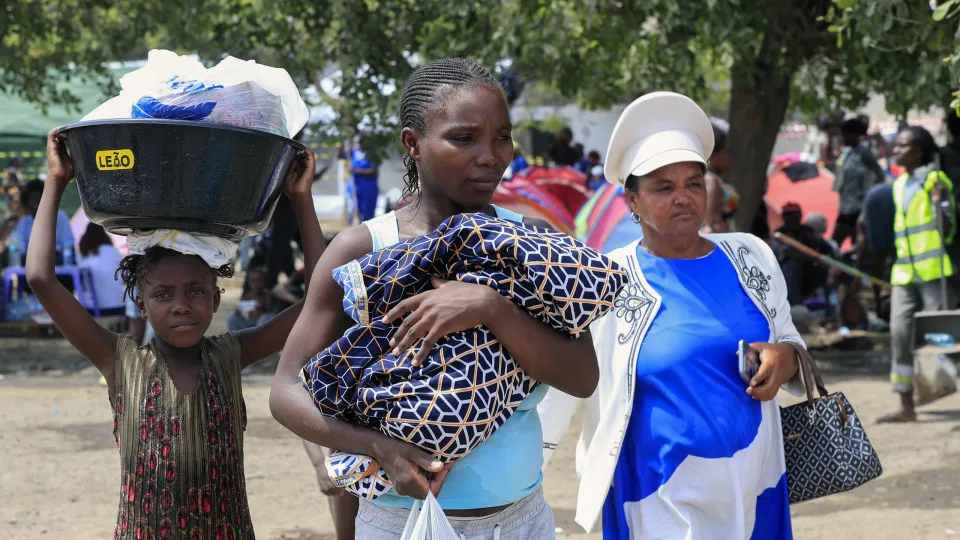
The Angolan Government has acknowledged that, despite progress, inequalities and obstacles to eliminating discrimination against women remain.
© Lusa
07/10/2026
by
Lusa
A secretary of State for the Family and Women's Promotion, Alcina Kindanda, spoke at a hearing session of civil society organisations in the framework of this month's presentation in Geneva of the eighth periodic report of the Convention on the Elimination of All Forms of Discrimination against Women (CEDAW).
The initiative brought together leaders from the ministries of Justice and Human Rights and Social Action, Family and Women Promotion, the United Nations Development Programme (UNDP) and national civil society organizations.
In her speech, the Secretary of State for Family and Women's Promotion, Alcina Kindanda, said that Angola should present a realistic, balanced and well-founded vision, recognizing progress, but also the challenges that still require intervention.
Alcina Kindanda said that among the priorities is the fight against violence against women and girls, by strengthening the prevention of mechanisms of complaint and protection, access to legal and psychosocial assistance and effective accountability of aggressors.
“ It is necessary to ensure that all women, including those living in rural areas and those in situations of greater vulnerability, can know and exercise their rights without economic, geographical or social barriers,” he said.
The Angolan ruler stressed that education and prevention of early pregnancy in adolescence, child marriage and the permanence of girls in schools is one of the most important strategies to reduce poverty.
The Secretary of State acknowledged that “there are still inequalities and obstacles”, but considered that the progress achieved should be recognised and that the new instruments adopted should be understood as part of a continuous process of improving public policies.
In turn, Secretary of State for Human Rights and Citizenship, Antonia Yaba, stressed that the objective of the meeting was to put the vision of the Angolan executive and a whole set of actions implemented to the appreciation of civil society organizations, to jointly identify where challenges still persist, as well as propose improvements in the actions already implemented.
In her speech, the UNDP representative in Angola, Denise António, stressed that the session in Geneva, Switzerland, will be an opportunity for Angola to present the progress made since the last revision in 2019 and to affirm the country's commitment to promoting women's rights.
“UNDP acknowledges and welcomes Angola’s efforts to strengthen its legislative, institutional and political framework, in line with the commitments made under CEDAW and Agenda 2030 for sustainable development,” he said.
Denise António stressed that despite advances, “many women and girls still face obstacles in access to economic opportunities, participation in decision-making, protection against violence and the full exercise of their rights”.
“ Therefore, the CEAW process should be seen not only as a accountability mechanism, but also as an opportunity to strengthen dialogue and drive concrete actions,” he added.
He also stressed that “the active participation of civil society organizations is essential to ensure greater transparency, monitoring and appropriation of this mechanism”.
Denise António reaffirmed UNDP's commitment to continue to support Angola to eliminate all forms of discrimination against women and girls.