
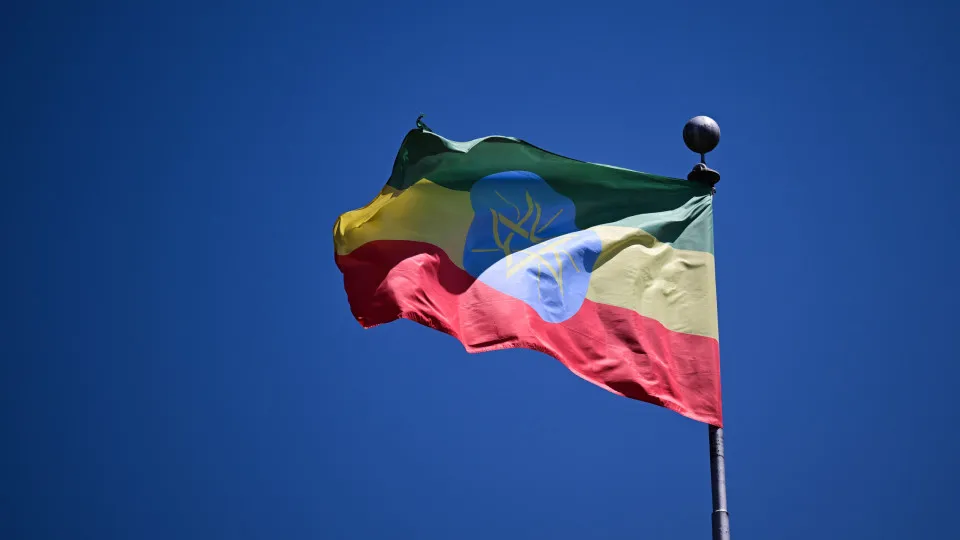
The Ethiopian authorities today suspended The Reporter, one of the country’s rare independent media, accused of spreading content that goes “against national interests.”.
© Sebastian Gollnow/picture alliance via Getty Images
02/11/2026
by
Lusa
Athe Ethiopian authorities today suspended, for an indefinite period, The Reporter, one of the country’s rare independent media, accused of spreading content that goes “against national interests”.
The violations of press freedom have multiplied in recent months in Ethiopia. The second most populous country on the African continent, with about 130 million inhabitants, ranks 148th among 180 in the index of press freedom established by the Non-Governmental Organization (NGO) Reporters Without Borders (RSF).
According to a statement published on Facebook by the Ethiopian Authority of ‘Media’ (EMA), The Reporter, which publishes a newspaper in English and Amharic and also has an ‘online’ site, released “information that stains the image of the country, impairs national security and corrupts the unity and values of peoples”.
The articles go “against Ethiopia’s national interests”, considers the EMA, whose director is appointed by the House of Representatives.
As a result, the registration certificate of the media agency, which has more than 110,000 followers on Facebook, “is totally suspended from publication and dissemination for an indefinite period of time” today, says EMA.
Today also marks the International Day for the End of the Impunity of Crimes against Journalists, under the motto “The threats evolve. Impunity persists” and the African Union – based in Ethiopia – and the Federation of African Journalists today declared that each professional should be able to cover it without fear of violence or retaliation.
“On this International Day for the End of the Impunity of Crimes against Journalists we fully sympathize with journalists and other media professionals throughout Africa,” said in a joint statement the Commissioner for Political Affairs, Peace and Security of the African Union Commission, Bankole Adeoye, and the President of the Federation of African Journalists (FAJ), Omar Faruk Osman.
By February, the license of another independent media, the Addis Standard, had been revoked in Ethiopia. The publication appealed against the decision.
In June, the correspondent of the French daily La Croix was expelled from Ethiopia.
According to the RSF, five journalists are currently detained in the country. Four of them for almost three years and are prosecuted for “terrorism”. They risk the death penalty, although capital punishment is rarely applied.
The Prime Minister, Abiy Ahmed, who came to power in 2018, began by being praised for his openness: he released numerous political prisoners as well as journalists. His hand extended to nearby Eritrea, with whom relations are historically tense, was awarded in 2019 the Nobel Peace Prize.
However, the chief executive is increasingly criticized by human rights organisations.