
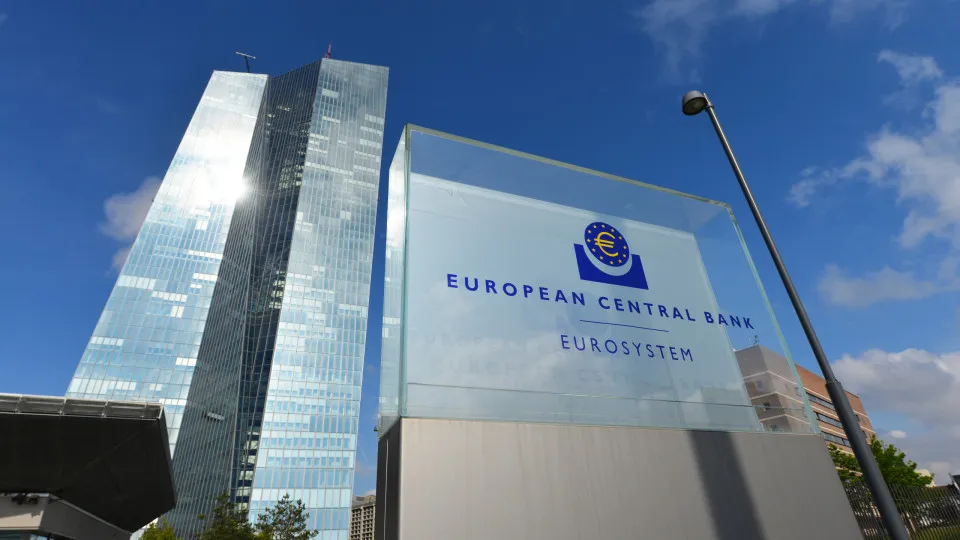
The European Central Bank (ECB) decided to maintain interest rates unchanged in line with expectations. The decision was released the day the president, Christine Lagarde, announced the exit of the institution.
© Shutterstock
29/10/2026
by
O The European Central Bank (ECB) decided this Thursday to keep interest rates in line with what was expected. The decision has been known on the day that the president of the institution, Christine Lagarde, revealed that she was leaving office.
“The Governing Council today decided to keep the three key ECB interest rates unchanged. Energy prices continued to rise, representing risks upwards towards inflation prospects and downwards towards growth prospects”, can be seen in the notified published.
It is also mentioned that, “although the effects of the energy shock have not been fully felt, the underlying inflation has remained broadly stable to date and there is no significant wage response at this stage.”.
“ It is likely that the greater magnitude and duration of energy shock, as well as the implications in terms of indirect and second-order effects, will lead to an increase in inflation and a decrease in growth. The financing conditions have become more restrictive since the previous Governing Council meeting, which will probably weigh on inflation and growth. The Governing Council is committed to defining monetary policy in order to ensure that inflation stabilises at 2% in the medium term”, it can be read.
The ECB's decision is known after the maintenance of interest rates by the US Federal Reserve (Fed) announced on Wednesday. The Fed decided to keep interest rates in the range between 3.75% and 4%, as anticipated by analysts and after a two-day meeting.
The decision was not unanimous, with two members of the Federal Open Market Committee (FOMC) voting against, preferring an increase of 0.25 percentage points.
Where's the focus?
O energy shock related to the conflict in the Middle East continues to worry, but the few economic data published since September do not seem to be sufficient to change the course of ECB decisions.
In this context, the attention must move to France, a country that has become the weakest link in the euro area, but without causing an immediate monetary response, according to analysts. Investors are concerned about the debt and deficit of France, among the highest in Europe, the heated debate around the 2027 budget and the uncertainties associated with the presidential elections in 2027.
The next meeting of the ECB will take place on 16 and 17 December in Frankfurt.
[News update]