
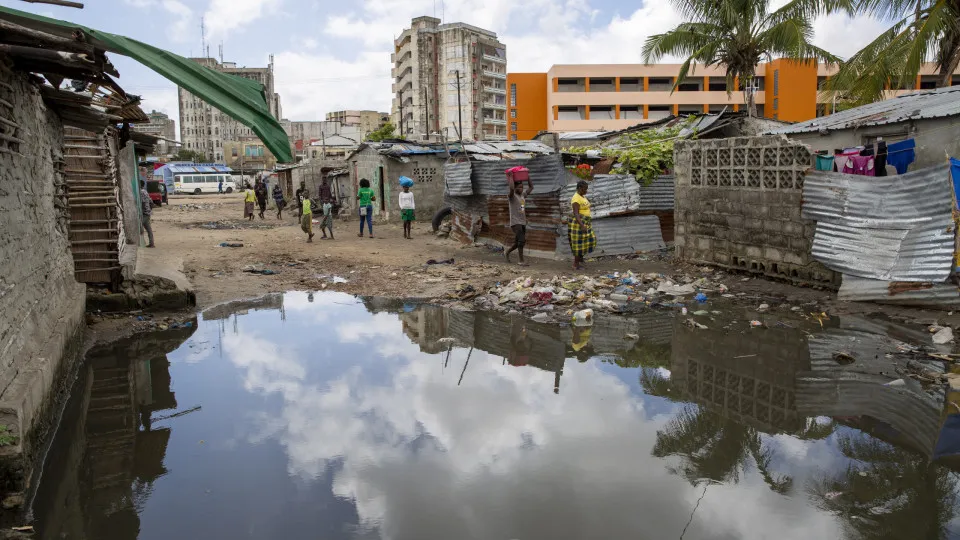
More than 200,000 Mozambicans affected by terrorism in the north and by floods in the south benefited from humanitarian assistance through the Restore project, led by CARE Mozambique, according to the institutions involved.
© Lusa
14/10/2026
by
Lusa
Mais 200,000 Mozambicans affected by terrorism in the north and by floods in the south have benefited from humanitarian assistance since April through the Restore project, led by the organization CARE Mozambique, announced today the institutions involved.
The deputy national director of CARE Mozambique, Vicente Adriano, said in Pemba, the provincial capital of Cabo Delgado, that the project planned to support 152,000 people, but ended up overcoming the initial goal.
“ We expected to watch 152 thousand people, and we were able to watch more than 200,000 people,” he said.
According to the responsible, about 25% of beneficiaries correspond to families affected by the floods in Gaza province.
In the agriculture and food security sector, the organization supported more than 18,000 people with agricultural inputs and tools to resume production after floods.
“ We provided assistance to more than 18 thousand people with agricultural inputs and tools for a quick recovery soon after the floods ", said.
CARE Mozambique, representing the international humanitarian organization CARE International, led the Restore project, implemented between April and October in the provinces of Cabo Delgado, Nampula and Gaza, which provided assistance to families affected by terrorism and floods through food and agricultural support, health services, water and sanitation, building shelters, document support and learning spaces for children, in a program budgeted at eight million dollars (6.9 million euros).
The intervention also included unconditioned monetary assistance for three consecutive months for affected families.
“ This monetary assistance allowed families to be given greater freedom and flexibility to respond to their needs,” he added.
In the area of health, through mobile brigades carried out in coordination with the district and provincial health authorities, more than 6,000 people were supported in areas of difficult access, including the districts of Ancuabe and Chiúre.
Vicente Adriano also highlighted interventions in the water, sanitation and hygiene sector, including the rehabilitation of infrastructure for communities returned to areas of origin after movements caused by the armed conflict.
“ We are talking about more than 30 rehabilitated water sources”, he said.
According to the responsible, the teams also distributed water, sanitation and hygiene kits containing buckets, detergents and soap to meet the needs of the families for three months.
In the shelter sector, considered one of the most demanding of the humanitarian response, the project allowed to build about 1,500 homes.
“ We built houses with zinc plate roofs at the level of the district of Chiúre, but we also built houses with canvas cover mainly in areas of greatest insecurity. We are talking about 1,500 shelters as a whole”, he explained.
Despite the results achieved, Vicente Adriano warned of the persistence of humanitarian needs.
“ The needs are still enormous. Our coverage capacity is below 40%, looking at global needs,” he said.
The person responsible also pointed out constraints on international humanitarian funding.
“ Mozambique competes with other global emergencies that have earned donor attention and there is a reduction in global funding,” he said.