
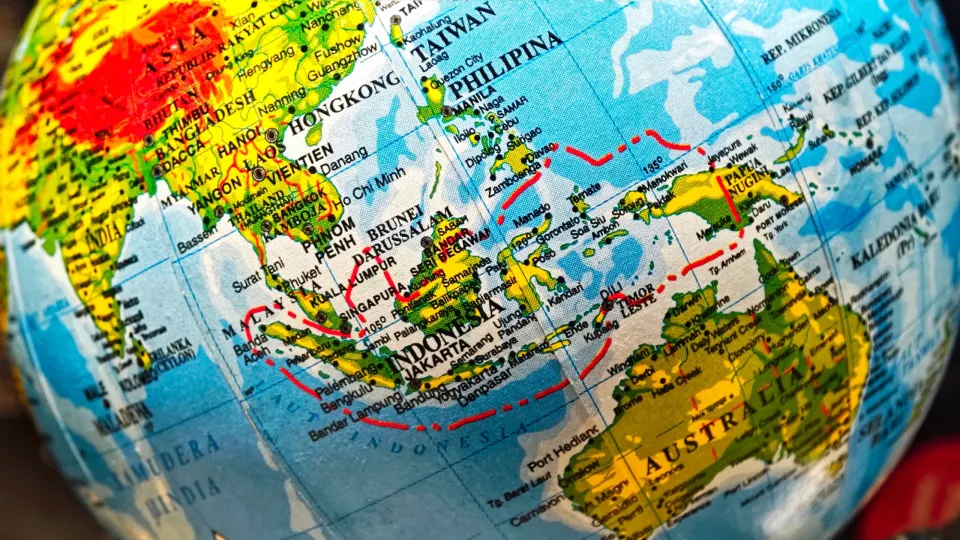
Economists and political representatives have warned that extreme energy shocks and climate phenomena, such as El Niño, are threatening Asia-Pacific growth.
© Shutterstock
14/10/2026
by
Lusa
ANDconomists and political representatives today warned that energy shocks, extreme climate phenomena, such as El Niño, and energy crises, are threatening the growth prospects of Asian-Pacific countries.
In a panel held during the Annual Meetings of the International Monetary Fund (IMF) and the World Bank, held in Bangkok, representatives of the IMF, central banks, and governments of the Association of Southeast Asian Nations (ASEAN), they warned of the impact that energy and climate crises may have on economic growth in the region.
“Of all the factors currently at stake, I would say that energy is the most important,” said Krishna Srinivasan, director of the IMF’s Asia and Pacific Department, stressing that oil and gas consumption represents on average around 7% of ASEAN’s GDP.
The threat arises at a time when governments face growing uncertainty associated with conflicts in the Middle East, the volatility of commodity prices and changes in global supply chains.
In addition to energy security, representatives pointed to climate change and extreme meteorological phenomena as a phenomenon. El Niño is one of the main risks to the region, with an impact on both the ASEAN countries and the small island states of the Pacific.
The World Meteorological Organization (WMO) warned this month that this year's climate phenomenon El Niño could become one of the strongest on record since 1950, with significant impacts on global temperatures and precipitation patterns.
The governor of the Central Bank of the Philippines, Eli Remolona, said that the monetary authorities are “more and more resorting to scenario planning” to deal with uncertainty, including an “extreme scenario like this year’s El Niño”.
“The effect of El Niño will not be felt before the beginning of next year, in January and February 2027, but we have already developed several scenarios. We are holding our breath, but we must be prepared for the worst”, he said.
For Scott Morris, vice president for East Asia, Southeast Asia and the Pacific of the Asian Development Bank (ADB), resilience has become a guiding principle, with governments facing an accumulation of risks ranging from pandemics to energy crises, to floods and other natural disasters.
“ One of the challenges we see is the need to respond simultaneously to a diversity of shocks,” he said.
In the short term, countries need to strengthen the reserves and security of fuel supply, but in the long term, it has advocated, it is essential to accelerate investments in renewable energy and locally produced energy sources.
“ The most important measure to meet this challenge in the long term is to accelerate investment plans in energy supply that do not depend so much on distant geographies,” he said.
At the same time, the Japanese Deputy Minister of Finance for International Affairs, Atsushi Mimura, considered that the immediate priority is to combat inflation and mitigate the effects of energy shocks through “directed, adapted and temporary” measures.
With regard to climate change, it advocated a strengthening of investment in infrastructure resilient to natural disasters, at a time when floods, storms and other extreme phenomena become more frequent and severe.
Mimura identified what she called the four main challenges of the region: demographic ageing, geopolitical polarisation, climate change and digitisation.
“ In countries where the population is ageing, such as Thailand and Singapore, it will be necessary to strengthen pension and social protection systems. In the younger economies, such as the Philippines, the priority should be investment in education and the qualification of the workforce,” he said.