
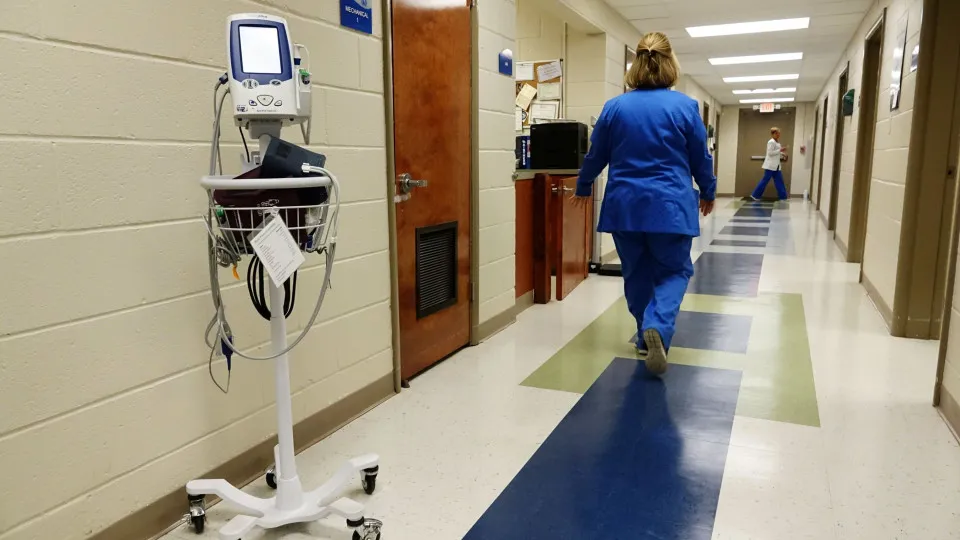
A study with more than 1,000 nurses in Portugal concluded that there are difficulties in attracting and retaining professionals, according to the University of Évora.
© Reuters
21/10/2026
by
Lusa
Um a study involving more than 1,000 nurses in Portugal concluded that there is a “need to strengthen” working conditions and difficulties on the part of the institutions in attracting and maintaining professionals, it was today published.
In a statement, the University of Évora (UÉvora) indicates that this study was developed with 1,004 nurses from 29 public and private hospital organizations in Portugal, and that it “reveals the difficulties in attracting and retaining” these professionals in Portuguese hospitals.
According to UÉvora, the research was conducted by Telma Lent, the Local Health Unit (ULS) of the Algarve and the Comprehensive Health Research Centre, Maria do Céu Marques, UÉ, Escola Superior de Enfermagem São João de Deus and the Comprehensive Health Research Centre, Liliana Mota, Escola Superior de Saúde do Norte da Cruz Rede Portuguesa and RISE-Saúde da Faculdade de Medicina da Universidade do Porto.
In the document it is underlined that, “despite the importance attributed” to leadership and talent management, organizational practices in this area were “assessed in a less favorable way”, highlighting the “need to strengthen” professional appreciation, development opportunities and working conditions.
According to the UE, the objective of the research was to “understand what factors” contribute to the management of nursing talents, which “practices are used” by organizations and which “main challenges” related to the attraction and retention of professionals.
“ The results revealed a globally positive assessment of the factors associated with talent management, with emphasis on leadership skills. On the other hand, organizational practices obtained less favorable evaluations, and the indicators of attraction and retention were those that presented the lowest results ", read in the document.
For the promoters of the study, these data “suggest that recognizing the importance of professionals is not enough” and that “it is necessary” to translate this recognition into concrete practices.
“ The appreciation of the work done, the opportunities for professional development, career progression, a leadership of support and better working conditions are relevant aspects to strengthen the capacity of organizations to attract and maintain nurses”, they argue.
The promoters of the study also recall that it was published in Nursing Reports, a study that “enforces the importance” of Portugal to develop “integrated strategies” for talent management, capable of contributing to the retention of professionals and the stability of teams.
“ However, because this is a cross-sectional study, the results do not allow establishing cause and effect relationships, nor conclude that these difficulties are responsible for the exit of nurses to other countries”, they conclude.