
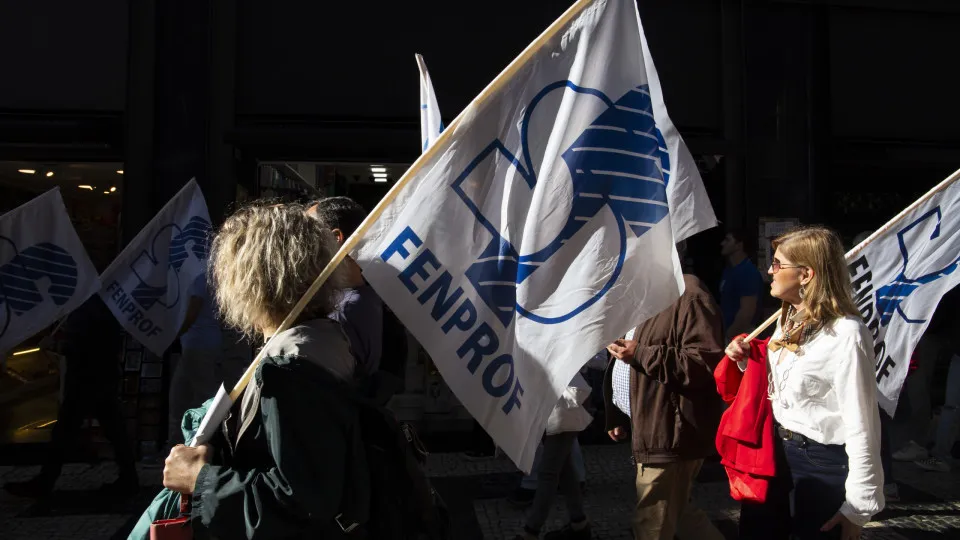
Fenprof challenged the intention to allow graduates in Basic Education to teach the first cycle without pedagogical training and demanded effective negotiation of the government proposal.
© Rita Franca/NurPhoto via Getty Images
05/11/2026
by
Lusa
A Fenprof today contested the intention to allow graduates in Basic Education to teach the first cycle without pedagogical training and demanded an effective discussion of the government proposal, admitting to request further negotiation.
The proposal was presented to the unions last week and provides that holders of a degree in Basic Education can teach in the first cycle before completing the master's degree or professionalization in service.
In a statement released today, the National Federation of Teachers (Fenprof) accused the guardianship of insisting on the measure, ignoring the concerns expressed by the representatives of teachers at the first and only meeting on that subject.
“The negotiation cannot be a mere formality, nor does it serve to legitimize decisions already taken by you,” the trade union federation stresses, stating that “the decision to keep the government proposal intact is yet another unacceptable disregard for the role of collective bargaining.”.
The Ministry of Education, Science and Innovation (MECI) justified the review of scientific training requirements for hiring teachers with the problem of lack of teachers, with particular incidence in the first cycle.
According to data presented by Minister Fernando Alexandre on Wednesday, in parliament, there are still 265 hours to be filled, of which 83 in the first cycle.
“ The fact that we are proposing that graduates in Basic Education may have their own qualifications will not lead to disinvesting in the professionalization of these teachers ", defended the ruler before the deputies.
Fenprof disputes the arguments of guardianship, arguing that no solution to recruitment difficulties can represent a reduction in training requirements or an indiscriminate extension of the use of own qualifications, i.e. teachers with scientific training, but without pedagogical training.
“In the first cycle, the demand must be even clearer”, they add, insisting that it is a matter “with profound consequences for the functioning of schools, the stability of their teaching staff and the quality of the public education service” and that, therefore, must be the subject of serious negotiation with the unions.
Fearing that the Government intends to approve the amendment without hearing the representative structures of teachers again, Fenprof admits to requesting the opening of an additional negotiation process.