
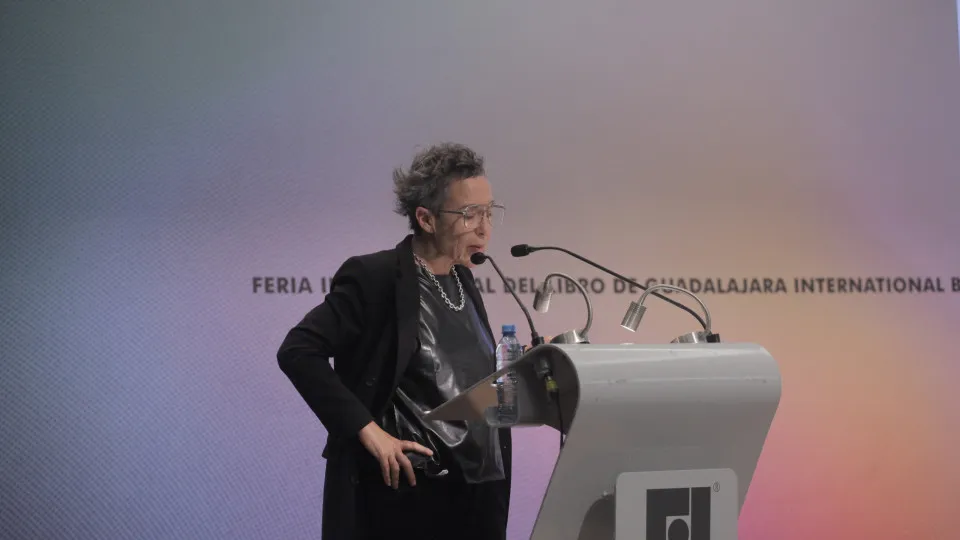
Argentinian writer Gabriela Cabezón Cámara considered the extreme right-wing wave in Latin America “wrecking” and “horrible”, warning of the persecution of culture, women and migrants. At the Folio Festival in Óbidos, the author argued that literature remains a space of resistance and denunciation.
© Leonardo Alvarez Hernandez/Getty Images
11/10/2026
by
Lusa
A extreme right wave in Latin America “is devastating”, said Argentine writer Gabriela Cabezón Cámara today, stressing the need to combat an ideology that seeks in writers, migrants and women to hate.
“Darling” and “horrible” was like the author of “The Girls of Orangel”, winner of the National Book Award 2025 in the Translated Literature category, described the “wave of the far right” that rages in several countries of South America and that “hates those who like to write, who like to read, because they like to think about things”.
In a conversation at Folio – International Literary Festival of Óbidos, the writer lamented the existence of movements that “need to build an enemy, someone to hate” and chose, besides writers, “women and migrants”.
About her country, where recently writers like Dolores Reys and Gabriela Cabezón Cámara themselves were “targeted for violent persecution,” the author considered that Javier Miley’s government is also “looking for enemies in a sector that wants to destroy: culture.”.
“ They don't like us writers, they don't like us journalists, they don't like us women. They don’t like us, the sexual dissidents, they don’t like anyone,” he said, alluding to “a setback” in which “living seems to be the end of culture.”.
In an interview at the Market Bookshop, the writer shared with Folio readers the impact that literature may have on alerting “the destruction of the social fabric”, which in her work goes by giving a voice “to the defeated, to the oppressed”.
“ At the moment we are all in the position of losers, they are pushing us all into the abyss ", said referring to impoverishment, the new generations that cannot buy house.
However, he added, “these losers are not defeated, they are still alive, they continue to resist,” as in the literature “there are more women or more indigenous writers to be able to publish,” in an era that “all contemporary literature is written from the political perspective of people defeated, oppressed and subjugated” and, at the same time, there are “resistance movements that are achieving achievements.”.
Gabriela Cabezón Cámara's interview ended the program of the Penguin publisher scheduled for the first weekend of Folio, with 450 authors participating in about 300 initiatives to take place in the village of the district of Leiria until the 18th.