
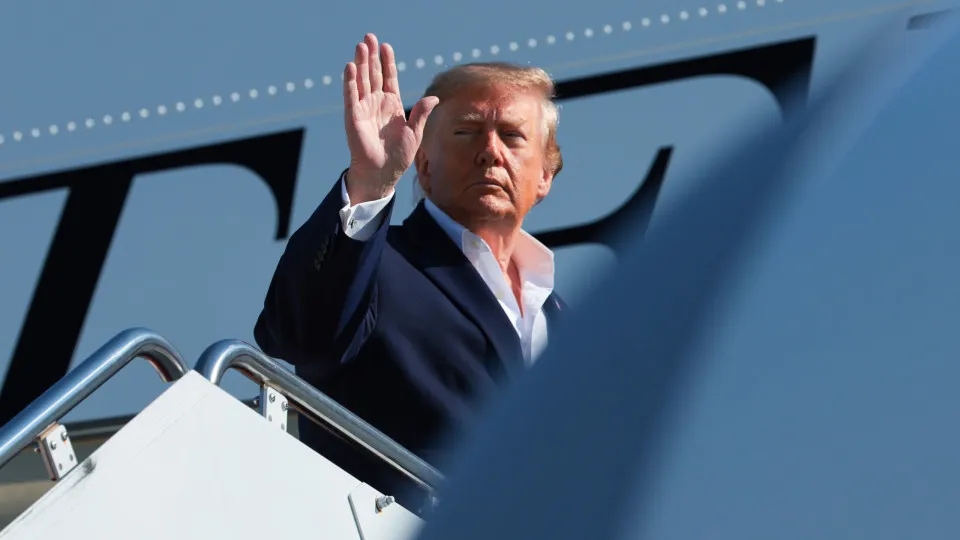
American press and analysts anticipate the end of the “ Donald Trump era” after the significant Democratic victory in Tuesday’s mid-term elections, classified as a “blue tsunami”.
© Chip Somodevilla/Getty Images
04/11/2026
by
Lusa
Impressa and American analysts anticipate the end of the “ Donald Trump era” after the significant victory of the Democrats in the mid-term elections of Tuesday, already classified as a “blue tsunami”, in reference to the color of the party currently in the opposition.
The Atlantic magazine, based in Washington, wrote that Trump has been “the dominant political figure of this century,” but after the heavy defeat of the Republican Party in the mid-term elections, the tycoon was forced to face his own “political mortality.”.
“He [President] asked voters to make these midterm elections a referendum on him, to imagine that his name was on the ballot. They heard him... and rejected him. It is an impressive and widespread rejection,” wrote American magazine editor Jonathan Lemire.
With the broad Democratic victory, including in traditional and deeply Republican states, Trump will now have to deal with a majority opposition in the two chambers of Congress, which can block his legislative agenda and use the power of subpoena.
However, The Atlantic stresses that the head of state also needs to face the possibility that the political party that has remodeled in its image may soon begin to look beyond “trumpism”.
“Donald J. Trump is now officially, and completely, a President in office. ... Tuesday’s vote is a clear milestone in Trump’s trajectory towards irrelevance,” he added.
The Foreign Policy magazine has seen the results of the midterms as the “start of the end of trumpism”.
“If trumpism was the most recognisable expression of the wave of contestation that marked this global moment, perhaps we are now witnessing a counterreaction (...). The Americans have finally fulfilled what they were saying to the polling institutes all year round: they are furious and will no longer tolerate this,” said the article signed by editor Ravi Agrawal.
Despite not taking credit to Democratic candidates for the victorious campaign, the article suggests that the vote was more a rejection of the present presented by Trump than a roadmap for the future.
Also influential The New York Times (NYT) wrote: “Infuriated electors mark the beginning of the end of the Trump era.”.
The newspaper explains that the negative electoral reaction to Trump extended even to deeply Republican states and indicated that the President lost control of the coalition that led him to the White House twice.
“ The general margin of democratic victory indicates that, although the President still has two more years in office and can exert great influence, the Americans are signaling the beginning of the Trump era ", said the text.
Trump quickly tried to save his reputation, insisting that the defeat of his Republican Party was not really a rejection of the presidential figure, since his name was not on the ballot — despite having repeatedly told the voters to vote as if he were.
However, NYT points out that the Republican campaign clearly revolved around Trump, even if the President is now trying to get away from it.
“It was Trump who decided to start a war with Iran, which shook the energy markets and made gasoline prices go off. It was Trump who chose the candidates, the themes, the strategy and the message” of the campaigns”, emphasized the article.
To the list of analysts and media that anticipate the end of Donald Trump's era joins, for example, the magazine The New Yorker, with the article "Finally, the beginning of Trump's end", or the British newspaper The Guardian, with an opinion article signed by columnist Moira Donegan and entitled "The bells of the death of trumpism have finally sounded".
The Democratic victory in Tuesday's mid-term elections gives the party control of Congress and should limit President Donald Trump's action in the last two years of his term.
From the beginning of January, when the new elect take office, Democrats will be able to define the legislative agenda, condition the federal budget, block presidential nominations and launch parliamentary investigations on the Republican President and members of his administration.
Donald Trump will, however, continue to have important tools of power, including the presidential veto and powers of the executive branch.