
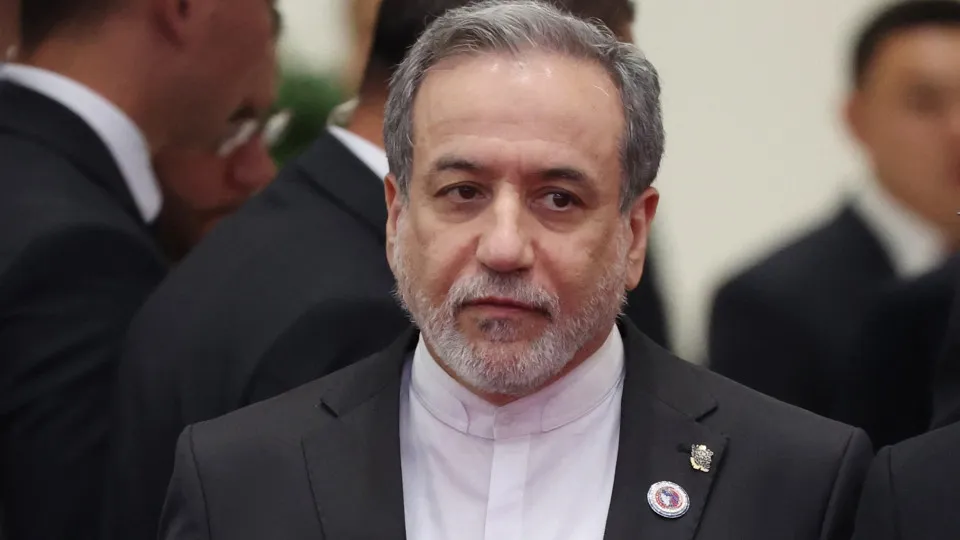
Iran has said that it is in contact with mediators to examine proposals to implement its “seven-day peace plan” in less than a week, although Washington rejected it more than a month ago.
© Vyacheslav PROKOFYEV / POOL / AFP via Getty Images
28/10/2026
by
Lusa
O They said today that they are in contact with mediators to examine proposals to implement their “seven-day peace plan” in less than a week, although Washington rejected it more than a month ago.
“ We maintain close and continuous contact with the mediators to examine proposals to ensure the implementation of our seven-day plan within a period of less than a week,” said Iranian Foreign Minister Abbas Araghchi on social networks.
Although the Armed Forces of the Islamic Republic are “fully prepared to defend the homeland,” the minister stressed that Tehran will continue to give diplomacy a chance “to succeed”.
The American news site Axios advanced today that Qatar-led regional mediators were making efforts to resume negotiations between Iran and the United States and prevent the resumption of the war after the US mid-term elections scheduled for November 3.
According to Axios, who cites in particular American and Israeli sources, Qatar’s diplomats are trying to “convince Iran to authorize UN inspectors to visit their bombed nuclear installations in exchange for a certain reduction in US sanctions.”.
In recent days the Islamic Republic has received representatives from Russia, Qatar, Pakistan, Saudi Arabia and Turkey — the last three members of the Mecca Agreement — with whom it addressed the war launched by the United States and Israel against Iran eight months ago.
So far no progress has been announced towards a peace agreement, while the belligerents continue to exchange threats and maintain the deadlock in the Strait of Ormuz.
On 25 September, during a press conference outside the United Nations General Assembly in New York, Araghchi proposed to Washington a seven-day plan to put an end to hostilities, reopen the Ormuz Strait and then start negotiations on the Iranian nuclear programme.
The proposal provided for a ceasefire in the Middle East, the end of the US naval blockade, the lifting of sanctions on Iranian oil and the release of frozen Iranian assets, in exchange for reopening the Ormuz Strait and the start of negotiations with the United States to reach a definitive agreement.
The day after his presentation, President Donald Trump said he had rejected the plan, claiming that his country had already fully controlled the strategic maritime passage of Ormuz.
Since then, Tehran has insisted that any diplomatic solution to the conflict must guarantee compliance with its conditions.
American media have reported preparations from Washington and Tel Aviv to launch a new offensive against the Islamic Republic following the mid-term elections in the United States.
According to Axios, the Chief of Staff of the Israeli Armed Forces, General Eyal Zamir, spoke on Monday with the commander of the United States Central Command (CENTCOM), Admiral Brad Cooper, to coordinate possible future attacks.
The same US media, citing US and Israeli authorities, indicated that the future military operation would include a week of large-scale attacks on targets related to the leadership of the Islamic Republic, energy and nuclear infrastructure.