
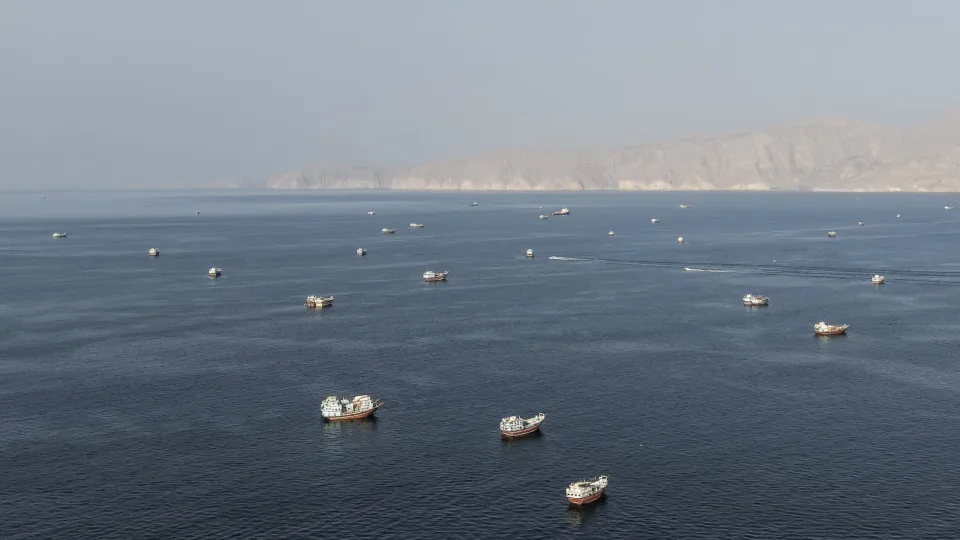
Iran has reported that indirect talks with the United States, with Qatar's mediation, continue on a two-day plan to reopen the Strait of Ormuz. The Iranian Foreign Minister, Abbas Araqchi, pointed out that negotiations have not yet reached a concrete outcome.
© AFP via Getty Images
01/11/2026
by
Lusa
O Iran said today that indirect talks with the United States, with the mediation of Qatar, continue on a two-day plan to reopen the Ormuz Strait.
“ We are currently negotiating a two-day plan with the mediators, but we have not yet reached a concrete result and that depends on the answers the counterpart wants to give to our questions,” Iranian Foreign Minister Abbas Araqchi, in the margins of a parliamentary session, reported the ICANA agency, the official news agency of the Iranian parliament.
So far, a week of intense diplomatic efforts has not produced results to end the eight-month war, which began in February with attacks by the United States and Israel against Iran, which retaliated with the blockade of the Ormuz Strait, where one fifth of world oil production passed.
The head of Iranian diplomacy recalled that a delegation from his country, led by a Deputy Foreign Minister, traveled Saturday to Qatar with the aim of “continuing dialogues with Qatari mediators who visited Tehran in recent weeks” and reiterated “that there was no plan to conduct negotiations with the US side” at those meetings.
“ We are doing everything possible to move forward on this (diplomatic) path and we hope that the other side will act rationally and prioritize diplomacy over other options,” Araghchi added, recalling that the Islamic Republic is prepared for any scenario.
A Qatari delegation has moved to Iran at least twice this week, as well as senior defense officials from Pakistan, Saudi Arabia and Turkey – member countries of the Mecca Pact – who met on Monday in Tehran with the authorities of the Persian country to discuss the war.
In an interview on Saturday to the qatari network Al Jazeera, Araghchi explained that Qatar proposed to reduce the period initially planned by Iran in its seven-to-five-day peace plan and that the parties are now working to shorten it further, to two days.
On September 25, during a press conference outside the United Nations General Assembly in New York, Araghchi proposed to Washington a seven-day plan to end hostilities.
The proposal provided for a ceasefire in the Middle East, the end of the US naval blockade, the lifting of sanctions on Iranian oil and the release of frozen Iranian assets in exchange for the reopening of Ormuz and the start of negotiations with the United States to reach a final agreement.
The President of the United States, Donald Trump, who rejected Tehran’s seven-day plan and maintained pressure through the naval blockade and intensification of sanctions, assured on Saturday that he would not attack the country before Tuesday’s mid-term elections and that negotiations with Iran are going well, although he warned that Washington still has outstanding military objectives.
To these new threats, the Iranian authorities responded by warning the US that a possible resumption of hostilities could be “longer” than the previous war.